Evaluating Carrier Resin Fractions for Masterbatch Tariff Line Determination
Determining masterbatch tariff lines requires thermogravimetric and DSC testing to prove whether carrier resin fraction or active loading sets essential character.

Heading

Tariff Code Allocation for Concentrated Polymer Preparations
Customs classification for masterbatch shipments hinges on the ratio of active additives to the carrier resin matrix. Under the Harmonized System, concentrated polymer mixtures split into different chapters depending on binder concentration and chemical function. Color masterbatches with organic or inorganic pigments in synthetic resin go to Chapter 32 ~ heading 3204 for organic colorants and 3206 for inorganic preparations.
Additive masterbatches containing antioxidants, light stabilizers, flame retardants, or slip agents carry no color and fall under Chapter 38 heading 3824 as chemical preparations, or move to Chapter 39 if the carrier resin gives the mixture its essential character.
Drawing the line between a Chapter 32 or 38 chemical preparation and a Chapter 39 primary polymer compound depends on carrier resin mass fraction and specific Harmonized System notes. General Rule 1 specifies that classification follows heading terms and related section or chapter notes. Note 3 to Chapter 32 sends concentrated plastic-bound colorants to heading 3204 or 3206, provided no more specific heading applies elsewhere.
In non-colorant masterbatches, if carrier resin exceeds 50 percent by mass, customs authorities often challenge Chapter 38 declarations and reclassify shipments under primary polymer headings like 3901 for polyethylene or 3902 for polypropylene.
| Masterbatch Function | Active Load Threshold | Carrier Fraction Limit | Primary HS Heading | Contested HS Heading |
|---|---|---|---|---|
| Organic Colorant Concentration | 15 to 45 percent mass | 55 to 85 percent mass | 3204.17 | 3901.20 / 3902.10 |
| Inorganic White (Titanium Dioxide) | 40 to 75 percent mass | 25 to 60 percent mass | 3206.11 | 3901.10 |
| Carbon Black Pigment | 20 to 50 percent mass | 50 to 80 percent mass | 3206.49 | 3901.90 |
| Hindered Amine Light Stabilizer | 10 to 30 percent mass | 70 to 90 percent mass | 3824.99 | 3902.30 |
| Processing Aid (Fluoropolymer) | 3 to 10 percent mass | 90 to 97 percent mass | 3824.99 | 3901.10 |
Disputes typically arise when carrier resin content is increased beyond functional needs simply to dilute active ingredients. Customs auditors assess whether the polymer serves strictly as a binder or forms the pellet’s primary structural matrix. Under General Rule 3(b), composite goods are classified by the component conferring their essential character.
A color masterbatch with an 80 percent linear low-density polyethylene carrier retains its character as a color preparation so long as pigment concentration remains high enough to color extrusions at standard let-down ratios. Once pigment loading falls below functional thresholds, the carrier resin defines the essential character, moving the entry into Chapter 39.
A carrier resin fraction exceeding 85 percent by weight in a non-colorant additive mixture shifts tariff classification from chemical heading 3824 to primary polymer heading 3901 under General Rule of Interpretation 3b.
Misclassifying a masterbatch entry risks clearance delays at the port, back-dated duty reassessments, and fines for inaccurate commercial invoices.
Ash
Analytical Methods for Organic Resin Mass Determination
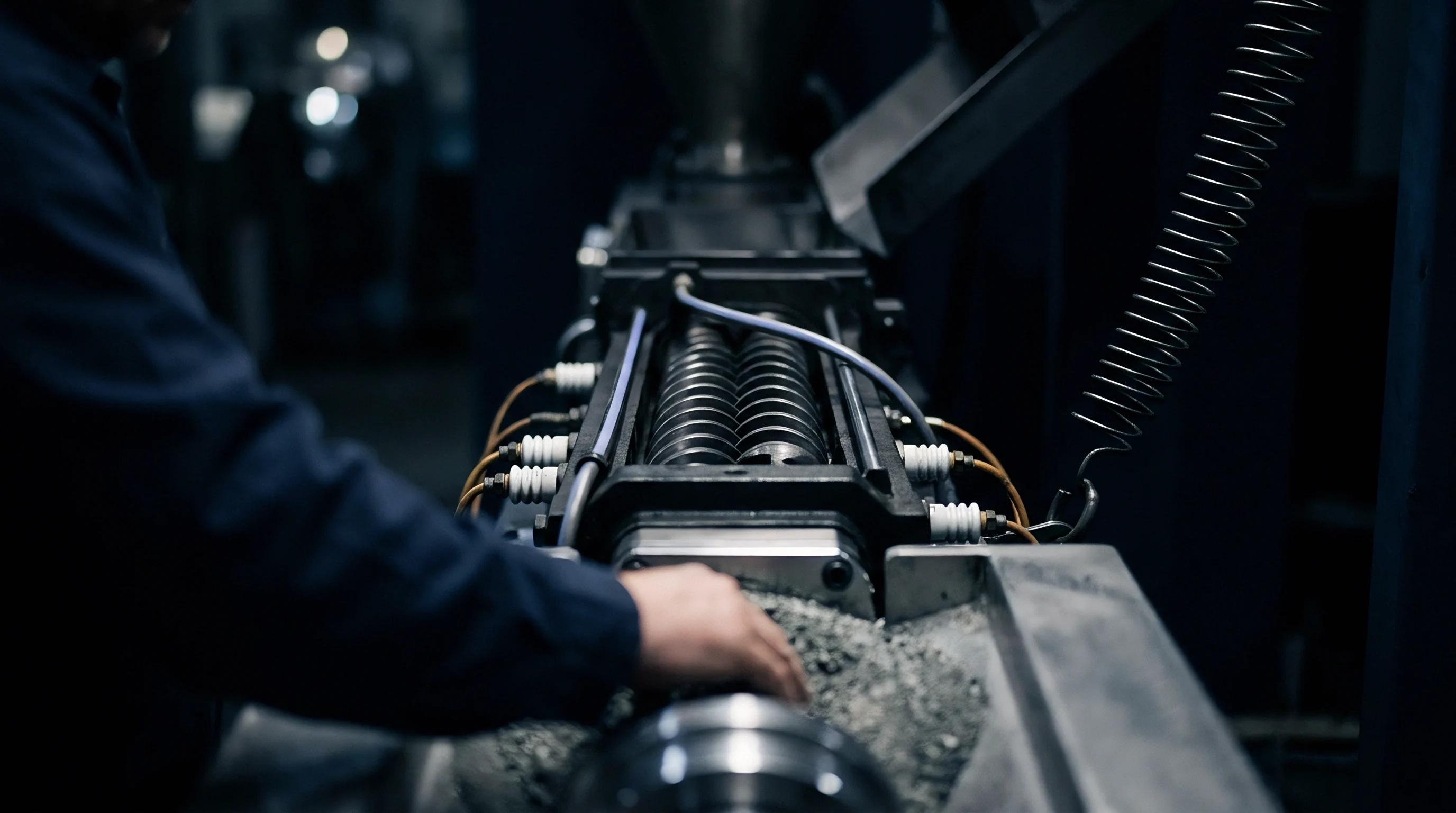
Pinpointing carrier resin mass requires isolating organic polymer chains from inorganic pigments, mineral fillers, and metal-based additives. Thermogravimetric Analysis run per ISO 11357-6 yields the compound’s baseline decomposition curve. A 10 to 20 milligram sample of homogenized pellet undergoes a controlled heating ramp from room temperature to 900 degrees Celsius in a microbalance furnace.
Nitrogen gas flowing at 50 milliliters per minute blocks oxidation during initial heating, driving pyrolytic scission of the organic polymer chains between 350 degrees Celsius and 550 degrees Celsius.
Polyolefin carriers ~ such as ethylene-octene copolymers, linear low-density polyethylene, and polypropylene homopolymers ~ volatilize completely across this range, leaving no organic residue behind. Mass loss recorded between 250 degrees Celsius and 550 degrees Celsius covers the full volatile organic fraction, including the carrier resin, low molecular weight wax dispersants, and organic processing aids. Changing the atmosphere from nitrogen to high-purity air or oxygen at 600 degrees Celsius burns off any elemental carbon black.
Whatever mass remains at 900 degrees Celsius represents non-combustible inorganic ash, such as titanium dioxide, calcium carbonate, talc, or synthetic silica.
Calcination testing under ISO 3451-1 provides a fast bench check for routine incoming quality control. A 2 to 5 gram sample sits in a tared porcelain crucible inside a muffle furnace at 600 degrees Celsius plus or minus 25 degrees Celsius until carbonaceous material burns off completely. Dividing residual ash mass by the starting dry sample mass gives the inorganic fraction, and subtracting that percentage from 100 percent offers a rough estimate of total organic content.
However, calcination alone cannot separate low molecular weight waxes, organic pigments, or liquid additives from the carrier resin, which introduces errors in heavily modified formulations.
Thermal decomposition of polyolefin carriers under nitrogen flow per ISO 11357-6 completes between 350 degrees Celsius and 550 degrees Celsius, leaving inorganic fillers as measurable residue.
The table below outlines standard thermal transitions and mass loss windows for masterbatch components during thermogravimetric evaluation.
| Constituent Material | Test Atmosphere | Decomposition Temperature Window | Residue Mass Yield at 900 °C | Primary Test Standard |
|---|---|---|---|---|
| Polyethylene Carrier (LLDPE/HDPE) | Nitrogen Gas | 380 °C to 490 °C | 0.0 percent mass | ISO 11357-6 |
| Polypropylene Carrier (Homopolymer) | Nitrogen Gas | 350 °C to 470 °C | 0.0 percent mass | ISO 11357-6 |
| Polyethylene Wax Dispersant | Nitrogen Gas | 220 °C to 380 °C | 0.0 percent mass | ASTM E1131 |
| Carbon Black (Channel/Furnace) | Synthetic Air | 560 °C to 750 °C | 0.1 to 0.5 percent mass | ISO 11357-6 |
| Titanium Dioxide (Rutile) | Nitrogen / Air | Stable to 900 °C | 99.5 to 100.0 percent mass | ISO 3451-1 |
| Calcium Carbonate (Calcite) | Nitrogen Gas | 620 °C to 820 °C (Decarboxylation) | 56.0 percent mass (as CaO) | ISO 3451-1 |
Errors in calculating carrier fractions crop up when compounders change filler surface treatments or use thermally unstable minerals. Several common issues disrupt mass determination during customs audits:
- Uncorrected filler calcination weight loss happens when calcium carbonate undergoes decarboxylation above 600 degrees Celsius, releasing carbon dioxide and artificially boosting the calculated organic resin percentage.
- Volatilization of low molecular weight wax additives below 300 degrees Celsius leads to processing aids being tallied as carrier polymer matrix.
- Incomplete combustion of structural carbon black under inadequate oxygen flow leaves fixed carbon behind in the crucible, overstating inorganic mineral content.
- Hygral moisture retention in hydrophilic fillers like synthetic silica drives weight loss below 150 degrees Celsius, distorting the dry sample baseline.
Subtracting total inorganic ash from sample weight without adjusting for carbonate decomposition produces an artificially elevated organic resin figure.

Matrix
Rheological and Structural Influence of Polymer Carriers
A carrier resin’s physical structure and molecular weight distribution determine both its let-down behavior and its tariff classification limits. Compounders choose low-density polyethylene, linear low-density polyethylene, polypropylene random copolymers, or ethylene-vinyl acetate for the carrier matrix. That selection sets the compounding thermal window, melt viscosity matching, and maximum filler loading.
To ensure rapid dispersion during injection molding or film extrusion, the carrier must melt at a lower temperature or show a higher melt flow rate than the base polymer.
Measuring Melt Flow Rate under ISO 1133 condition D (190 degrees Celsius, 2.16 kilogram load for polyethylene) or condition M (230 degrees Celsius, 2.16 kilogram load for polypropylene) gives a clear view of carrier resin molecular weight. Prime film-grade LLDPE resins typically range between 0.5 and 2.0 grams per 10 minutes MFR. Masterbatch carriers, by contrast, often rely on high-flow injection molding grades or broad-distribution waxes with MFR values above 20 ~ or even 100 ~ grams per 10 minutes.
When formulations use significant amounts of ultra-low molecular weight polyethylene wax for pigment wetting, separating structural carrier polymer from non-structural chemical wax is critical for tariff determination.

How Does Carrier Molecular Weight Alter Tariff Line Eligibility?
Polymers with number-average molecular weights under 10,000 grams per mole classify as waxes or chemical preparations under Chapter 34 heading 3404, rather than primary plastics in Chapter 39. Blending high ratios of synthetic polyethylene wax lowers the overall molecular weight of the carrier phase. Solvent extraction with boiling xylene or toluene per ISO 6427 separates these low molecular weight waxes from the structural polymer.
If testing shows the high molecular weight resin fraction dropping below 50 percent of total organic binder, customs authorities will reclassify the masterbatch under heading 3824 or heading 3404.
Ethylene-vinyl acetate copolymer carriers introduce specific classification rules linked to vinyl acetate content. Chapter 39 Note 4 classifies copolymers based on whichever monomer unit predominates by mass. An EVA carrier with 18 percent vinyl acetate by weight falls under heading 3901 as an ethylene copolymer, since ethylene makes up 82 percent of the mass.
But if the formulation uses an EVA resin with 55 percent vinyl acetate, the carrier itself shifts to heading 3905 as a vinyl acetate copolymer. In those cases, carrier chemistry alone can force a reclassification of the entire compound.
| Carrier Resin Type | Melt Flow Rate Index | Test Condition (ISO 1133) | Melting Peak Temperature | Target Base Resin System |
|---|---|---|---|---|
| Linear Low-Density PE (LLDPE) | 20.0 g/10 min | 190 °C / 2.16 kg | 122 °C | PE Film / Blow Molding |
| High-Density PE (HDPE Carrier) | 7.0 g/10 min | 190 °C / 2.16 kg | 133 °C | HDPE Pipe / Industrial Containers |
| Polypropylene Random Copolymer | 35.0 g/10 min | 230 °C / 2.16 kg | 145 °C | PP Clarified Thin-Wall Molding |
| Ethylene-Vinyl Acetate (18% VA) | 15.0 g/10 min | 190 °C / 2.16 kg | 87 °C | Flexible Packaging / Foams |
| Polyethylene Dispersant Wax | 500 g/10 min | 140 °C / 2.16 kg | 106 °C | High-Pigment Concentrates |
Receiving inspections need to track lot-to-lot carrier resin viscosity. To trim costs, compounders sometimes swap prime carrier grades for off-spec lots or reprocessed scrap. Recycled polyolefins introduce mixed monomers, degraded antioxidants, and shifting melt flow indexes that change the thermal profile of the carrier.
Wide MFR swings across container lots usually signal material substitution upstream.
Silo-side sampling frequently uncovers gaps between product specification sheets and delivered material. A shipment certified as prime LLDPE might actually contain recycled low-density polyethylene blended with paraffin wax. Lower thermal stability in recycled carriers shifts the onset of oxidative degradation, causing premature color fading or melt fracture during extrusion.
Establishing baseline rheological profiles gives buyers the documentation needed to catch undeclared material changes.
Thermal shear history inside the compounding extruder naturally elevates the final melt flow index of the masterbatch compound.


Proof
Spectroscopic and Calorimetric Dossier Construction
Supporting carrier resin claims during customs audits requires a solid analytical audit trail. Fourier Transform Infrared Spectroscopy (FTIR) in Attenuated Total Reflectance (ATR) mode offers rapid functional group identification of the carrier phase. Standard ATR-FTIR spectrum analysis highlights key absorption bands: C-H stretching doublets at 2915 cm-1 and 2847 cm-1 mark the aliphatic backbones of polyethylene or polypropylene, while a strong carbonyl peak at 1735 cm-1 identifies ester groups from ethylene-vinyl acetate or acrylate copolymers.
Differential Scanning Calorimetry per ISO 11357-3 measures melting enthalpy to verify carrier polymer identity and degree of crystallinity. Samples are run through a thermal cycle from minus 50 degrees Celsius to 200 degrees Celsius at 10 Kelvin per minute under nitrogen. Peak melting temperatures identify the matrix: low-density polyethylene melts near 110 degrees Celsius, linear low-density polyethylene peaks between 120 and 124 degrees Celsius, and polypropylene homopolymer shows a sharp peak between 160 and 165 degrees Celsius.
Integrating the melting endotherm yields mass-normalized enthalpy in Joules per gram, which, compared against 100 percent crystalline reference values, establishes the exact percentage of semi-crystalline carrier resin in the compound.
Customs testing protocols require a step-by-step analytical sequence to verify masterbatch declarations before final duty assessment:
- Dry a representative 50-gram pellet sample in a vacuum oven at 80 degrees Celsius for four hours to prevent surface moisture from distorting mass measurements.
- Determine preliminary ash content per ISO 3451-1 at 600 degrees Celsius in a muffle furnace to record total inorganic loading.
- Run thermogravimetric analysis per ISO 11357-6 under nitrogen to track organic volatile loss between 200 degrees Celsius and 550 degrees Celsius.
- Scan the organic distillate or raw compound using ATR-FTIR from 4000 cm-1 to 400 cm-1 to map functional polymer groups.
- Perform Differential Scanning Calorimetry per ISO 11357-3 to measure carrier melting peaks, crystallization temperatures, and crystalline enthalpy mass fraction.
- Extract high molecular weight resin using boiling xylene per ISO 6427, then dry and weigh the insoluble residue to confirm total insoluble pigment load.
Melting enthalpy measurement via DSC per ISO 11357-3 quantifies semi-crystalline polymer mass fraction by comparing sample heat fusion values against pure reference baseline figures.
Customs authorities routinely reject declarations based only on general technical data sheets, requiring accredited test reports from ISO/IEC 17025 certified laboratories.
Purchase contracts should require lot-specific certificates of analysis showing carrier resin grade, tested melt flow rate, and carrier weight fraction before shipments leave the plant.
Duty
Financial Exposure and Landed Cost Arithmetic
Reclassifying a masterbatch changes its final landed cost through shifts in duty schedules and exposure to trade defense measures. Standard most-favored-nation duty rates for Chapter 32 color masterbatches under heading 3206.11 or 3206.49 typically range from 0.0 percent to 6.5 percent depending on trade agreements. While primary polymers under Chapter 39 heading 3901.10 or 3902.10 may share that same base rate, they frequently trigger regional anti-dumping levies, countervailing duties, or Section 301 tariffs aimed at specific producing nations.
Moving an additive masterbatch from heading 3824.99 to primary polyethylene heading 3901.20 opens importers to retroactive assessments covering up to three years. If the destination country levies a 14.2 percent anti-dumping duty on primary polyethylene from a specific origin, reclassified masterbatch entries absorb that full anti-dumping rate. Beyond the duty difference itself, entries incur mandatory penalty interest and administrative fines calculated on total CIF (Cost, Insurance, and Freight) values.
Take a 40-tonne masterbatch shipment valued at 2,800 USD per tonne CIF. Under Chapter 38 heading 3824.99, the lot carries a 6.5 percent base duty and zero anti-dumping exposure. If customs auditors reclassify the shipment under Chapter 39 heading 3901.20 after finding an 88 percent carrier resin fraction, the entry attracts the 6.5 percent base duty plus a 14.2 percent anti-dumping duty applied to primary polymer imports from that origin.
| Cost Component Parameter | Declared Tariff Line (HS 3824.99) | Reclassified Tariff Line (HS 3901.20) | Financial Variance per Lot |
|---|---|---|---|
| Shipment Lot Quantity | 40.0 Tonnes | 40.0 Tonnes | 0.0 Tonnes |
| CIF Declared Invoice Value | 112,000 USD | 112,000 USD | 0 USD |
| Base Customs Duty Rate | 6.5 percent | 6.5 percent | 0 USD |
| Base Customs Duty Payable | 7,280 USD | 7,280 USD | 0 USD |
| Anti-Dumping Duty Rate | 0.0 percent | 14.2 percent | +14.2 percent |
| Anti-Dumping Duty Amount | 0 USD | 15,904 USD | +15,904 USD |
| Misdeclaration Administrative Fine | 0 USD | 5,600 USD (5% value) | +5,600 USD |
| Total Landed Entry Cost | 119,280 USD | 140,784 USD | +21,504 USD |
| Effective Cost per Tonne | 2,982 USD/Tonne | 3,519.60 USD/Tonne | +537.60 USD/Tonne |
Defending tariff positions during an audit requires a solid technical and commercial dossier. High-volume import programs should maintain the following records on file:
- Certified material safety data sheets detailing polymer matrix identity, CAS registration numbers, and exact additive weight percentages.
- ISO/IEC 17025 accredited laboratory test reports showing TGA decomposition curves, DSC melting enthalpy figures, and inorganic ash percentages per ISO 11357.
- Masterbatch let-down performance data establishing the technical necessity of active additive loadings for downstream processing.
- Manufacturer compounding process declarations outlining raw material feed ratios, carrier resin grade codes, and compounding parameters.
Reclassifying masterbatch entries under primary resin tariff codes applies full regional anti-dumping duty margins to total shipment values.
Whether customs authorities will eventually adopt uniform global weight-fraction thresholds to harmonize masterbatch classification across regions remains an open question.