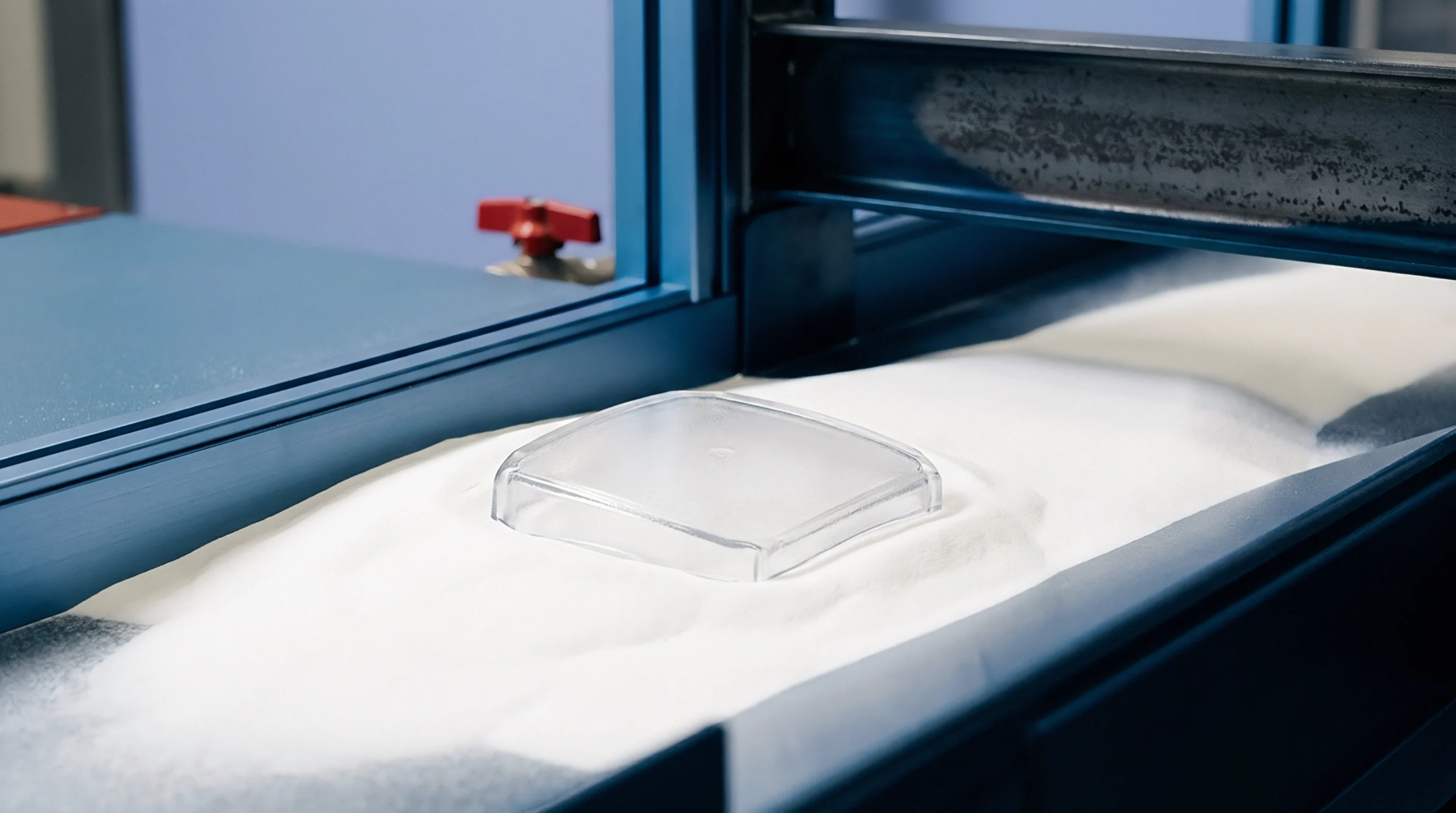
Tooling Surface Finishing Impact on Sample Part Geometry Validation
Cavity surface finish dictates interfacial heat transfer, ejection friction, and metrology scan accuracy, directly altering T1 sample part validation.
Light dispersion adjustment within high-opacity thermoplastic film finishing operations relies on a precise deposition of titanium dioxide mattifying spray offset to reduce surface gloss. This chemical suspension targets the outermost layer of a polymer matrix to scatter incident photons, effectively shifting the refractive profile of the substrate. It functions by introducing microscopic pigment interference particles that neutralize backscattered glare across the angular distribution of a finished component.
The application stops at the boundary where the film reaches a specified haze rating or gloss unit threshold, ensuring the additive remains confined to the surface rather than migrating into the bulk material. Proper deposition depth governs the tactile texture of the film while maintaining structural integrity during subsequent thermoforming steps.
Achieving a uniform reduction in reflectivity requires tight control over atomization pressure and nozzle distance. The titanium dioxide mattifying spray offset behaves as a thin film modification layer that responds to changes in the viscosity of the carrier solvent. Excessive coating volume leads to surface blushing or streaking, while insufficient coverage results in inconsistent light diffusion across the width of the extruded sheet.
Moulders track the mass flow rate of the suspension to determine if the coating thickness adheres to the engineering standard for light transmission. Variations in line speed necessitate adjustments to the spray pattern width to ensure the additive covers the web consistently. A stable run depends on the chemical compatibility between the pigment carrier and the substrate resin, as any poor adhesion causes flaking or powder release under mechanical stress.
Resin suppliers distinguish between bulk opacification and the surface effect produced by this process. Bulk pigmentation uses high titanium dioxide loading to block light throughout the entire part volume, whereas the spray method targets only the exterior aspect to save on costly additives. Virgin resin grades generally support this finish better than regrind because recycled streams introduce contaminants that alter the surface energy of the part.
Moulders often hold a lower gloss value across a production run by modulating the deposition density of the pigment. Datasheet values for standard opacity do not account for this secondary finishing step, so production teams must verify the final product performance through targeted gloss meter testing. The cost difference between incorporating additives into the resin blend and using a surface application justifies the use of a spray system when gloss requirements change frequently across a production schedule.
Maintaining the target haze requires constant monitoring of ambient humidity and temperature within the coating booth. High moisture levels interfere with the evaporation rate of the solvent, causing the pigment to clump and create visible defects in the film. Operators adjust the dwell time in the drying tunnel to prevent solvent entrapment, as trapped liquids undermine the long-term durability of the matt finish.
Performance remains consistent when the pigment particle size distribution stays narrow, preventing uncontrolled light absorption or scattering. This process determines the visual character of the end product by modifying the final interface properties of the polymer.
Cavity surface finish dictates interfacial heat transfer, ejection friction, and metrology scan accuracy, directly altering T1 sample part validation.
Expertise is a utility, not a secret. sentiention™ publishes its working knowledge as open reference: intelligence layer covering the materials it sources, the markets it enters, and the reference that serves both.