Meaning
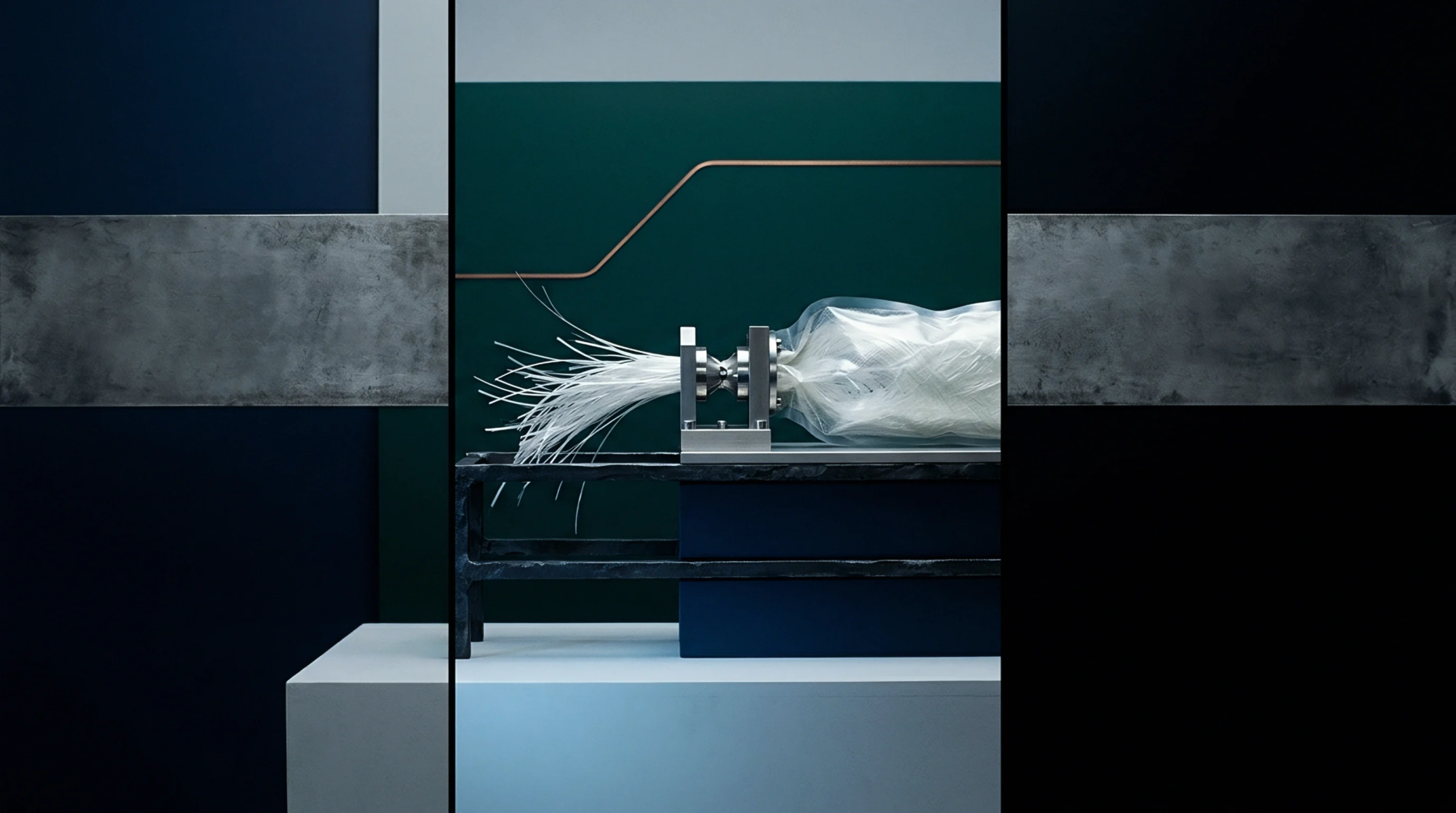
An extrusion defect appears as longitudinal splitting or bifurcation at the apex or edges of an extruded profile, tube wall, film tab or monofilament. Processing lines experience tip splitting when high melt elasticity, excessive shear stress, thermal gradients or uneven flow distribution forces molten resin to tear apart as it exits die land tips. The structural failure ruins profile geometry, degrades surface finish, compromises seal integrity in film converting and causes mechanical failure under low tensile loads.
Datasheet melt flow rate values fail to predict this dynamic defect because tip splitting depends on local die geometry and melt elasticity under high shear conditions.
Defect Mechanism
Extrudate exits die lips under high shear stress that stretches polymer chains beyond their tensile limit at sharp die radii. Dynamic forces induce tip splitting when melt strength is insufficient to resist cohesive failure at the profile tip or converging flow front. High regrind content introduces crosslinked gel particles and molecular weight variations that create weak boundary lines where tear propagation initiates.
Lowering extrusion speed reduces local shear rates and strain rates below critical tearing thresholds.
Tooling Influence
Die lip condition and geometric design directly dictate shear stress concentrations at profile edges. Unbalanced land lengths generate localized velocity differences that trigger tip splitting at thin geometric features. Radius polishing on die tips smooths sharp flow transitions, redistributing exit stress evenly across the profile cross section.
Heating die lips independently reduces melt viscosity at the exit boundary, suppressing tear initiation.
Production Prevention
Process adjustments balance melt temperature, barrel pressure, screw speed and draw ratio to keep exit stresses within acceptable bounds. Broadening molecular weight distribution or blending small amounts of high melt strength polymer increases tear resistance at die exit lips. Regular die lip inspection prevents wear patterns that concentrate stress and initiate profile defects.