Meaning
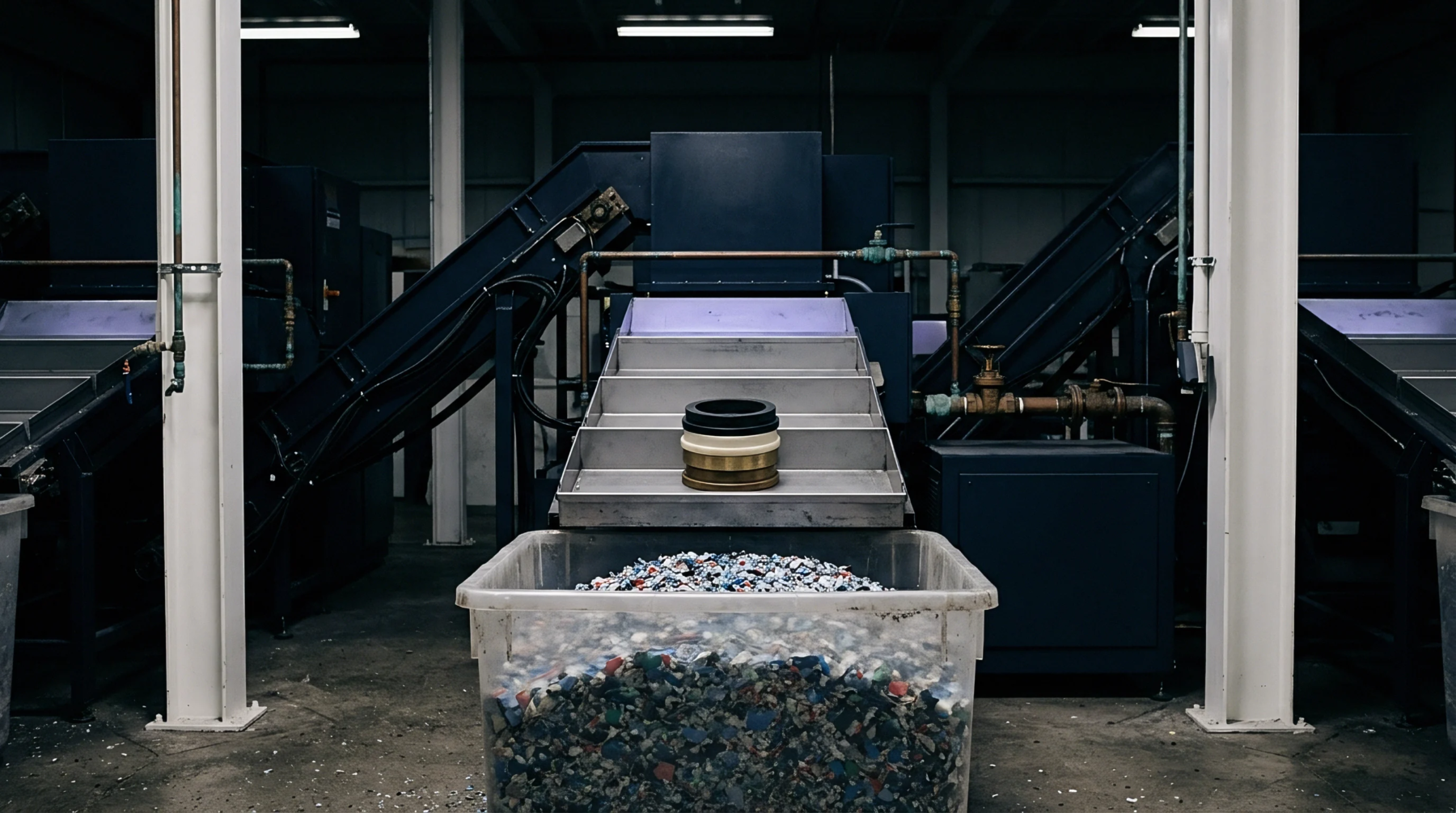
Multi-stage decontamination represents the high-intensity purification of thermoplastic scrap designed to restore polymer purity to virgin-equivalent levels. This super cleaning recycling process removes volatiles, inks, adhesives and metallic contaminants that standard washing systems cannot eliminate. The procedure occupies the bridge between basic mechanical size reduction and advanced chemical recovery.
Quality control relies on melt flow index consistency to confirm the removal of cross-linked molecules that impair mechanical properties.
Purification Dynamics
Molecular extraction happens inside a vacuum-vented extruder where thermal energy drives off absorbed impurities from the polymer matrix. These gaseous contaminants evacuate through specialized ports before the molten plastic reaches the filtration screen. The efficiency of the operation depends on the dwell time and the temperature profile maintained within the processing chamber.
A stable vacuum pressure guarantees that the extrudate remains free of micro-voids caused by trapped gases. Variations in these parameters lead to inconsistent resin grades and elevated levels of dark specks in injection moulded components.
Resin Specification
Virgin specifications represent the baseline for optical clarity and mechanical strength during final part validation. The regrind fraction introduced by this method carries a different profile due to the thermal history accumulated during previous moulding cycles. Datasheet values for viscosity reflect only the initial state of the raw material, whereas the actual performance of the recycled resin drops if the cleaning efficiency declines during a production run.
Processors select this grade of material to satisfy environmental standards without sacrificing the dimensional stability of high-tolerance mechanical housings.
Economic Boundary
Capital investment remains the primary barrier for adopting this technology because the machinery demands higher energy inputs than basic wash lines. Large scale facilities mitigate these costs by processing high-volume streams of post-consumer waste with minimal manual sorting. Smaller shops find that the price differential between standard regrind and this premium output dictates whether the use of recycled material makes financial sense for a specific product line.
Cost analysis must account for the lower yield inherent in the removal of persistent surface coatings and stubborn additives. Superior material recovery offsets the expense of disposal fees by transforming contaminated waste streams into saleable assets.