Meaning
Mechanical cavity wear localized within subterranean tunnel gates manifests as progressive dimensional enlargement and edge degradation from pressurized resin flow. In three-plate or two-plate automatic de-gating moulds, sub gate erosion occurs as the sharp metering edge and angled tunnel geometry wear down under frictional shear and abrasive contact. The erosion alters gate shear heating, de-gating break points, and cavity filling dynamics over high-volume production runs.
This degradation mechanism excludes catastrophic tool fracture, gate blockage by cold slugs, or chemical pitting caused by acidic decomposition off-gases.
Erosion Dynamics
Molten polymer forced through an angled subterranean tunnel experiences extreme shear rates as it approaches the cavity parting line. Abrasive additives, including chopped glass strands, carbon fibers, and mineral particulates, strike the tunnel ceiling and shear edges at acute impingement angles. This hydrodynamic slurry action induces sub gate erosion, washing away steel along the break edge and widening the tunnel cross-section.
The wear process accelerates exponentially once the hardened surface layer of a nitrided tool steel is breached, exposing softer substrate metal underneath. Tool wear patterns display asymmetric enlargement on the outside radius of the tunnel where centrifugal melt forces concentrate abrasive particles against the steel wall.
Production Consequences
Dimensional enlargement of the tunnel gate reduces localized shear heating, which alters melt viscosity entering the cavity and shifts the filling balance in multi-cavity moulds. Cavities suffering from advanced sub gate erosion fill faster, causing over-packing, localized flash, and uneven internal stress distributions across the mould layout. The primary functional failure appears during the automatic part ejection stroke when the part separates from the runner system.
Eroded, misshapen gates fail to shear off cleanly, causing the gate vestige to tear deep divots into the finished part wall or leave protruding burrs that exceed dimensional limits. High-speed automation systems shut down when jagged gate remnants snag in ejector pockets, preventing automated part clearance.
Tooling Remediation
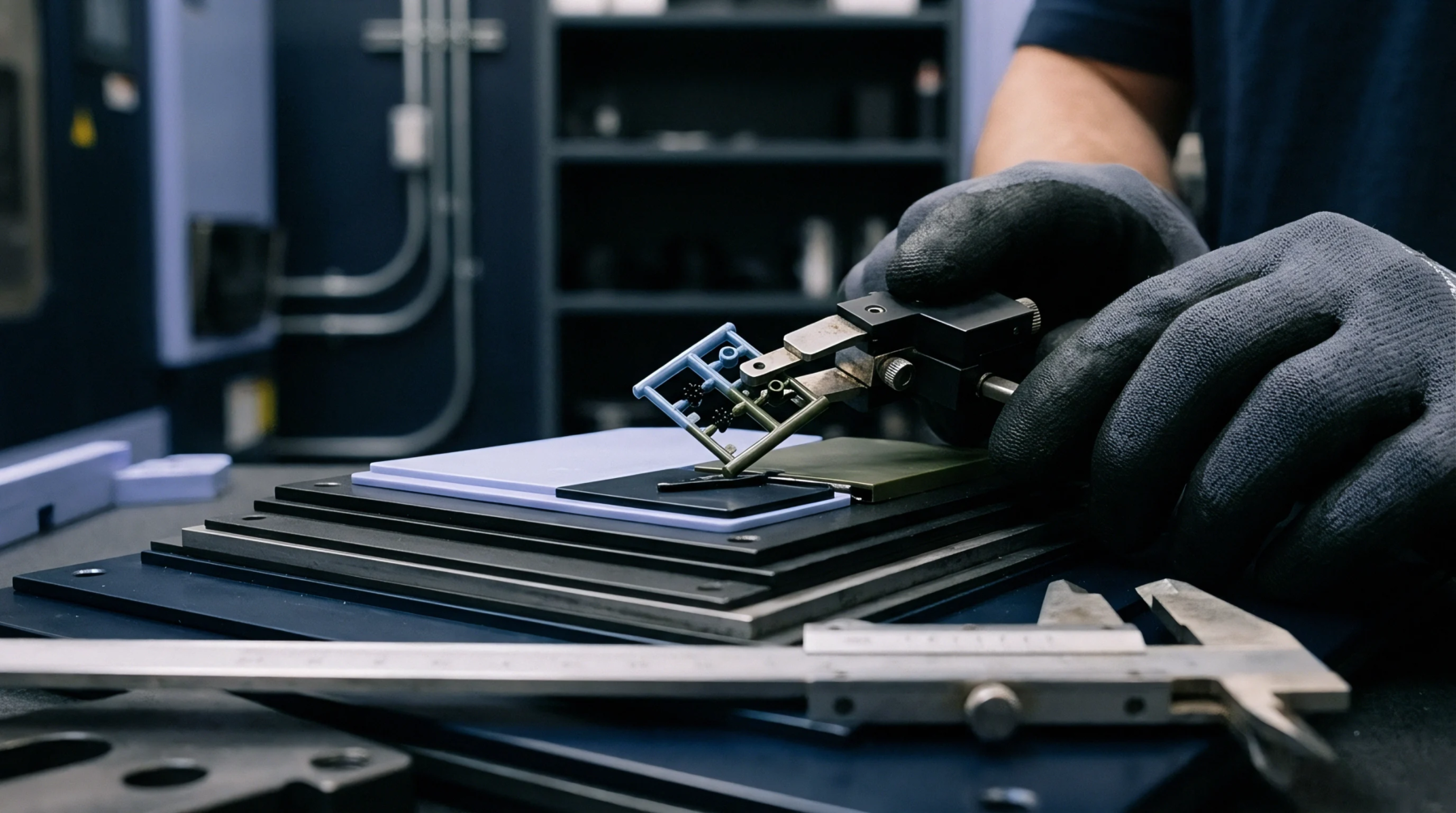
Correcting eroded subterranean gates requires precision tool room maintenance to restore the sharp edge geometry required for clean mechanical shearing. Tool builders bore out the worn tunnel area to install hardened sub-gate inserts or pre-machined carbide drop units that can be swapped without remaking cavity blocks. Process engineers monitor gate condition by measuring part vestige dimensions with optical comparators at defined cycle count intervals.
Dropping injection velocity through the gate entry using profiled injection stages reduces peak shear stress and slows the erosion rate of tool steel. When running highly abrasive compounds or recycled materials with inconsistent particle distributions, tool rooms select powder metallurgical steels hardened above 58 HRC to prolong gate production life.