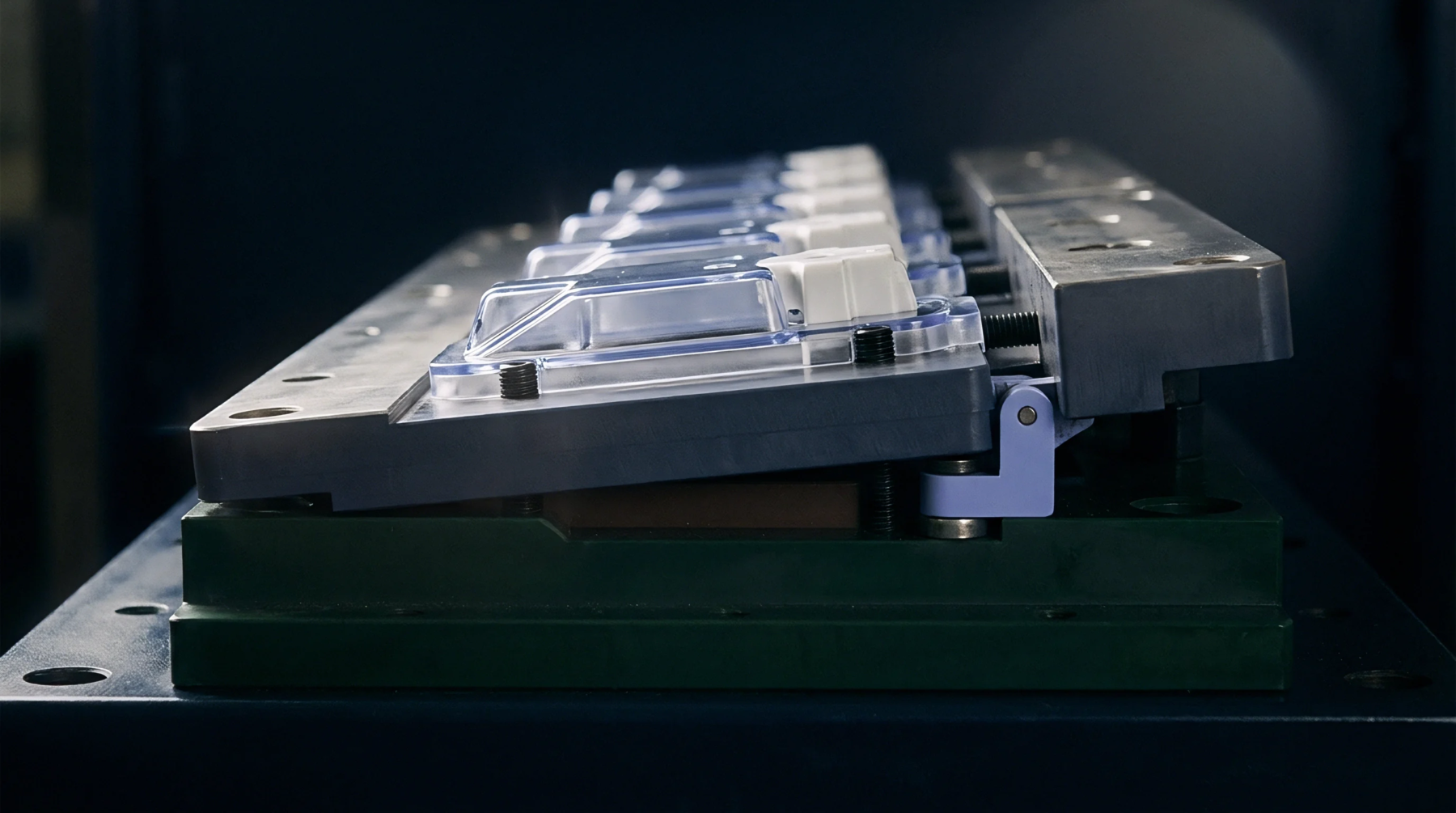
Meaning
An engineering threshold defines the maximum allowable closing force exerted by a moulding machine clamping system against a specific tool configuration. A steel-safe condition prevents the permanent deformation of mould faces and structural components by ensuring that the hydraulic or toggle pressure does not exceed the mechanical yield point of the metal. Designers calculate this limit based on the projected surface area of the part and the cavitation count of the tool.
Process Parameter
Moulders establish this limit during the initial setup phase of an injection cycle to prevent accidental damage during dry cycling or full-shot operation. A steel-safe condition protects the parting line from crushing if the controller receives an erroneous signal regarding material viscosity or volume. Technicians verify the setting by observing the clamp tonnage readout while the tool is closed empty.
Lowering this threshold provides a buffer that absorbs potential energy spikes during the solidification of the resin.
Economic Consequence
Excessive clamping force frequently leads to the premature peening of shut-off surfaces and the crushing of delicate core pins. Such damage creates costly downtime for manual welding and surface grinding of the tool steel. A steel-safe condition maintains the integrity of expensive cavities throughout long production runs involving high-pressure crystalline resins.
Moulding shops depend on this rigid enforcement to preserve the tolerance of thin-walled geometries across millions of cycles.
Material Relationship
Polymer viscosity dictates the minimum force required to hold the tool closed against the internal cavity pressure. High-flow amorphous resins require different parameters than glass-filled compounds because the latter exhibit higher shear resistance during the packing stage. A steel-safe condition governs the upper bound of this balancing act between flashing prevention and structural tool safety.
Proper application of these values ensures the tool survives the high-speed impact of modern reciprocating screw movements.