Meaning
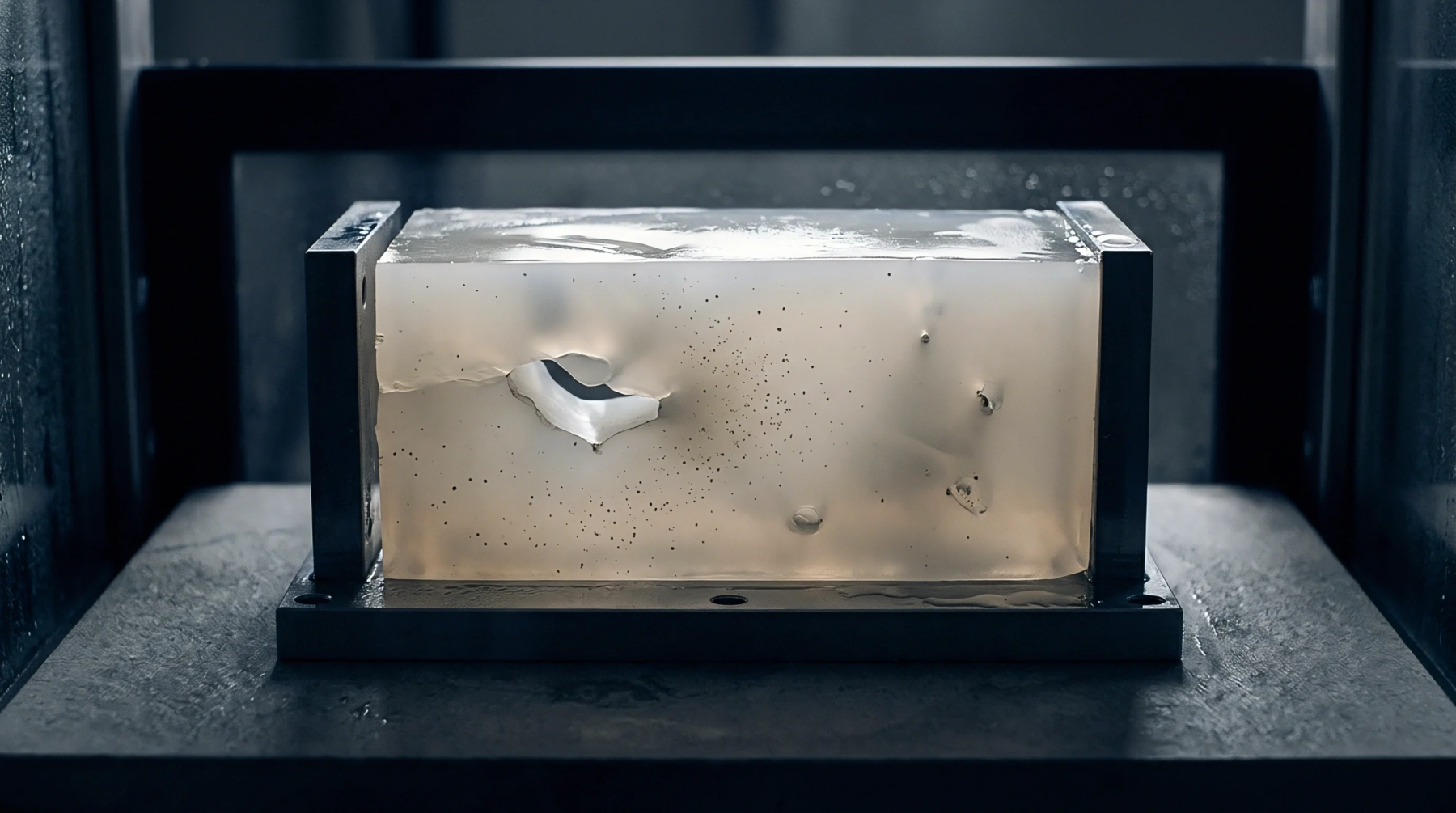
Elastic ratios of torsional or shearing stress to the resulting angular strain define the initial resistance of a solid polymer to shape distortion at constant volume. The shear modulus serves as the fundamental elastic constant governing part rigidity under twisting, sliding, and transverse bending loads. The parameter applies strictly within the linear viscoelastic limit where strain remains completely recoverable upon instantaneous release of applied force.
It ceases to govern behaviour once the plastic yield stress is exceeded, after which plastic slip and permanent molecular orientation dominate deformation.
Viscoelastic Dependence
Dynamic mechanical analysis measures this property across a sweep of temperatures and frequencies to map material phase transitions. The storage component of shear modulus drops by up to three orders of magnitude as a polymer passes through its glass transition temperature. Crosslinked elastomers maintain a stable plateau modulus above this transition, whereas linear thermoplastics soften into viscoelastic liquids suitable for melt processing.
Testing at elevated frequencies shifts the measurable modulus upward, simulating impact loading conditions during transit or drop testing.
Moulding Rigidity
Torsional stiffness calculations for ribbed mouldings and snap-fit assemblies depend directly on holding the specified value across production runs. A drop in shear modulus results in severe part deflection, stripped screw threads, and packaging seal leaks under continuous torque. Post-consumer recycled resins show noticeable variations in this property due to the cross-contamination of flexible polymers inside rigid matrices.
Mineral fillers such as talc or glass fiber raise the effective shear modulus by physically constraining polymer chain mobility under applied shear fields.
Datasheet Divergence
Raw material datasheets typically report the elastic tensile modulus determined at room temperature, deriving shear properties through theoretical Poisson ratio approximations. Such conversions fail in semicrystalline plastics where internal anisotropy from injection shear patterns creates directional stiffness variations across part walls. Parts molded with cold tooling exhibit low skin shear modulus due to incomplete crystallization during quench.
Verifying the actual modulus via torsional dynamic mechanical tests prevents premature structural failure in load-bearing plastic components.