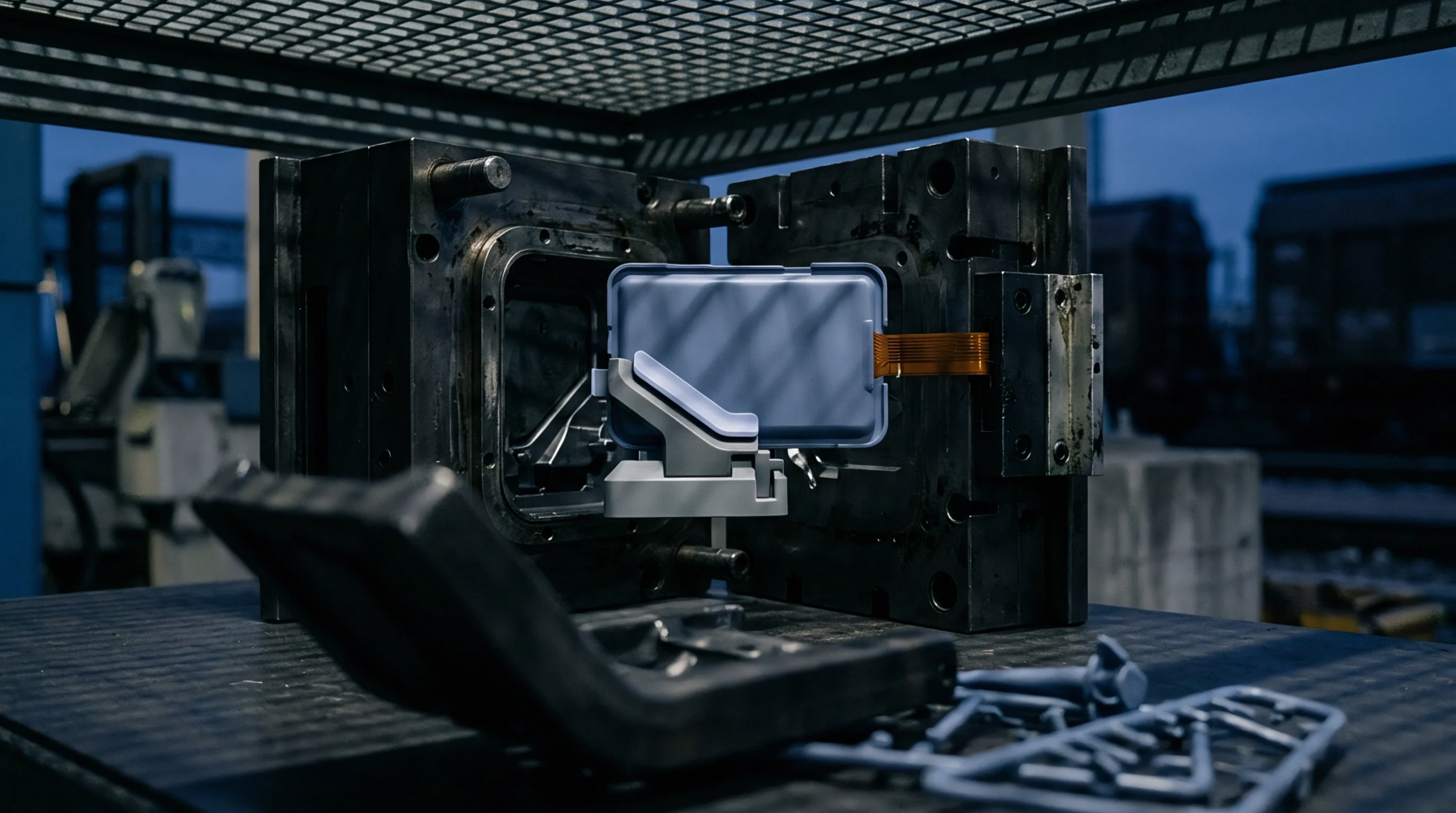
Meaning
Thermoplastic resins that contain both highly ordered crystalline regions and disordered amorphous zones are characterized by a distinct melting temperature and anisotropic shrinkage behavior. These materials, known as semicrystalline polymers, include widely used resins such as polyethylene, polypropylene, and polyamides. They exhibit a sharp transition from a solid to a liquid state during processing.
Structural Morphology
The ordered regions, called crystallites, form when the polymer chain folds during cooling from the melt. These structures are embedded in an amorphous matrix of entangled, disordered chains. The degree of crystallinity depends on the chain structure and the cooling rate during solidification.
Faster cooling limits the growth of crystallites, resulting in a lower percentage of crystalline regions and altered mechanical properties.
Processing Behavior
Moulding of these materials requires careful thermal management because the transition from melt to solid involves a substantial volume reduction. The crystalline regions pack more densely than the amorphous phase, causing higher volumetric shrinkage compared to fully amorphous resins. Processors must apply high holding pressures to pack the mold cavity and prevent sink marks or warpage.
This shrinkage behavior makes mould design more complex.
Performance Tradeoff
Higher crystallinity leads to increased yield strength, chemical resistance, and stiffness, but decreases impact strength and optical clarity. Unfilled grades are often opaque or translucent because the crystallites scatter light.