Meaning
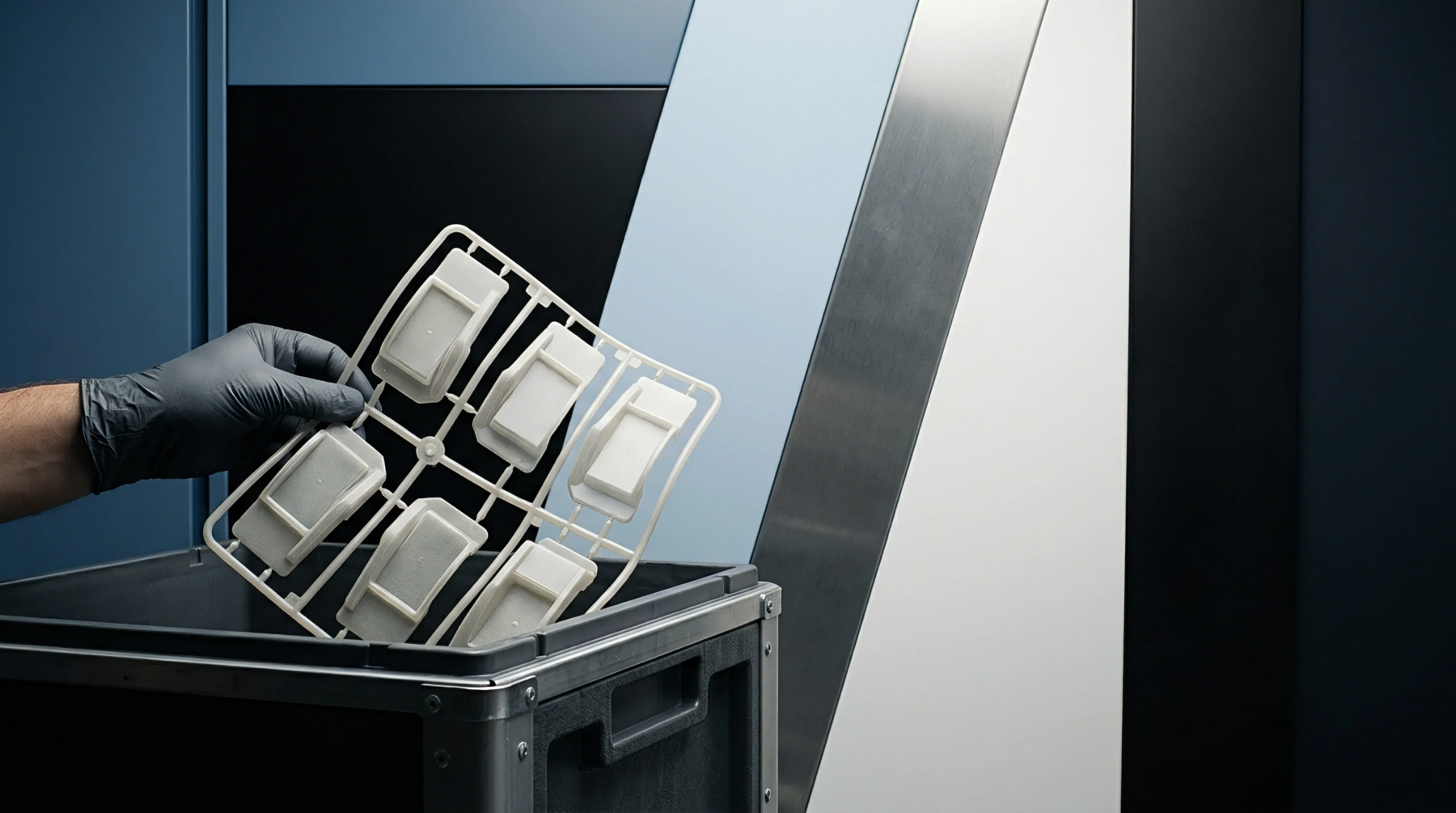
Mathematical comparison between the mass of the material in the delivery system and the mass of the final moulded component determines the material efficiency of a tool. Runner volume part ratio expresses the relationship between the plastic consumed by the cold runner system and the plastic that actually forms the usable part. A high ratio indicates that a large portion of the material is being used for the delivery system, which increases the cost per part.
Designers strive to minimize this ratio by optimizing the layout of the cavities and the diameter of the runners.
Material Cost
Spending rises when the runner volume part ratio is high because more virgin resin must be purchased to produce the same number of parts. While the runner can often be ground and reused, the energy cost of regrinding and the risk of contamination add to the overhead. Some high-value medical or food-grade applications do not allow the use of regrind at all.
In these cases, a poor ratio leads to a direct loss of expensive material.
Large Runners
Feed systems require more time to cool than the parts they feed, which extends the overall cycle time of the machine. The thickest section of the runner dictates when the mould can be opened without deforming the plastic. Reducing the runner volume part ratio often allows for faster cycles and higher machine throughput.
A well-designed hot runner system can reduce this ratio to near zero by keeping the delivery material in a molten state.
Efficiency Improvements
Success follows as the ratio drops.