Meaning
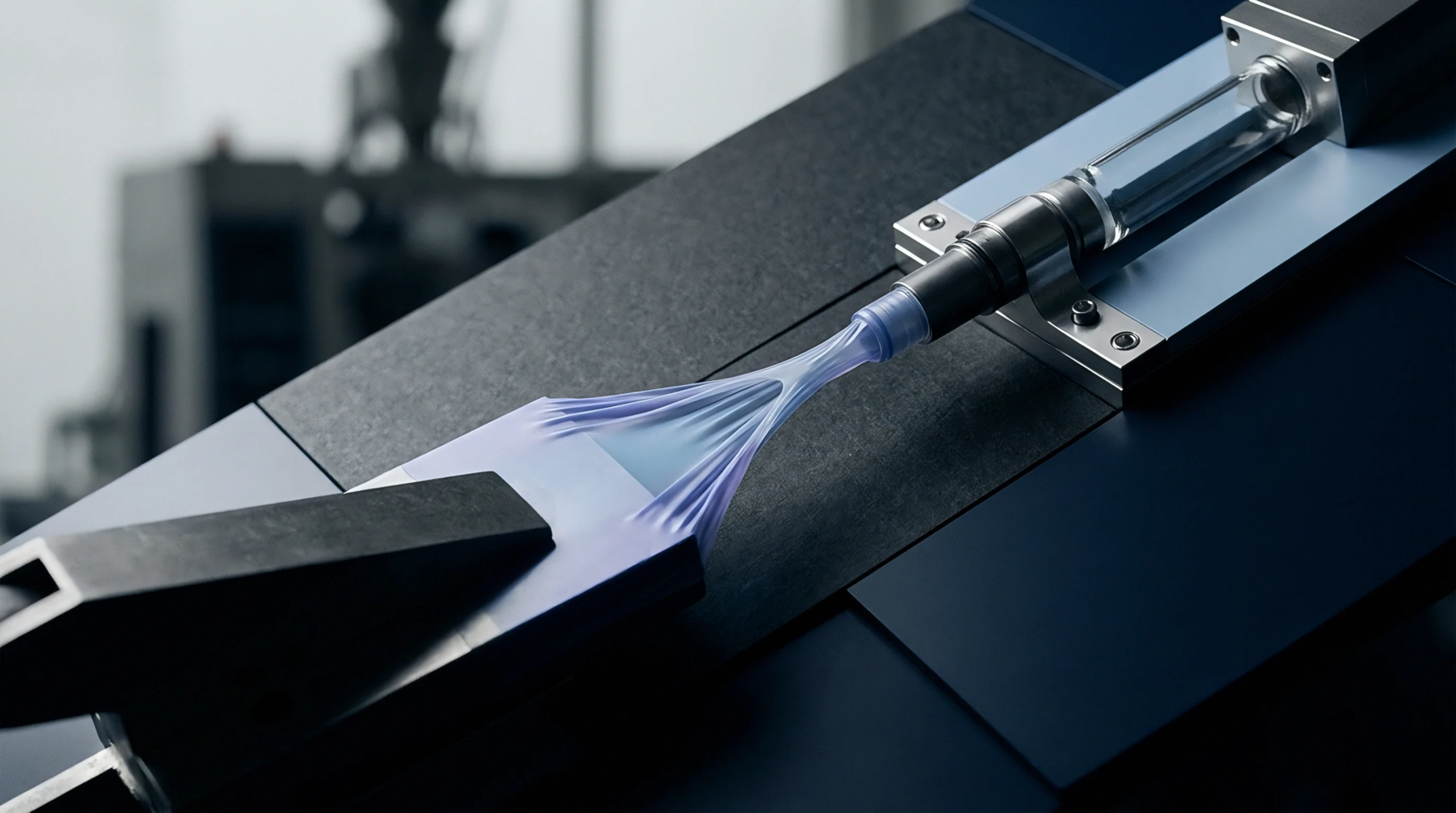
Low-pressure air injection during the initial stretch phase of a container-forming cycle shapes the heated preform before the high-pressure expansion occurs. This initial pneumatic force, termed pre-blow pressure, ranges between two and fifteen bar to guide the expanding polymer bubble as the stretch rod descends. It controls the axial and hoop distribution of the material before the final high-pressure blow locks the shape into the mould.
Operational Mechanism
Preform expansion begins when the stretch rod starts to move downward, drawing the heated resin toward the base of the bottle mould. During this mechanical extension, a controlled stream of air at the pre-blow pressure is introduced to prevent the polymer from sticking to the rod. The timing of this air introduction must be precise to ensure that the plastic does not touch the cold mould walls too early.
If the air is injected too soon, the material cools rapidly and cannot stretch fully, leading to an unbalanced wall thickness.
Quality Consequence
Uneven material distribution occurs when the initial inflation pressure deviates from the set process window. If the pre-blow pressure is too high, the preform inflates too rapidly, causing the top of the bottle to become thin while leaving the base excessively thick. Conversely, low air pressure fails to expand the preform away from the stretch rod, leading to cooling lines and localized stress points.
These issues reduce the top-load strength and impact resistance of the finished bottle, causing failures during filling.
Cycle Optimization
Process tuning requires a balance between stretch rod speed, delay times, and the pressure profile of the air system. Moulding engineers use pressure transducers to map the transition from the initial low-pressure stage to the final thirty-bar blow stage. Adjusting the pre-blow pressure allows the team to shift the material distribution toward areas that require more structural support, such as the neck or the base.
This optimization reduces the cycle time and allows the use of lighter preforms, which directly lowers the unit resin cost in high-volume production.