Meaning
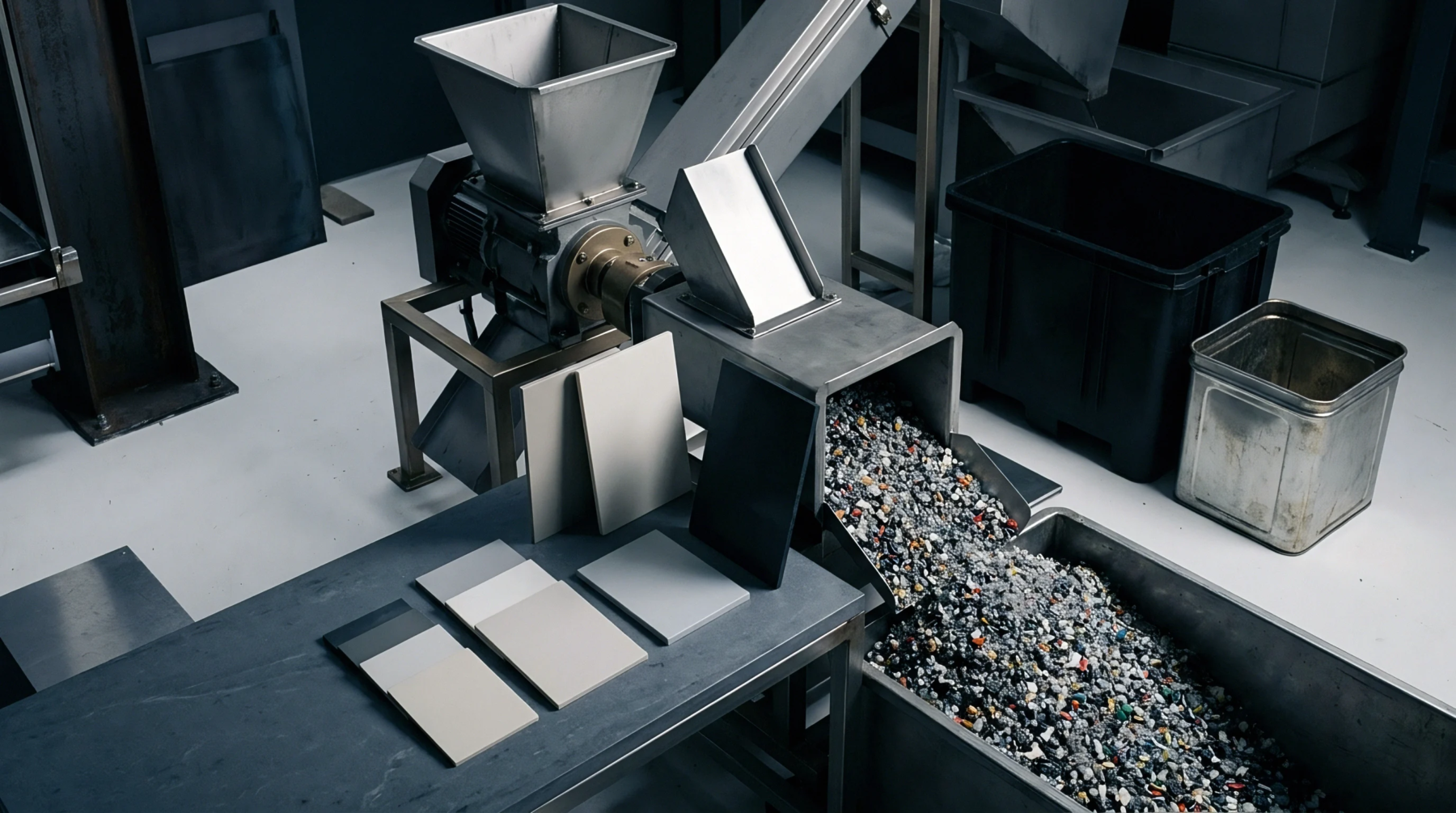
Recycled resin streams consist of high density polyethylene recovered from finished goods that have reached the end of their intended utility. Common sources of post consumer hdpe include milk jugs and detergent bottles that are sorted by colour and ground into flake. This material enters the supply chain as a lower cost alternative to virgin pellets.
Collection Stream
Curbside recycling programs provide the primary feedstock for these resins. Automated optical sorters separate the clear containers from pigmented ones to ensure colour consistency in the final regrind. Contamination from other polymers or labels remains a primary concern for the reclaimer.
Density separation in water tanks allows the polyethylene to float while heavier contaminants sink. This separation ensures the purity of the stream before it reaches the pelletizer.
Mechanical Processing
Wash tanks and friction cleaners remove residual liquids and adhesives from the shredded plastic. Drying and extrusion with high mesh filtration follow to create uniform pellets. The heat history of the material increases with every pass through an extruder.
Moulding Performance
Processors adjust machine settings to account for the wider molecular weight distribution found in recycled lots. Shrinkage rates vary more than they do with virgin resin. Melt flow index measurements must be taken for every incoming batch to prevent short shots or flashing.