Meaning
Structural arrangement defines how distinct thermodynamic segments organize within a heterogeneous polymer system during cooling from the melt. Phase domain morphology dictates the mechanical performance and chemical resistance of semicrystalline and block copolymer materials by governing the spatial distribution of ordered and disordered regions. Crystalline lamellae or dispersed soft segments create barriers to crack propagation when their internal geometry aligns with the direction of applied stress.
Thermal gradients across a mould cavity alter these microscopic configurations, forcing a shift in final part performance that virgin material specifications alone cannot predict.
Processing Dynamics
Secondary structure formation occurs during the transition from a liquid melt to a solid state as molecules attempt to pack into preferred configurations. This sequence starts when the cooling rate reaches the crystallization temperature, locking the spatial arrangement of chains into a fixed grid. Variation in the dwell time or the hold pressure changes the speed at which these segments settle, directly affecting the density of the resulting crystal domains.
Poorly controlled cycles permit erratic domain growth, leading to inconsistent shrinkage values that differ between the edge and the center of a moulded component.
Material Economics
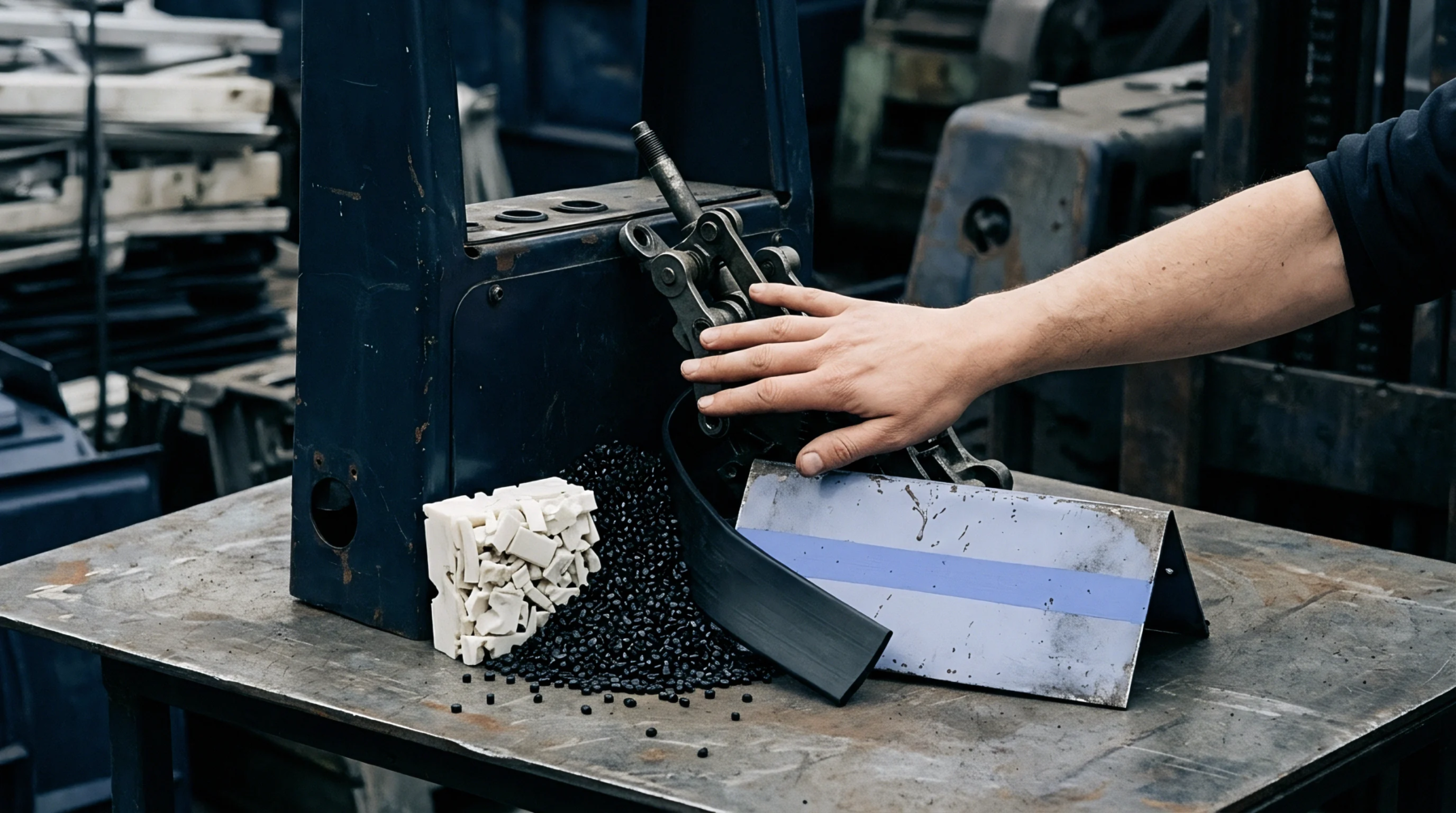
Regrind quality depends on the integrity of existing domain boundaries after repeated thermal exposure. Each heating cycle degrades the ability of chains to reorganize into the original phase domain morphology, causing a drop in the modulus and impact strength of the resin. Pure virgin resin maintains the optimal distribution of these structures, whereas contamination from high-melt-index fillers disrupts the symmetry of the domains.
Lowering the cost of a part by increasing the percentage of regrind inevitably demands a sacrifice in the consistency of these internal structures across production runs.
Quality Verification
Optical and thermal analytical methods provide the evidence needed to confirm that the internal architecture aligns with design tolerances. Differential scanning calorimetry measures the energy released during the transition of these segments, providing a record of how effectively the moulder controlled the solidification. X-ray scattering allows for the mapping of the orientation of these phases, which shows whether the moulding process induced unwanted anisotropy in the finished part.
Proper identification of the final domain structure prevents premature failure in applications subject to repetitive mechanical load or environmental chemical exposure.