Meaning
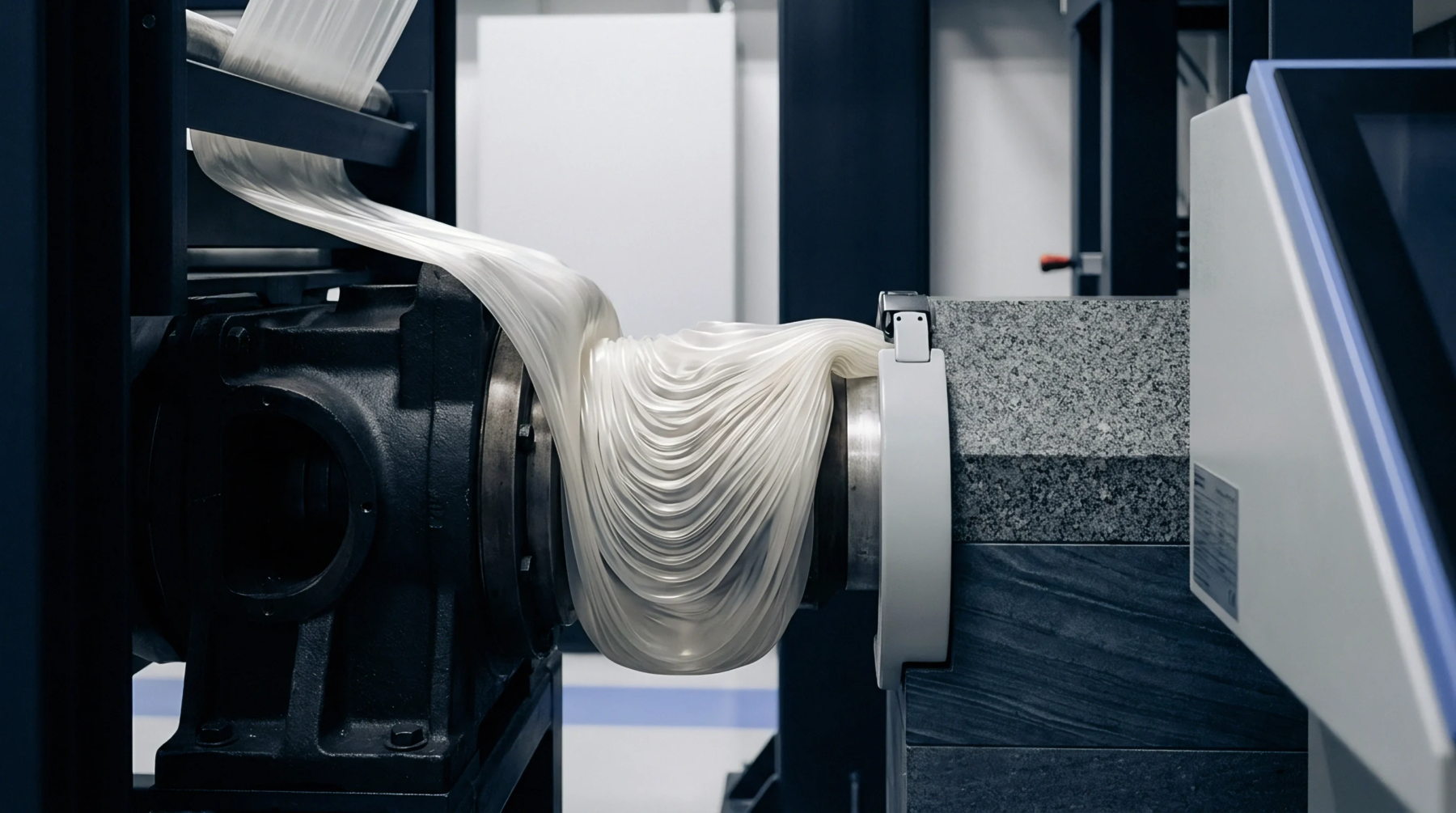
Shear thinning behavior under thermal stress defines non Newtonian melt rheology within polymer processing operations. Viscosity drops as the barrel pressure increases during injection moulding cycles. Molecular chains align parallel to the flow direction inside the runner system.
Polystyrene handles distinct rate dependencies compared to linear low density polyethylene during extrusion. Molecular weight distribution dictates the specific flow curve for each resin lot.
Thermal Profile
Barrel heaters maintain precise temperature gradients to prevent localized polymer degradation prior to mould entry. Shear rates spike inside narrow gate geometries during rapid cavity filling stages. Melt temperature variation alters the measured viscosity value independently of applied pressure.
Process technicians adjust feed zone temperatures to stabilize shot weights across long production runs.
Shear Sensitivity
High injection speeds generate extreme frictional heat within runner channels. Polymer chains disentangle rapidly under heavy mechanical stress during screw rotation. Viscosity drops sharply as the shear rate increases within the nozzle tip.
Part dimensions shrink unevenly when material relaxation rates fail to match cooling speeds.
Viscosity Control
Incoming resin lots require capillary rheometer testing to establish baseline processing parameters before shop floor deployment. Virgin pellets maintain predictable flow indices while regrind batches exhibit broader molecular weight distributions. Melt fracture occurs when extrusion speeds exceed the critical shear threshold for high density polyethylene.
Production scrap rates decrease when machine operators compensate for batch to batch viscosity shifts by modifying holding pressures.