Meaning
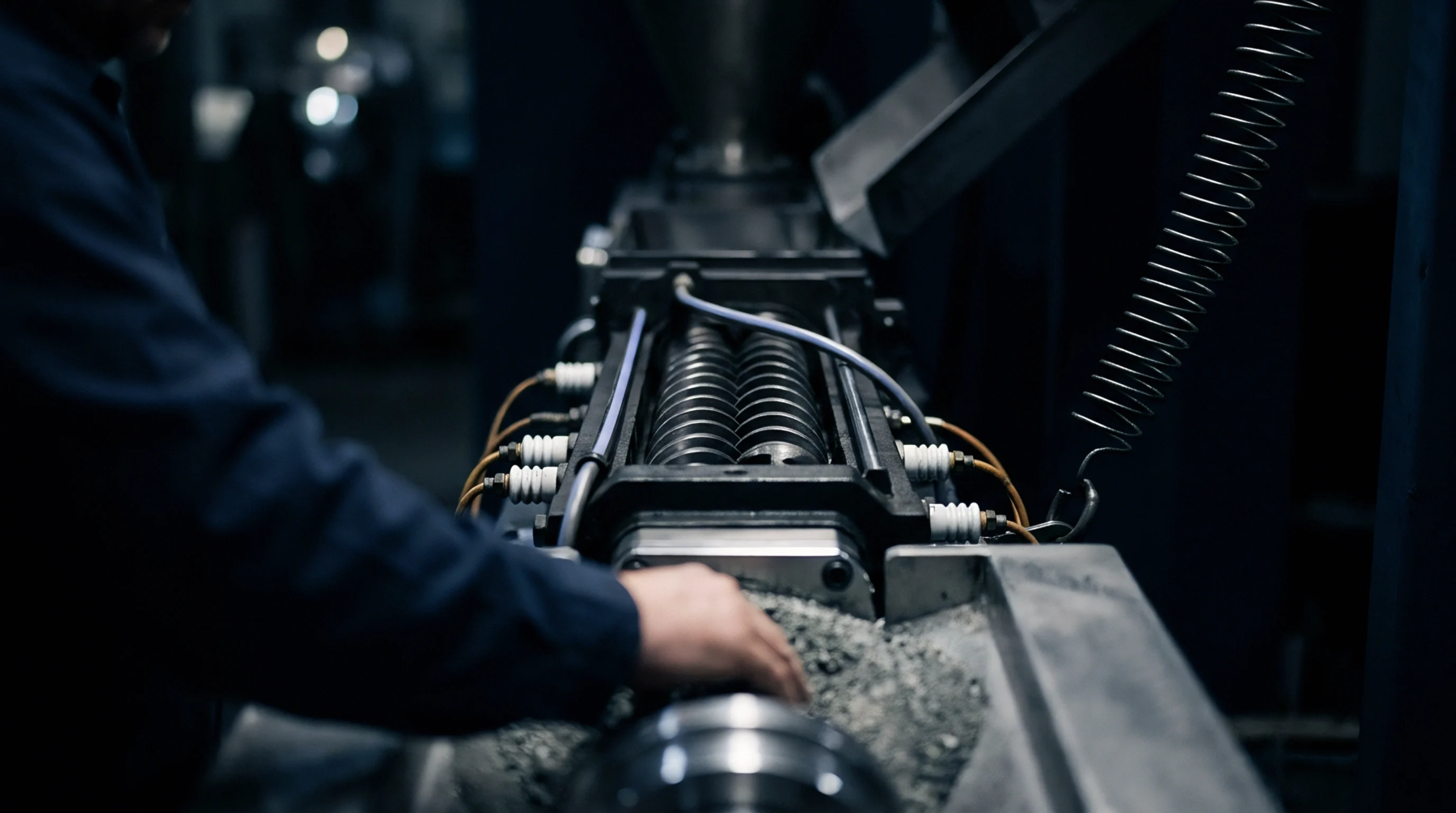
Extruder screws require a localized restriction in the flow path to prevent the escape of gases or vacuum loss through the feed section. The melt seal geometry consists of a highly restrictive screw element or a reverse flight that forces the polymer to fully fill the screw channels. This filled section creates a continuous barrier of molten plastic.
Screw Configuration
Double screw compounding lines utilize specific kneading blocks and restrictive mixing elements to generate the necessary melt seal geometry. In this region, the screw channels transition from being partially filled to being completely filled with compacted polymer melt. This transition must be located before the degassing zone to isolate the vacuum chamber.
Pressure Isolation
Vacuum systems on devolatilizing extruders cannot function without a solid barrier to separate the atmospheric pressure zone from the vacuum zone. The melt seal geometry ensures that the deep vacuum applied downstream does not pull air from the hopper or feed throat. If this seal fails, air leaks degrade the polymer.
Processing Stability
Unstable melt seals cause pressure fluctuations that lead to surging and inconsistent output rates at the die. If the polymer does not melt uniformly, the melt seal geometry will periodically break and reform, disrupting the entire extrusion process. Ensuring a stable melt seal requires precise control over barrel temperatures and feed rates, which helps to maintain the molten barrier and guarantees a steady flow of material to the die head.