Meaning
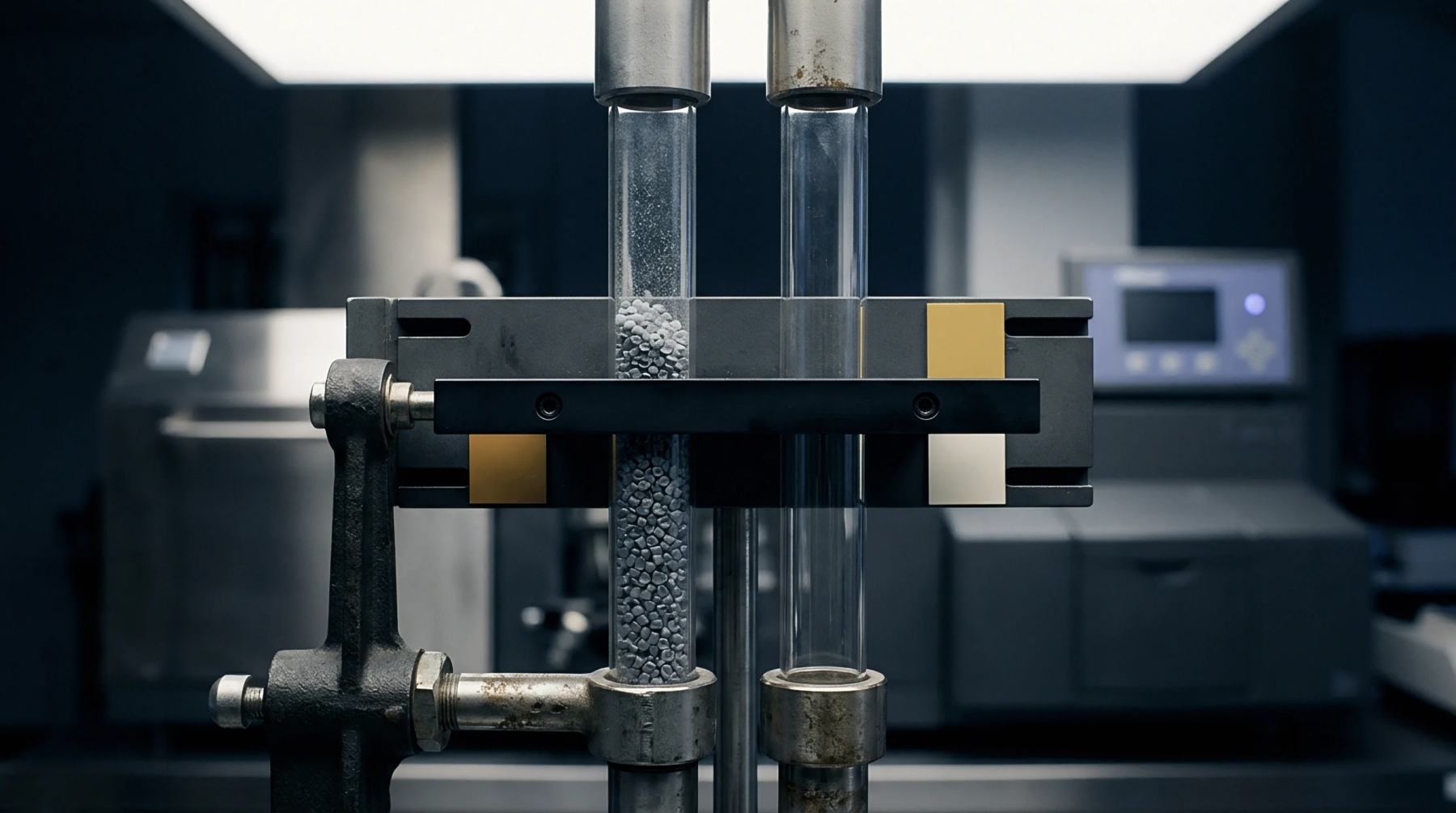
Specimen preparation via compression moulding produces flat sheets of uniform thickness for standardized material evaluation. A hot-pressed plaque represents the primary sample format for characterizing the physical, optical, and chemical properties of a virgin or recycled resin. It provides a flat, isotropic material sample that is free from the molecular orientation and shear stresses typically introduced by injection moulding.
This makes it highly suitable for testing intrinsic material properties rather than part-specific behaviour.
Thermal Processing
Moulding procedures involve heating a measured quantity of polymer pellet or powder between two heated plates under pressure. This process forces the polymer to melt and flow into a metal frame of defined thickness, which is then cooled at a controlled rate to establish a uniform crystalline structure. The resulting hot-pressed plaque has a controlled thermal history, which is essential for obtaining reproducible tensile and impact test results.
Structural Uniformity
Physical testing depends on the absence of internal voids and surface defects in the prepared sheet. When preparing a hot-pressed plaque, air bubbles can become trapped if the clamping pressure is applied too rapidly or if the temperature is insufficient. These defects act as stress concentrators, which cause premature failure during mechanical testing and artificially lower the measured strength of the polymer.
Mechanical Testing
Cutting dies are used to stamp out tensile bars or disk specimens directly from the cooled sheet. This guarantees that each specimen has identical dimensions and smooth edges.