Meaning
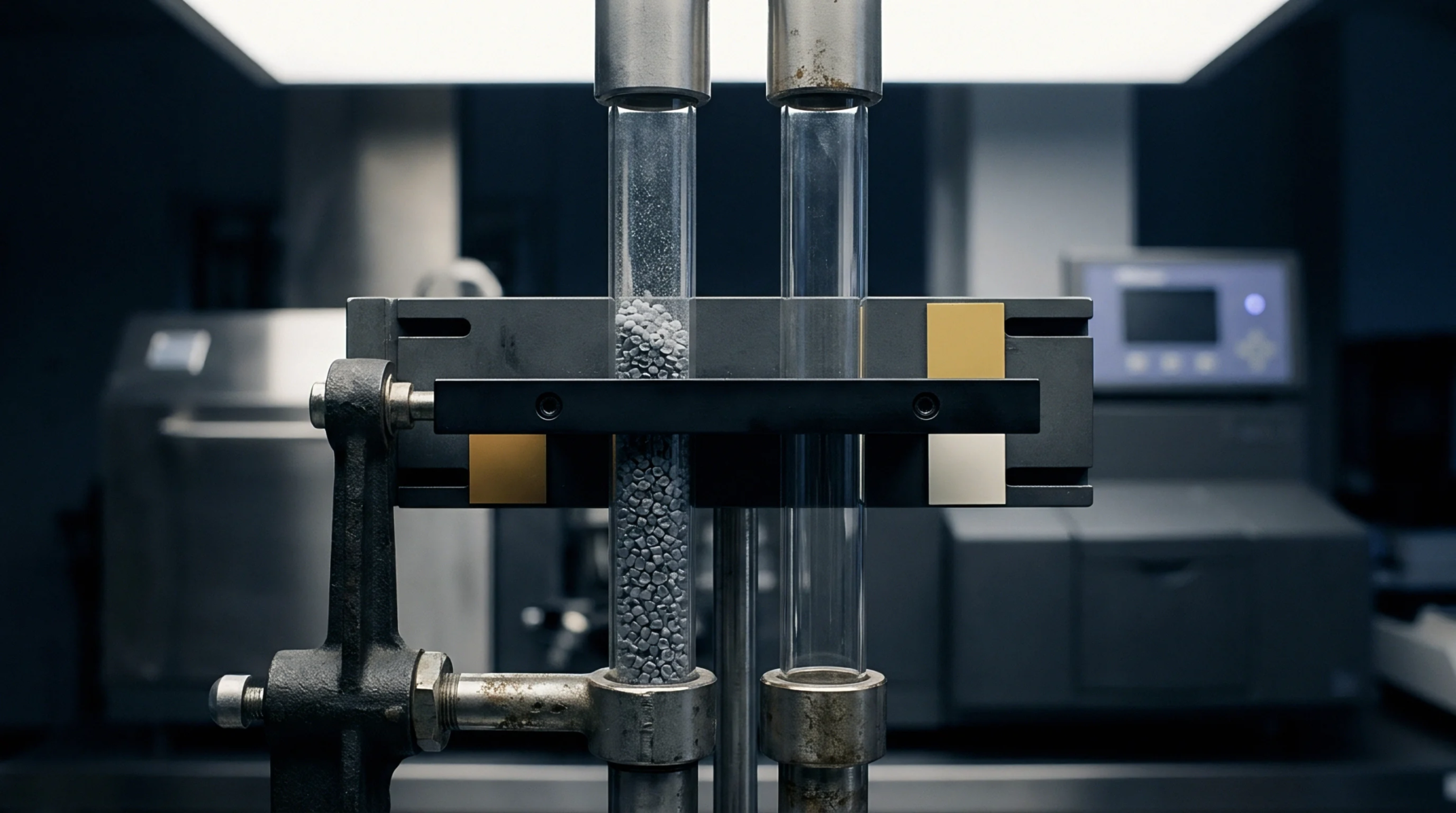
Optical insertion hardware designed for direct thermal and structural profiling inside polymer melts during injection cycles is commonly known as a gradient index lens probe. Polymethyl methacrylate or specialized chalcogenide glass compositions form the internal optic train, which translates internal refractive index gradients into measurable shifts in optical path length. Resin melt temperatures and localized shear stresses dictate the operational threshold of the assembly, beyond which thermal degradation compromises the refractive gradient.
Thermal Calibration
Optical throughput inside injection barrels depends entirely on stable core temperature profiles across the optical tip. Barrel heaters transfer energy through steel walls into the flowing polymer, and thermocouple arrays monitor the outer boundary while the gradient index lens probe measures internal core deviations. Melt viscosity drops when local overheating occurs, shifting the focal point of the internal lens element and producing false readings on the data acquisition screen.
Processing technicians calibrate the output against known reference standards before every production run to separate true molecular density changes from thermal expansion artifacts in the probe housing.
Resin Verification
Virgin polycarbonates demand precise control over moisture content during the drying phase to prevent hydrolytic chain scission inside the plasticising unit. Regrind incorporation alters the melt flow rate unpredictably, forcing the gradient index lens probe to detect localized density variations caused by degraded polymer chains. Virgin material exhibits uniform refractive behavior under high shear rates, whereas contaminated batches scatter light differently across the optical interface.
Quality controllers reject lots that show excessive refractive variance during the initial shot, avoiding costly sink marks and structural weakness in the finished moulding.
Defect Prevention
Internal voids and weld lines weaken structural moulded components when cooling rates fluctuate across thick wall sections. Cooling channels inside the mould steel must extract heat evenly to prevent differential shrinkage, and the gradient index lens probe tracks the progress of the solidification front in real time. Injection pressure adjustments follow immediately when the probe registers premature freezing near the cavity walls, preventing localized residual stresses from causing part distortion after ejection.
Process stability improves measurably when optical feedback replaces traditional timer based cavity pressure monitoring for high precision engineering components.