Meaning
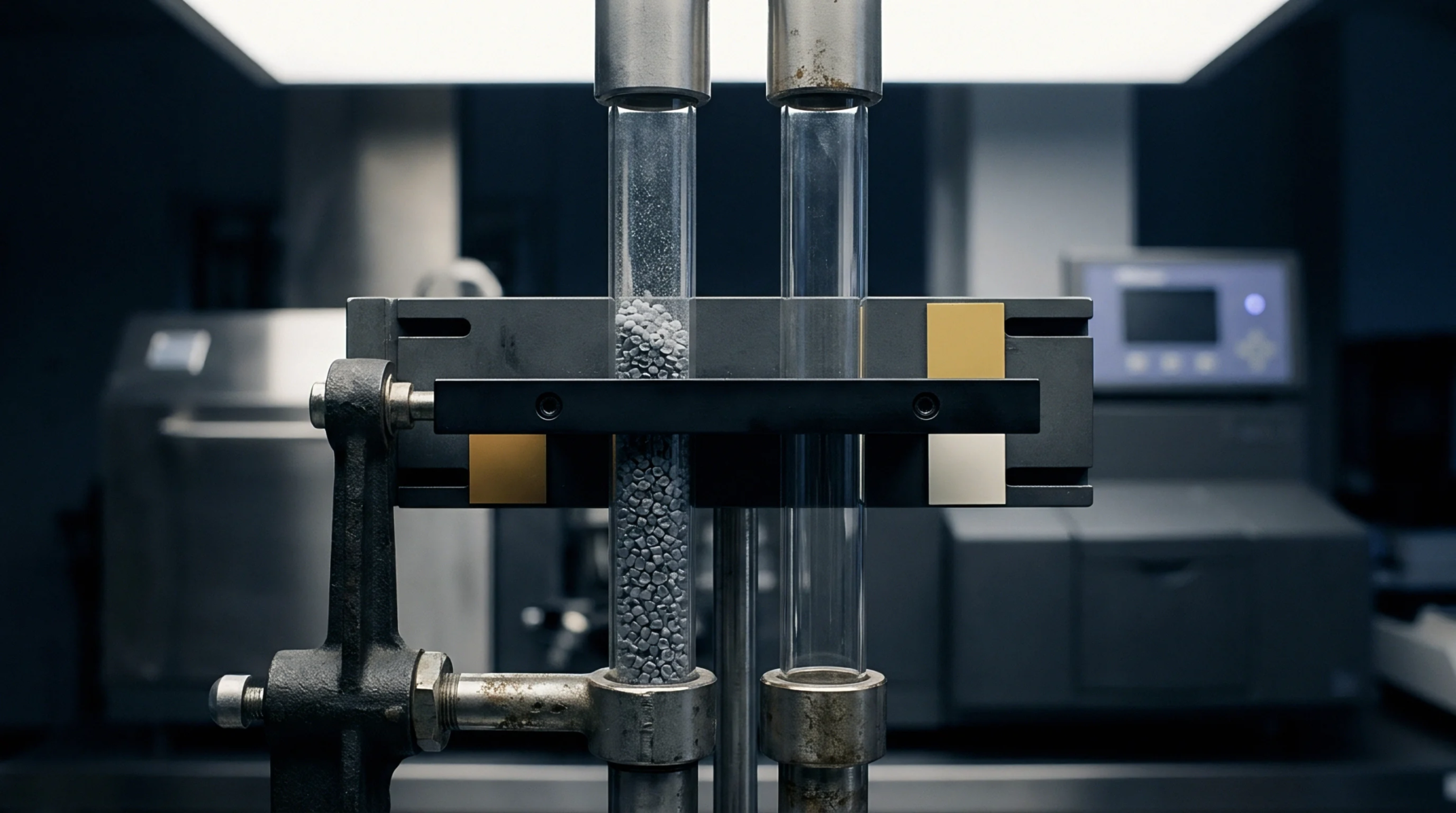
Composite materials consisting of a thermoplastic matrix embedded with high-strength silicate fibers represent a standard industrial solution. In injection moulding, glass reinforced polymer increases the flexural modulus and thermal stability of the moulded part. These materials are used where unfilled resins would deform or fail under mechanical load.
Fiber Orientation
Flow paths during the injection phase determine how the reinforcement aligns within the mold cavity. Near the gate, fibers tend to align parallel to the flow direction, while in wider sections they may orient randomly or transversely. This alignment causes anisotropic properties, meaning the part is much stronger along the flow line than across it.
Anisotropic Shrinkage
Differential cooling rates between the polymer matrix and the rigid fibers create dimensional challenges. Parts with varying fiber orientation often warp because the fibers do not shrink.
Moulding Cost
Tool wear increases when processing abrasive reinforced materials. High-speed flow of the hard fibers erodes the steel walls of the mold gates and the screw flights of the injection molding machine. Moulders must budget for hardened tool steels or protective coatings to prevent premature degradation of the molding equipment, which increases the initial capital cost of the project, especially when using high fiber loadings such as forty percent or more.