Meaning
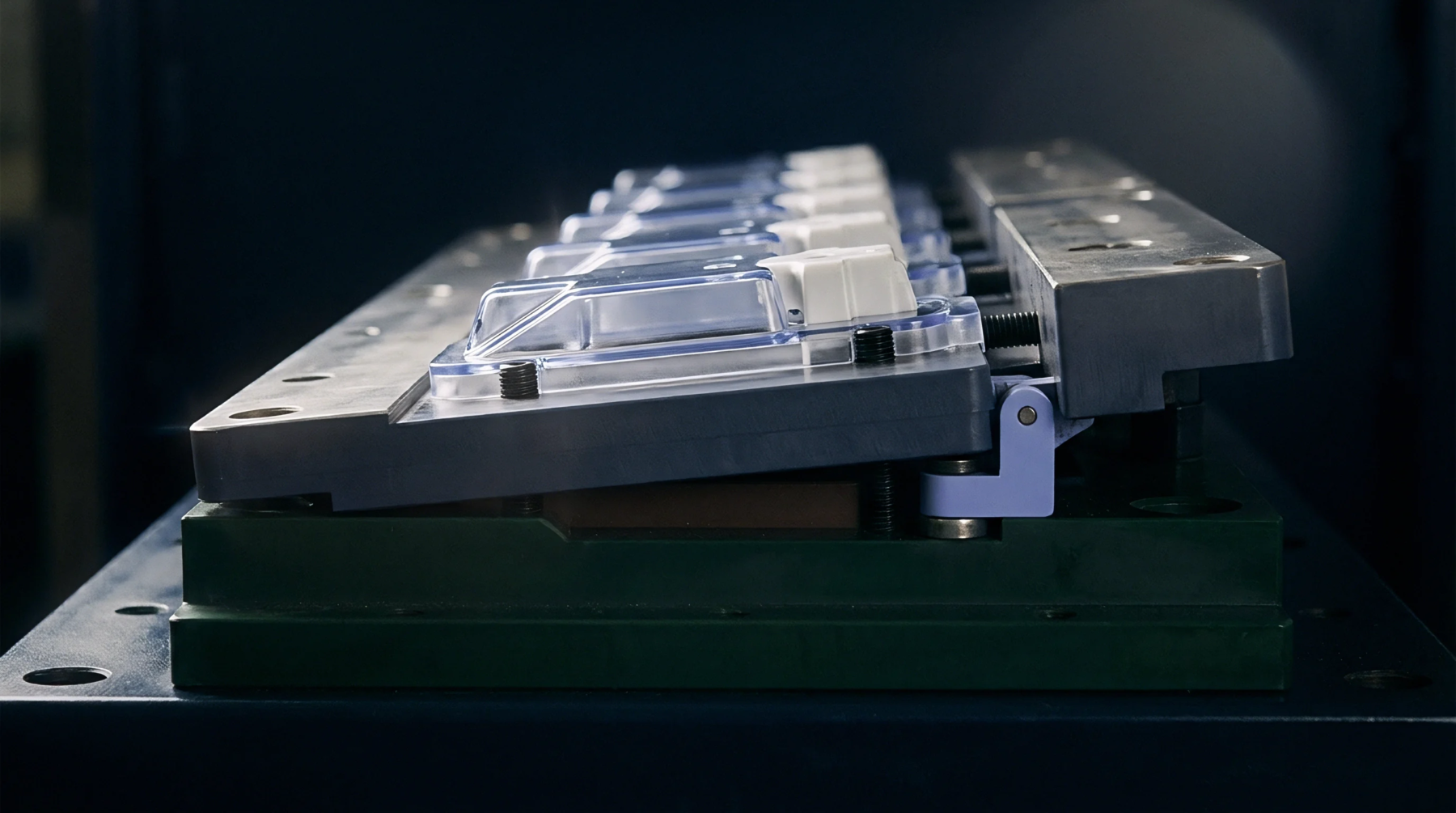
Hardened alloy matrix selection dictates the rigid resistance against elastic deflection that a mould cavity experiences under high injection pressures during thermoplastic processing. Flexural modulus tool steel defines the mechanical stiffness parameter governing how much a high-pressure mould core or cavity wall will deflect when molten polymer enters the tool at packing pressures often exceeding one hundred megapascals. This structural property applies exclusively to the metal tooling side of the thermal forming cycle rather than the polymer pellet or moulded part itself.
The boundary where this parameter stops applying sits at the point of thermal fatigue and micro-cracking, beyond which elastic deformation yields to permanent plastic strain or catastrophic brittle fracture.
Alloy Stiffness
Tooling durability depends directly on the elastic modulus of the chosen grade, which typically ranges from two hundred gigapascals to two hundred ten gigapascals across standard heat-treated martensitic grades. Higher alloy purity and optimized carbide distribution prevent localized sagging in thin core pins during repeated high-tonnage clamping sequences. Datasheet values for metal rigidity remain constant under room temperature laboratory testing, yet shop floor conditions introduce thermal gradients that alter actual deflection resistance inside the running mould.
Moulders frequently compensate for lower baseline rigidity by adding structural backing plates or increasing wall thickness around high-aspect-ratio cavities to prevent flash and dimensional drift in the final part.
Resin Deflection
Polymer melt viscosity interacts directly with metal rigidity when high-flow engineering resins require rapid injection speeds to fill thin-walled geometries before freezing occurs. If the metallic cavity wall exhibits excessive compliance under the resulting hydraulic load, the final moulded component gains unintended wall thickness variation and geometric distortion across the parting line. Part specifications require tight dimensional tolerances that become unachievable when core deflection exceeds fractional millimeter limits during the volumetric packing stage.
Virgin polymer grades with consistent melt flow rates allow predictable cavity loading, whereas regrind incorporation introduces viscosity shifts that generate unpredictable localized pressure spikes against the tooling walls.
Thermal Maintenance
Cavity distortion risks escalate when cooling channel placement fails to dissipate heat uniformly, creating thermal expansion differentials across the metal matrix during continuous cycling. High-speed production runs generate internal stresses that degrade the effective stiffness of the steel over extended operational lifetimes, leading to gradual creep and progressive part out-of-spec rejection rates. Tooling maintenance protocols monitor this dimensional stability through periodic laser scanning of critical cavity dimensions during scheduled press downtime.
Proper tempering during initial tool fabrication locks in the required martensitic structure to sustain high flexural demands without premature fatigue failure.