Meaning
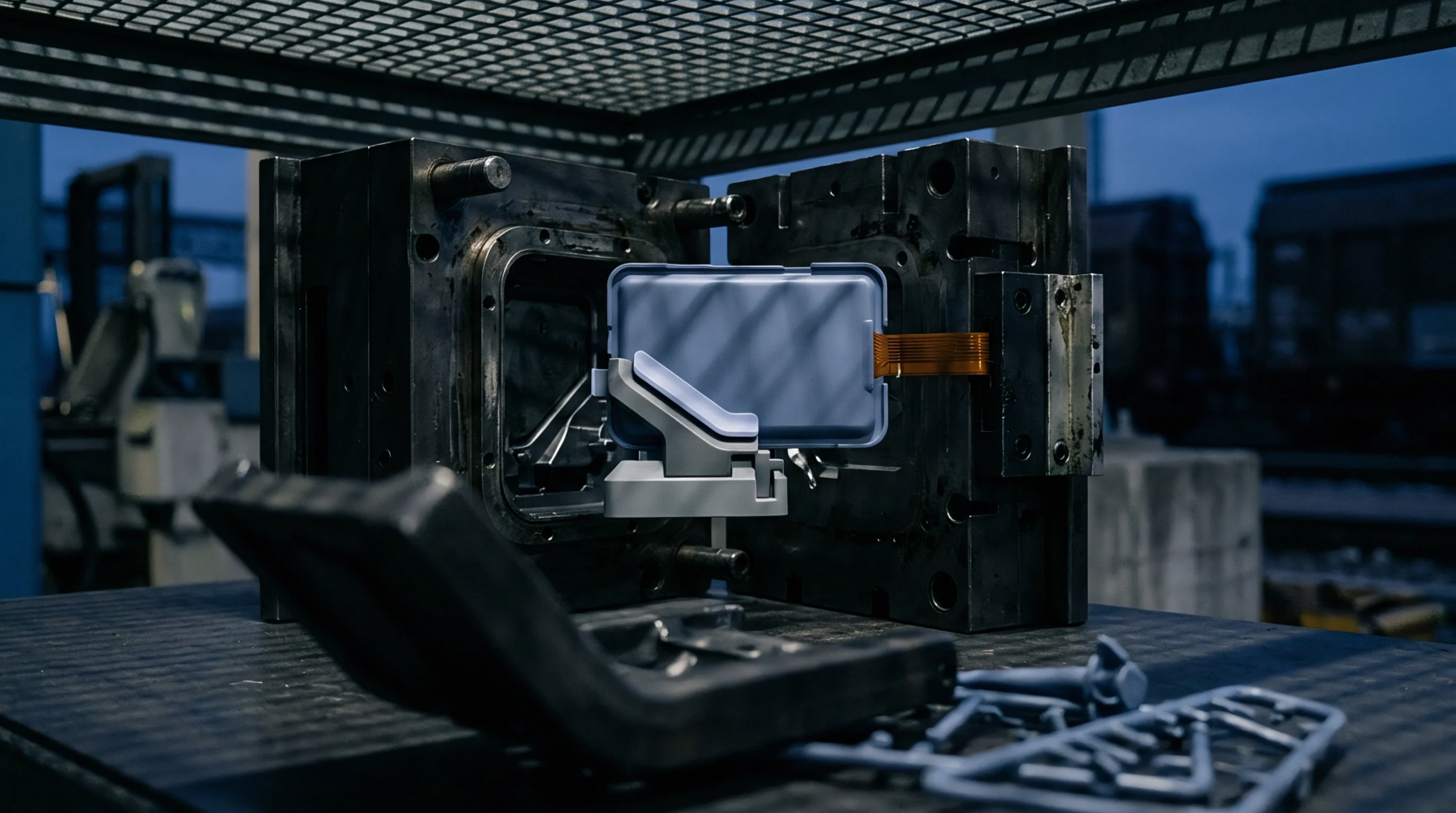
Infrared radiation sensors utilizing flexible glass or plastic filaments allow for the measurement of melt temperatures inside the nozzle or cavity without direct electrical contact. This technology captures the thermal energy emitted by the polymer and transmits it as an optical signal to a remote detector. Because fiber optic pyrometry does not require a probe to sit in the flow, it avoids the shear heating and pressure errors common with thermocouples.
Sensor Integration
The optical probe is installed behind a pressure-resistant window or flush with the wall of the melt stream. This arrangement protects the delicate fibers from the high pressures and abrasive fillers found in engineering resins.
Signal Transmission
Light travels through the fiber with very little attenuation, allowing the electronics to be located away from the heat of the molding machine. The system converts the light intensity into a temperature reading based on the emissivity of the specific polymer. This digital output can be used by the machine controller to make instantaneous adjustments to the barrel heaters.
Measurement Accuracy
Response times are much faster than traditional contact sensors, capturing thermal spikes that occur during the high-speed injection phase. This speed allows for the detection of melt degradation or non-uniform heating within a single shot. Processors use this data to fine-tune the screw speed and back pressure for optimal melt homogeneity.