Injection Mold Parting Line Wear Inspection Basics
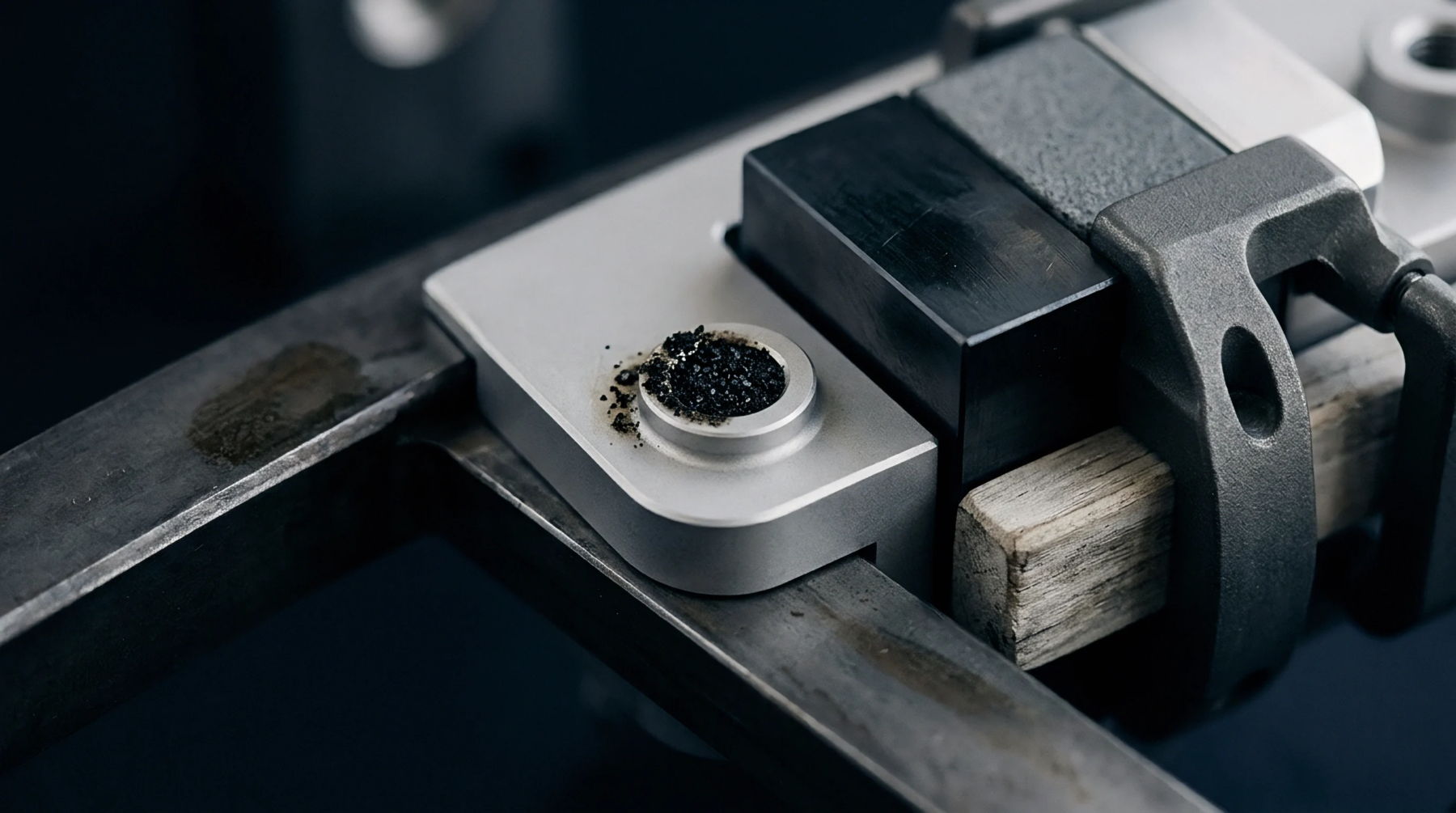
Inspect parting line wear using optical blueing and depth micrometer checks to catch shutoff hobbing before flash exceeds 0.03 mm.
Injection molding equipment relies on active pressure regulation systems to maintain sufficient platen contact during the high-velocity phase of melt delivery. Dynamic clamp force represents the active modulation of tonnage exerted by the machine to counter internal cavity pressure spikes that otherwise force the mold halves to separate. The value defines the minimum threshold required to prevent flash formation while avoiding structural fatigue on the tie bars.
If the system fails to match the instantaneous surge of injected material, the mold parting line shifts and allows excess resin to escape the intended geometry. This metric prevents damage to tooling surfaces that occurs when high-velocity plastic impacts a non-yielding mold interface.
Hydraulic control loops monitor the internal pressure of the primary mold cavity to adjust clamping tonnage in real time. Controllers sense a rising peak during the transition from packing to holding phases and adjust the hydraulic oil flow to maintain steady pressure against the mold face. Faster cycles increase the frequency of these adjustments while placing heavier demands on the proportional valves.
A mismatch between injection speed and the response time of the clamping cylinders creates a momentary gap. Parts produced under inconsistent pressure cycles exhibit variable dimensions and inconsistent surface finishes. Constant monitoring ensures the platen remains stable even as the melt cools and solidifies within the cavity.
Resin viscosity influences the degree to which a machine must vary its mechanical output throughout the injection sequence. Amorphous materials demand high holding pressures to compensate for shrinkage, which in turn forces the clamp to sustain peak loads for a longer duration. High filler content in the raw material increases the stiffness of the part, requiring more rigid clamp control to avoid localized mold deflection.
Moulders distinguish between a datasheet value provided by the resin supplier and the actual force a specific machine holds across a production run. Virgin resins perform predictably, whereas the inclusion of regrind introduces flow variations that require more aggressive clamp adjustments to maintain dimensional stability. Excessive clamp settings consume extra electrical energy and accelerate the wear of platen bushings.
Precise control of tonnage provides a barrier against the formation of parting line flash. Parts show dimensional drift when the clamp system fails to compensate for internal pressure fluctuations during the final seconds of injection. Operators measure the weight of the shot to identify whether pressure loss allows resin leakage at the seams.
Stable contact between the mold halves ensures that wall thicknesses remain uniform across all cavities in a multi-cavity tool. Proper adjustment of this parameter reduces the necessity for secondary trimming operations that add cost and time to the manufacturing cycle. Mechanical reliability hinges on the ability of the clamp to respond to every pressure peak without hesitation.
The consistency of this force determines the final tolerance capacity of the molded article.
Inspect parting line wear using optical blueing and depth micrometer checks to catch shutoff hobbing before flash exceeds 0.03 mm.
Expertise is a utility, not a secret. sentiention™ publishes its working knowledge as open reference: intelligence layer covering the materials it sources, the markets it enters, and the reference that serves both.