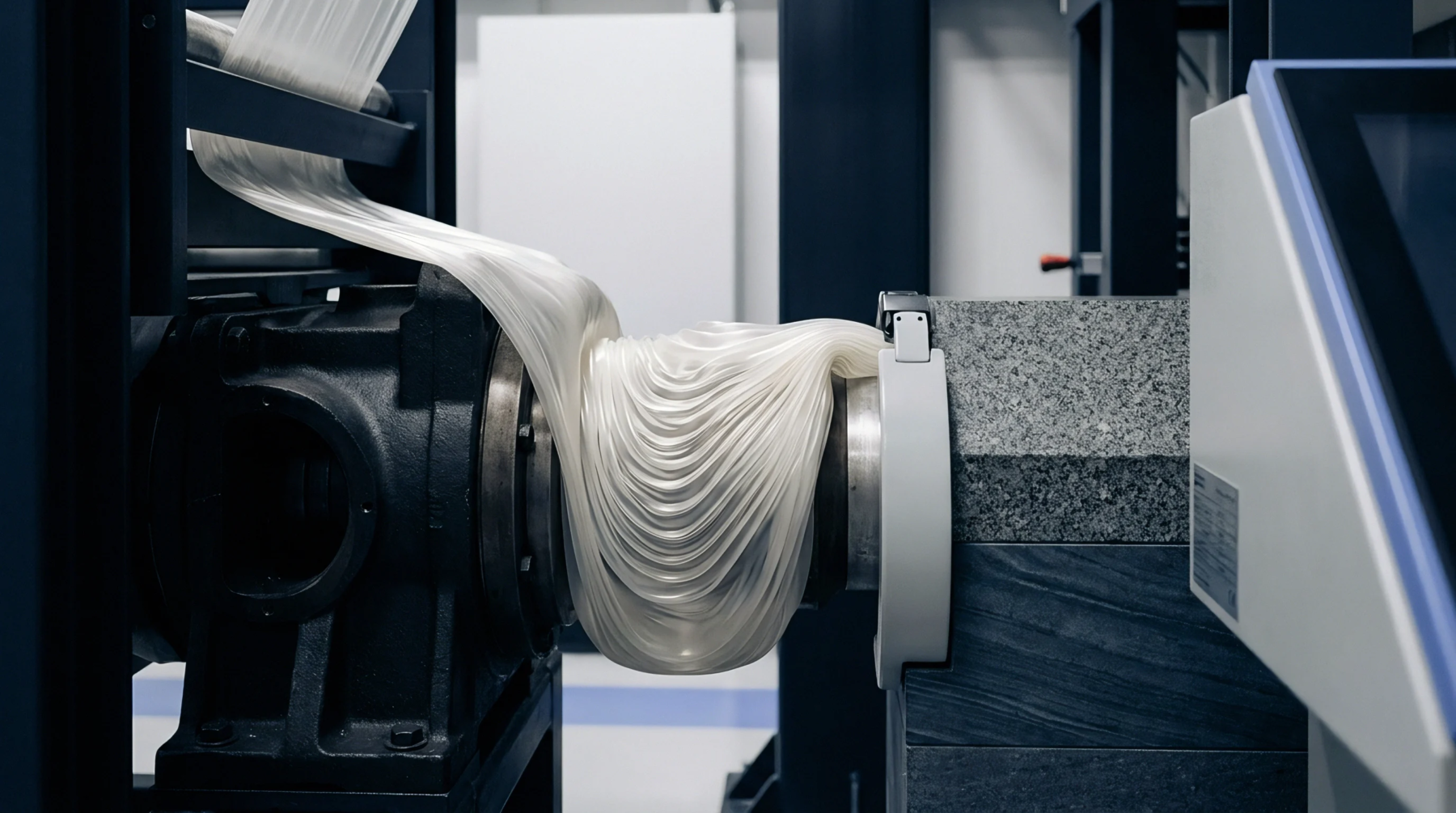
Optimizing Melt Channel Bifurcations to Eliminate Shear Heating Viscosity Gradients
Optimizing melt channel bifurcations with melt rotation geometry and stepped hydraulic diameters eliminates shear-induced viscosity gradients across cavities.
Channel intersections dividing a singular primary cold feed stream into two discrete sub-branches govern melt flow splits in multi-cavity injection moulds. Every cold runner bifurcation halves stream cross-sectional areas or steps channel diameters down to maintain stable volumetric flow rates and preserve injection velocities. The geometry controls pressure loss and shear rate progression as thermoplastic resin travels toward individual cavity gates.
Wall friction and thermal exchange with temperature-controlled steel plates continuously solidify an exterior frozen layer inside the bifurcated conduit. This mechanism establishes a boundary condition where delivery channels must be sized generously to prevent freeze-off yet small enough to avoid protracted cooling cycles and material scrap waste.
Fluid division at branching runner junctions imposes immediate directional changes that generate localized shear gradients and pressure drops. Flow lines entering perpendicular branches experience intense shear against sharp divider corners, driving sudden viscosity drops in non-Newtonian polymer melts. Designers mitigate friction losses by applying generous fillet radii at branching forks, preventing stagnation zones that cause resin degradation.
Secondary channel cross sections must account for hydraulic resistance according to equivalent diameter calculations, preventing unbalanced pressure drops between stages. Sizing ratios commonly dictate that downstream dual branches maintain approximately seventy percent of the upstream feed diameter to sustain uniform shear rates. Uncontrolled bifurcations induce differential freeze rates, elevating injection pressure demands at the moulding machine nozzle.
Asymmetrical shear heating develops within the primary runner and splits unevenly across downstream flow paths. Material adjacent to runner walls experiences severe shear rates, absorbing viscous dissipation energy and exiting the bifurcation warmer than core material. The high-temperature stream clings to internal walls of secondary branches, setting up uneven viscosity fields within ostensibly balanced layouts.
Melt entering interior cavities exhibits reduced resistance compared to viscous outer streams, inducing uneven filling across identical part cavities. Toolmakers counteract this segregation by applying branch geometric offsets or incorporating physical melt-rotation features at the junction. Failure to account for viscous segregation produces part warpage and dimensional spread across cavitation arrays.
Material consumption from oversized runner junctions dictates direct regrind fractions and moulding cycle lengths. The thickest cross-sectional diameter within a cold runner bifurcation establishes the minimum cooling duration for the mould before part ejection can proceed safely. Excessive mass at branching nodes prolongs cooling phases, restricting press cycle times and elevating per-part overhead costs.
High-volume automotive and packaging moulders track the weight ratio between the runner tree and moulded parts, seeking minimum channel volumes to contain virgin resin consumption. Introducing granulated bifurcation sprues back into feed hoppers alters base resin melt flow indices, requiring steady process monitoring to prevent filling inconsistencies. Efficient bifurcation design cuts regrind volume, reducing thermal degradation risks associated with repeated reprocessing loops.
Optimizing melt channel bifurcations with melt rotation geometry and stepped hydraulic diameters eliminates shear-induced viscosity gradients across cavities.
Expertise is a utility, not a secret. sentiention™ publishes its working knowledge as open reference: intelligence layer covering the materials it sources, the markets it enters, and the reference that serves both.