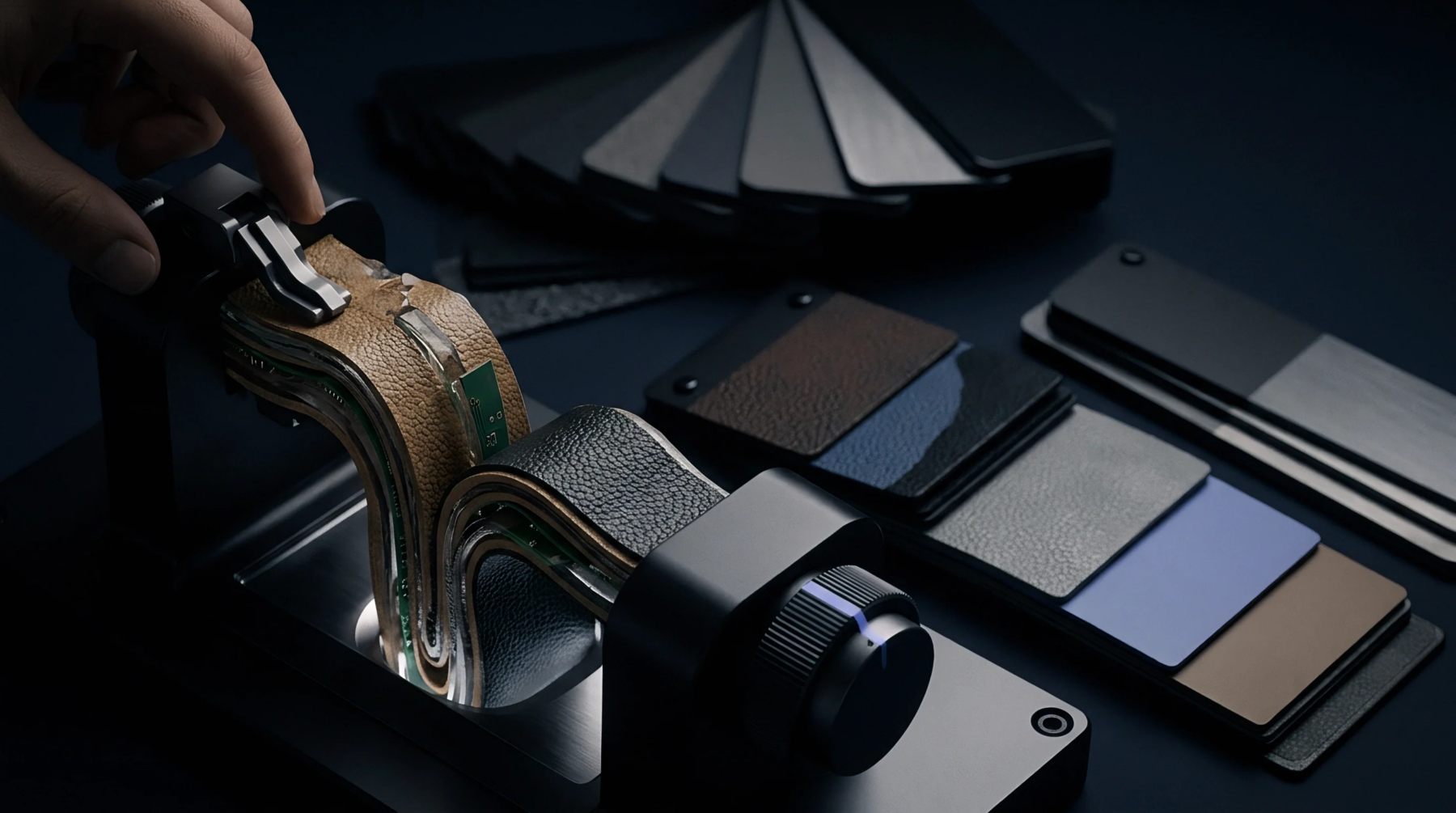
Microscopic Air Entrapment Mechanics in Textured Mold Surfaces
Microscopic air entrapment in textured molds stems from rapid melt front advancement trapping gas in surface valleys, manageable via controlled fill rates and porous micro-venting.
Microscopic surface texturing applied through acid exposure generates the precise tool cavity relief known as chemical photo etching. Production tooling for polymer moulding requires this subtractive masking technique to impart matte finishes and tactile leather patterns onto steel cavities. Toolmakers coat hardened tool steel with a light-sensitive photoresist layer, expose the masked pattern to ultraviolet light, and wash away the unpolymerized areas before submerging the metal in an acidic etchant.
Acid bath duration and temperature govern etch depth, a critical process variable determining whether a moulded thermoplastic part releases cleanly from the tool or binds during ejection. Draught angles specified on part geometry must increase proportionally with etch depth to prevent surface scratching and excessive part retention on the core side.
Chemical photo etching transforms flat or contoured metal inserts into textured mould boundaries capable of scattering light and hiding sink marks on high-gloss thermoplastic housings. Cavity texturing introduces micro-asperities that alter polymer flow resistance near the wall, raising localized injection pressure requirements during the filling phase. Tooling engineers specify texture depth classes using standardized scales, mapping specific micrometer values to acceptable cosmetic grades on consumer electronics and automotive interiors.
Etched pockets trap air during injection if venting is inadequate, producing local burns and surface delamination on the moulded article. Virgin polymer resins replicate fine acid-etched details faithfully, whereas high-percentage regrind batches suffer from incomplete filling of micro-cavities due to melt flow index degradation and elevated viscosity.
Component geometries featuring chemical photo etching demand specific geometric adjustments to accommodate the frictional drag generated by micro-textured cavity walls. Designers calculate minimum draft angles by adding specific degrees per side for every micrometer of texture depth, ensuring the moulded component clears the tool without surface tearing. Insufficient draft causes whitening, drag lines, and rapid tool wear as the polymer tears across the acid-bitten peaks during ejection.
Polymer shrinkage characteristics interact directly with tool textures, where semicrystalline resins shrink away from the mould more aggressively than amorphous thermoplastics, altering the final release force.
Process optimization for chemically etched tooling requires precise control over melt temperature, injection speed, and packing pressure to eliminate surface blemishes and dimensional inaccuracies. High melt temperatures reduce polymer viscosity, allowing the molten plastic to fully penetrate the micro-cavities of the acid-etched pattern without premature freezing. Packing pressure must balance between filling the microscopic relief completely and avoiding flash formation along the parting line where texture meets sealing surfaces.
Datasheet values for shrinkage assume polished steel surfaces, forcing moulders to adjust cavity dimensions upwards when applying deep textures that restrict normal material movement. Tool maintenance protocols prohibit abrasive bead blasting on chemical photo etching areas, relying instead on ultrasonic cleaning to remove baked-on mould release agents without degrading the fine acid-cut geometry.
Microscopic air entrapment in textured molds stems from rapid melt front advancement trapping gas in surface valleys, manageable via controlled fill rates and porous micro-venting.
Expertise is a utility, not a secret. sentiention™ publishes its working knowledge as open reference: intelligence layer covering the materials it sources, the markets it enters, and the reference that serves both.