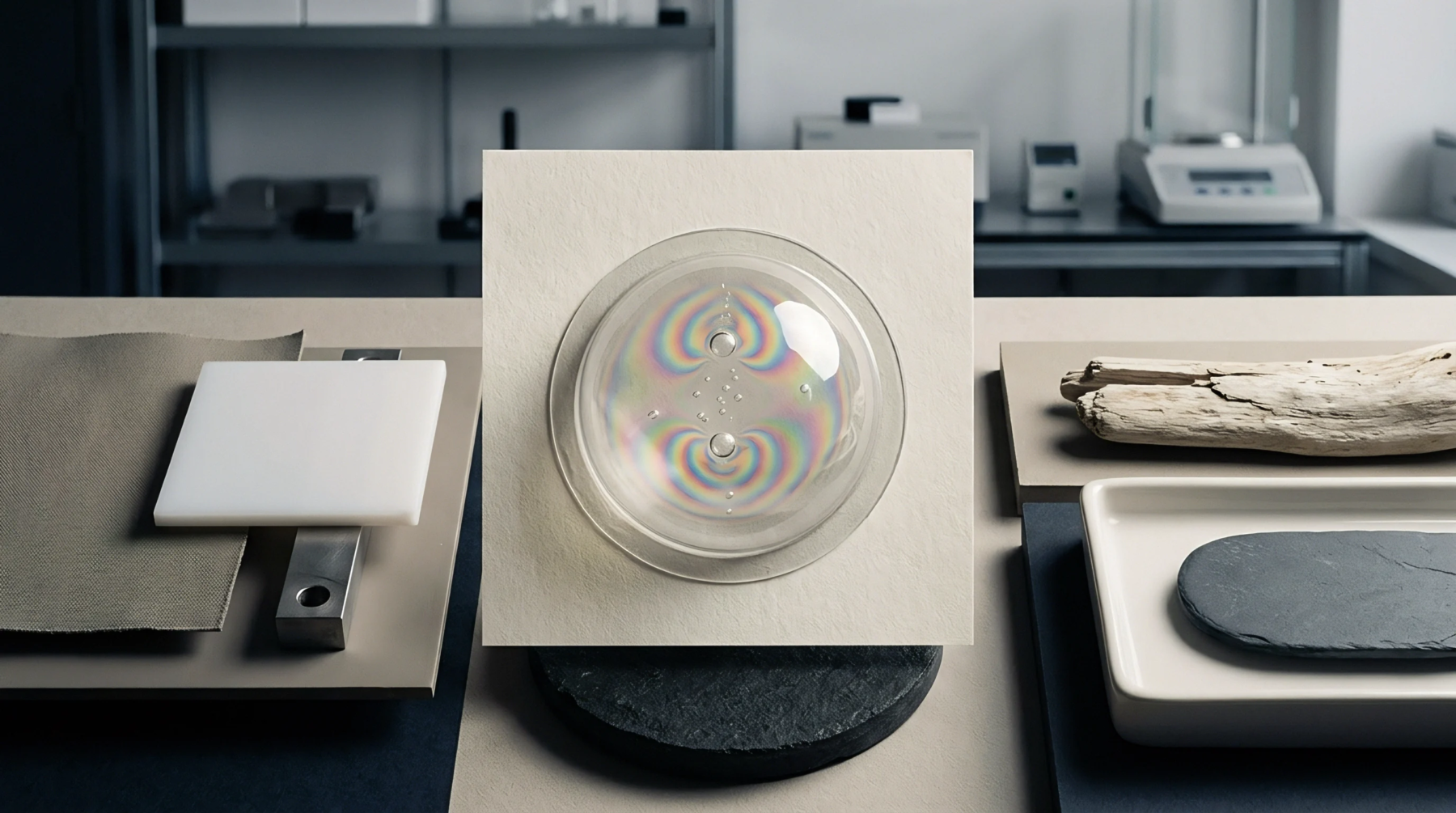
Optical Profilometry Parameter Verification for Hardened Steel Tool Cavities
Verify hardened steel tool cavity topography using ISO 25178 areal parameters and filtered coherence scanning interferometry to guarantee polymer part release.
A pre-hardened plastic mould steel alloy characterizes the chemistry of bohler m310 as a high-chromium martensitic grade designed for corrosive resistance. This material maintains optimal polishability and high dimensional stability throughout heat treatment cycles. It sits within the group of ferritic-martensitic steels commonly employed for injection moulds that process chemically aggressive polymer resins.
The chemical composition includes high chromium content alongside small amounts of molybdenum and vanadium which together prevent pitting from acidic decomposition gases. Manufacturers supply this grade in a quenched and tempered condition to eliminate additional heat treatment requirements before tool assembly. Application boundaries occur when moulding abrasive fillers at high speeds because the inherent hardness restricts wear resistance compared to powder metallurgical alternatives.
Surface finish quality relies on the uniform distribution of carbide structures throughout the metal matrix. Within the bohler m310 alloy, these small, spherical precipitates prevent the dragging effects common in secondary finishing operations. Tool makers achieve mirror finishes faster because the tempered structure responds evenly to diamond paste grinding.
Dimensional shifts remain minimal during the mechanical abrasion process, a feature allowing for tighter tolerances between sliding cores and cavities. Moulders gain value here through reduced cleaning cycles since the smooth, passive surface prevents plastic residue buildup. Polishing time drops significantly when compared to standard non-stainless tool steels, providing a direct benefit to tool room scheduling.
Chemical resistance governs the longevity of tool steels when processing polymers that release corrosive byproducts. This grade resists the acid attack generated by flame retardants or halogenated resins that degrade at high melt temperatures. The passive layer forms naturally on the surface to shield the iron content from oxidizing agents found in the cooling channels.
A proper passivation treatment after final machining reinforces this natural barrier against moisture and environmental humidity. Maintenance intervals extend because the passive surface remains resistant to the oxidation that ruins traditional steel cavities.
Injection performance depends on the thermal conductivity and uniform heat transfer properties of the core steel. The bohler m310 alloy facilitates consistent cycle times by allowing cooling fluids to draw energy away from the plastic part without localized overheating. Parts maintain higher dimensional accuracy because the tool structure resists the thermal fatigue that causes cracking in standard martensitic grades.
Moulders prioritize this specific steel when production volumes require reliable, long-term performance without the risk of cavity corrosion or surface pitting. Virgin resin batches process cleanly through these moulds, while regrind usage remains viable provided the material does not contain high concentrations of abrasive mineral fillers. Cavity pressure distribution stays stable across the entire lifespan of the tool, ensuring that part geometry satisfies engineering drawings despite the rigours of high-speed industrial manufacturing.
This metal provides a high return on investment by decreasing the frequency of unplanned tool maintenance stops.
Verify hardened steel tool cavity topography using ISO 25178 areal parameters and filtered coherence scanning interferometry to guarantee polymer part release.
Expertise is a utility, not a secret. sentiention™ publishes its working knowledge as open reference: intelligence layer covering the materials it sources, the markets it enters, and the reference that serves both.