Meaning
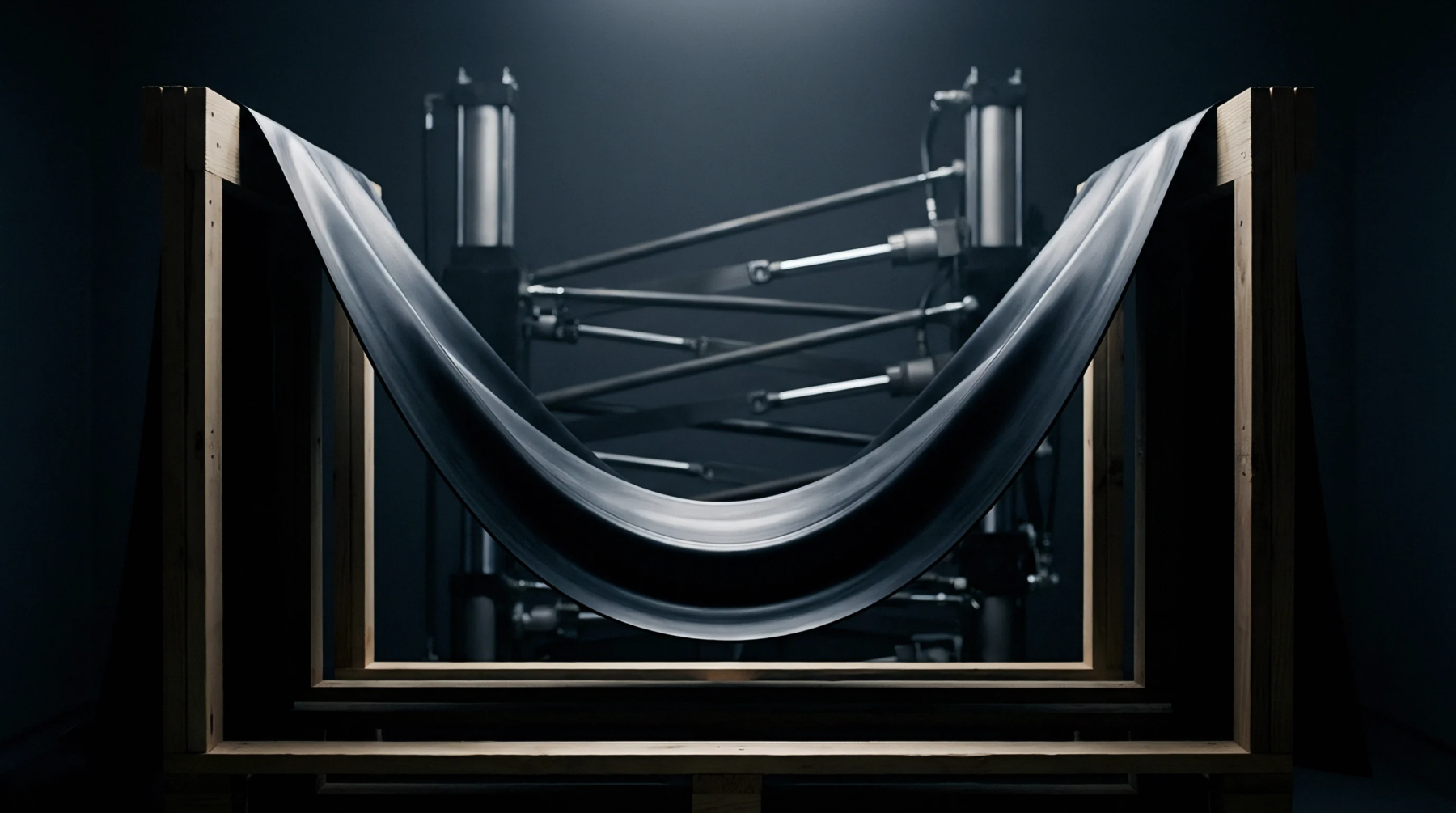
Clamping a flat sheet specimen over a circular cavity and inflating it with hydraulic or pneumatic pressure exposes thin polymer films to balanced two-dimensional tensile stress. Executing biaxial bulge testing allows engineers to measure membrane stress and strain states without edge friction or premature necking at specimen grips. The procedure applies to thermoforming sheets, blown films, and thin molded diaphragms, though it becomes invalid once local wall thinning causes geometric instability or dome rupture.
Pressure Kinematics
Fluid volume injection rates control the dome expansion rate during pressurization. Constant flow delivery increases the true strain rate as the dome expands and thins, which alters polymer chain orientation dynamics. Datasheet values from uniaxial tensile tests understate material resistance during actual thermoforming operations where multidirectional stretching occurs.
Deformation Profile
Optical sensors measure the changing radius of curvature and pole height of the expanding dome. Membrane stress calculations combine internal fluid pressure with instantaneous radius and thickness measurements at the pole. Polymer melt temperature during testing alters the strain hardening behavior of polyolefins and polyesters.
Processing virgin resin yields uniform wall thickness distribution, while regrind blends produce localized thinning due to contaminant inclusions.
Inflation Limit
Rupture behavior defines the maximum draw ratio acceptable for downstream forming processes.