Meaning
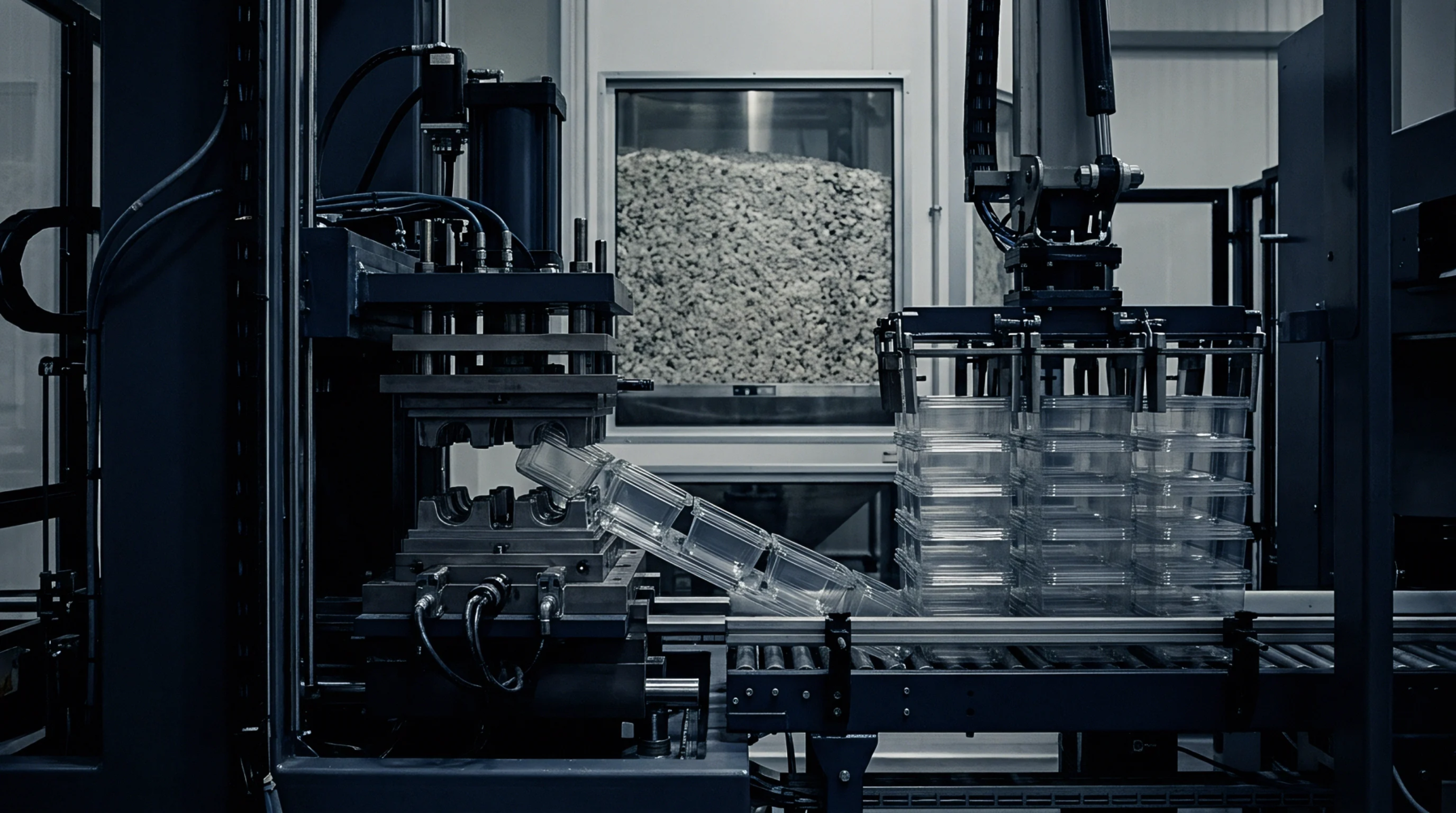
Polymer resins lacking long-range molecular order offer optical clarity and rapid thermoforming capabilities in sheet extrusion applications. Unoriented amorphous polyethylene terephthalate provides a clear barrier material for thermoformed packaging when quenched rapidly below its glass transition temperature during sheet casting. Cooling rates must exceed critical thresholds during chill roll contact to prevent spherulitic growth from clouding the extrudate.
Mechanical performance remains ductile under ambient impact, though thermal stability drops near seventy degrees Celsius where polymer chains gain mobility.
Thermal Response
Differential scanning calorimetry reveals distinct enthalpy changes during reheating cycles of non-crystalline polyester sheets. Processing amorphous polyethylene terephthalate requires precise temperature management between ninety and one hundred ten degrees Celsius to avoid cold crystallization during thermoforming plug assist cycles. Exceeding this thermal threshold initiates crystalline domains that embrittle final container flanges.
Mold temperatures are kept low to lock in the non-crystalline state.
Processing Window
Extrusion drying protocols demand desiccant air streams operating at low dew points. Hydrolytic degradation reduces the intrinsic viscosity of amorphous polyethylene terephthalate when moisture levels exceed limits prior to plastication.
Regrind Ratio
In-plant edge trim reintroduction alters the melt viscosity of virgin feedstocks. Reprocessing amorphous polyethylene terephthalate introduces thermal history that accelerates crystallization rates during subsequent sheet extrusion runs.