Meaning
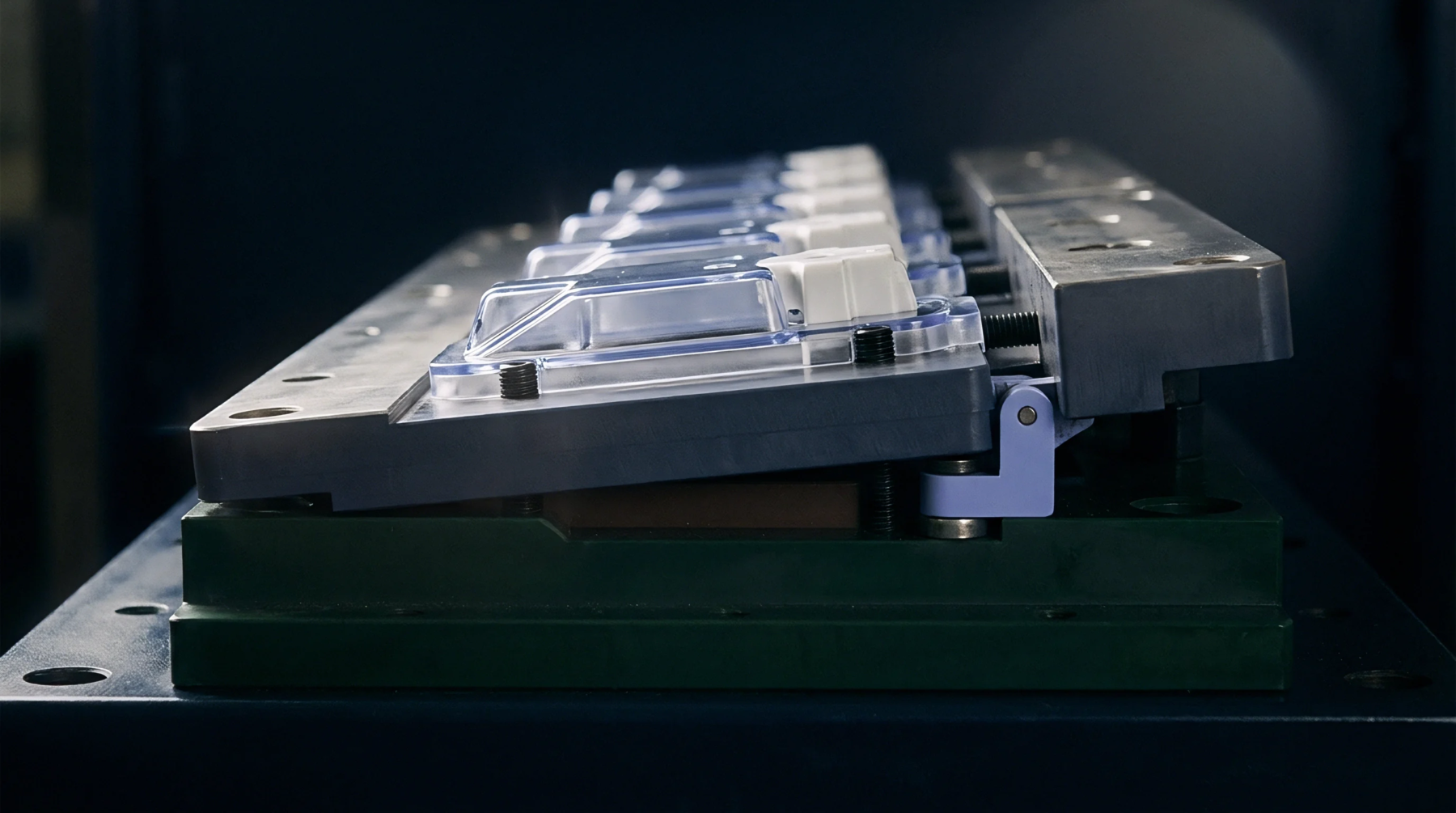
Chromium-molybdenum hot-work steel alloys provide toughness and thermal fatigue resistance for high-pressure injection moulding tooling applications. Tooling engineers specify AISI H13 tool steel for core and cavity inserts subject to repeated cyclic thermal stress during thermoplastic injection moulding. The alloy maintains structural hardness at elevated temperatures, preventing heat checking across extended production runs.
Thermal Resistance
Calculated heat dissipation properties govern how rapidly a mould steel transfers thermal energy from polymer melt to internal cooling channels. High thermal conductivity in AISI H13 tool steel enables uniform heat extraction across cavity faces during fast injection cycles, minimizing thermal gradients and cycle times. Rapid heat transfer prevents thermal softening of cavity surfaces during continuous production.
Uneven heat removal produces differential shrinkage across part sections, generating dimensional warpage and residual stress within moulded components.
Machining Capability
Annealed stock blocks undergo milling and electrical discharge machining prior to vacuum heat treatment to achieve target Rockwell hardness values. Machining AISI H13 tool steel requires rigid setup parameters when creating complex cavity features. Stress relieving prevents distortion during quenching.
Wear Lifetime
Mechanical friction from glass-reinforced resins gradually degrades cavity surface finish and creates abrasive wear along high-velocity gate paths. Uncoated AISI H13 tool steel resists mechanical wear during unfilled resin processing, but abrasive fillers accelerate surface dulling. Surface nitriding increases local surface hardness to prevent premature cavity erosion.