Standardizing Loss on Ignition for Mineral Masterbatch XRF Testing
Integrating calcination mass loss into XRF fundamental parameters corrects matrix absorption in mineral filled polyolefin masterbatches.
Ash
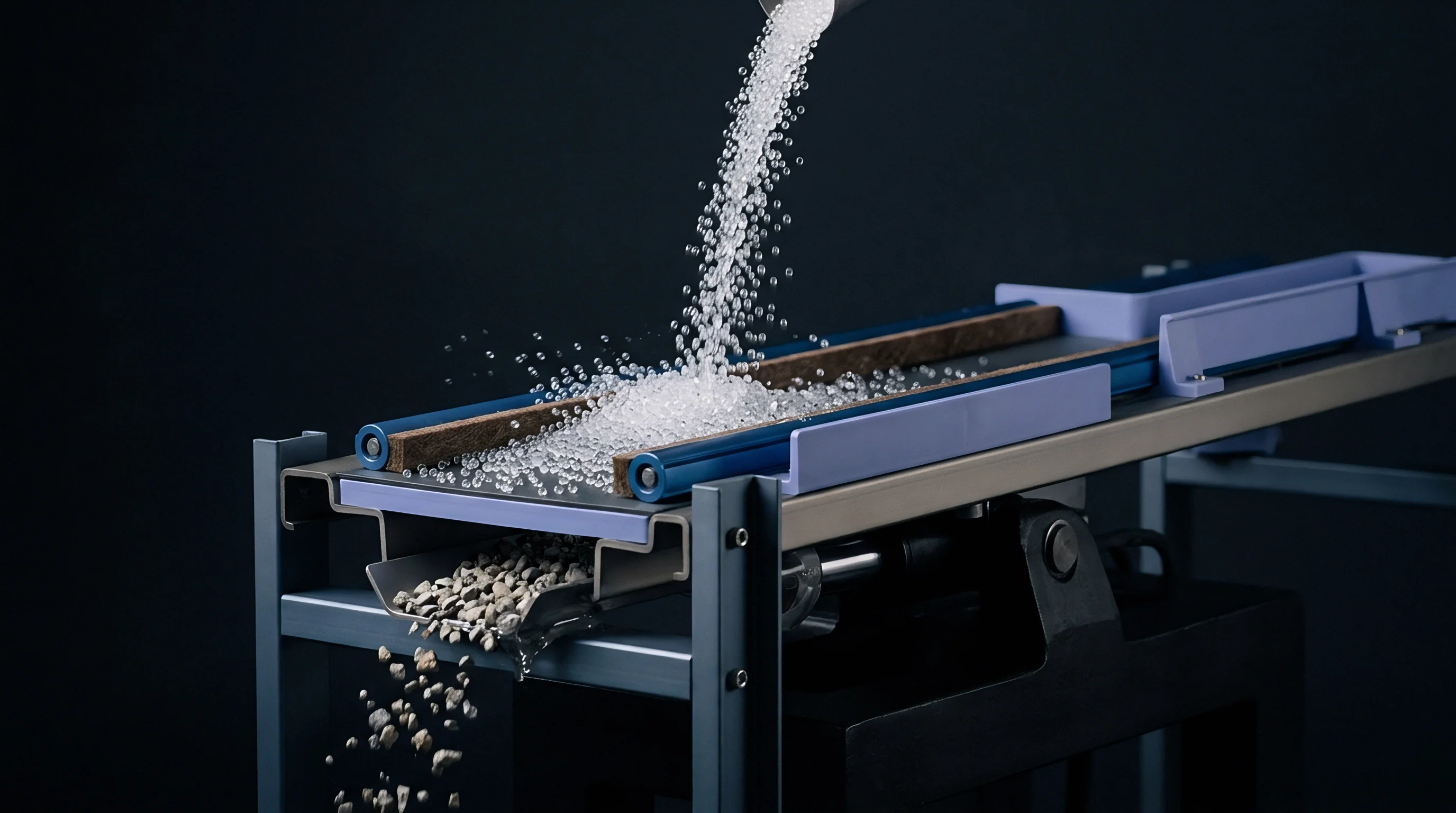
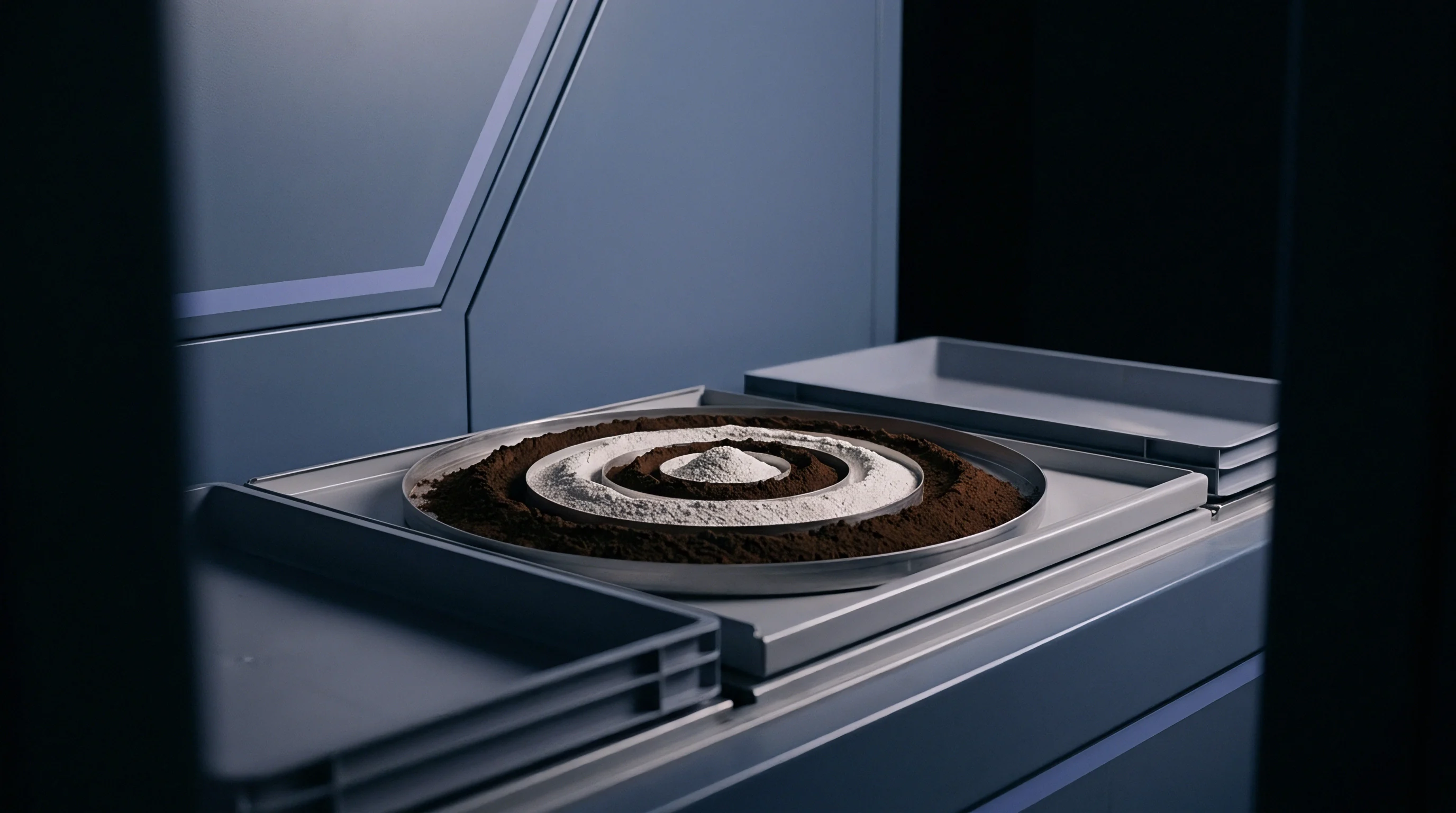
Thermal gravimetric decomposition splits mineral-filled masterbatch pellets into volatile hydrocarbon chains and an inorganic residue. For polyolefin carriers like low-density polyethylene or polypropylene homopolymer, the organic matrix oxidizes entirely between 350°C and 550°C in an atmospheric muffle furnace, leaving behind the mineral filler and any high-temperature metal oxide pigments. Direct gravimetric measurement at 550°C gives a baseline ash percentage, but that initial number overlooks structural chemical changes inside the mineral crystal lattice.
Polypropylene burns away completely at 550 C, yet analytical accuracy in X-ray fluorescence spectrometry depends on confirming whether that calcined residue actually matches the raw mineral mass introduced at the compounding extruder.

Thermal Decomposition Regimes for Common Mineral Fillers
Heating profiles in a muffle furnace draw the boundary between matrix burnout and mineral breakdown. At 550°C, calcium carbonate retains its anhydrous calcite structure, so an initial dwell at this temperature cleanly isolates uncalcined limestone filler from a polyethylene carrier. Talc loses bound water above 850 C. Kaolin clay undergoes rapid dehydroxylation between 550°C and 800°C, converting its hydrated aluminum silicate structure into amorphous metakaolin.
Titanium dioxide resists breakdown below 1100 C, while barium sulfate remains stable at 950 C. Stepping the furnace temperature deliberately allows an analytical laboratory to separate volatile organic mass loss from structural calcination.
Loss on ignition behavior varies markedly across compounding minerals. The table below maps the primary breakdown pathways, temperature thresholds, and chemical mass shifts observed across standard compounding minerals.
| Mineral Filler Type | Chemical Formula | Decomposition Temperature Range (°C) | Volatile Species Released | Theoretical Mass Shift (%) |
|---|---|---|---|---|
| Calcium Carbonate (Calcite) | CaCO3 | 650 – 900 | CO2 | -43.97 |
| Talc (Hydrated Magnesium Silicate) | Mg3Si4O10(OH)2 | 850 – 1050 | H2O (hydroxyl) | -4.75 |
| Kaolin Clay (Hydrated Aluminosilicate) | Al2Si2O5(OH)4 | 500 – 800 | H2O (structural) | -13.96 |
| Titanium Dioxide (Rutile/Anatase) | TiO2 | 1000 – 1200 | None (adsorbed H2O only) | -0.20 |
| Barium Sulfate (Synthetic Barytes) | BaSO4 | 1000 – 1300 | None (trace sulfur oxides >1200°C) | -0.10 |

Stoichiometric Mass Transitions in Mineral Calcination
Calcium carbonate releases gaseous carbon dioxide when temperatures cross 825 degrees Celsius in air, where one mole of calcium carbonate yields one mole of solid calcium oxide and one mole of volatile carbon dioxide gas. Standardizing loss on ignition procedures requires dual-stage heating to record both the organic binder content and this stoichiometric gas release. Dehydroxylation shifts structural mass by five percent, and when kaolin or talc experience high-temperature calcination, structural hydroxyl groups evaporate as water vapor, altering the apparent oxide weight ratio measured by the spectrometer detector.
Analytical routines for mineral masterbatches depend on identifying the specific chemical reactions occurring during furnace heating:
- Calcium Carbonate Calcination drives off carbon dioxide gas at 950°C, leaving solid calcium oxide that rapidly absorbs atmospheric moisture if cooling desiccators fail.
- Talc Dehydroxylation strips structural hydroxyl pairs between 850°C and 1050°C, converting hydrated magnesium silicate into synthetic enstatite and free silica.
- Kaolin Phase Transformation collapses hydrated aluminosilicate crystals into metakaolin at 600°C before forming dense mullite structures above 980°C.
- Polyolefin Matrix Oxidation breaks down polyethylene and polypropylene chains into water vapor and carbon dioxide at 550°C without generating ash residue.
Polyolefin carrier oxidation generates volatile carbon dioxide and water vapor without leaving solid inorganic carbon residues.
Masterbatch compounders frequently attribute discrepancies between gravimetric ash results and target loading ratios to raw material moisture variation rather than unrecorded mineral calcination gas loss.
Fusion
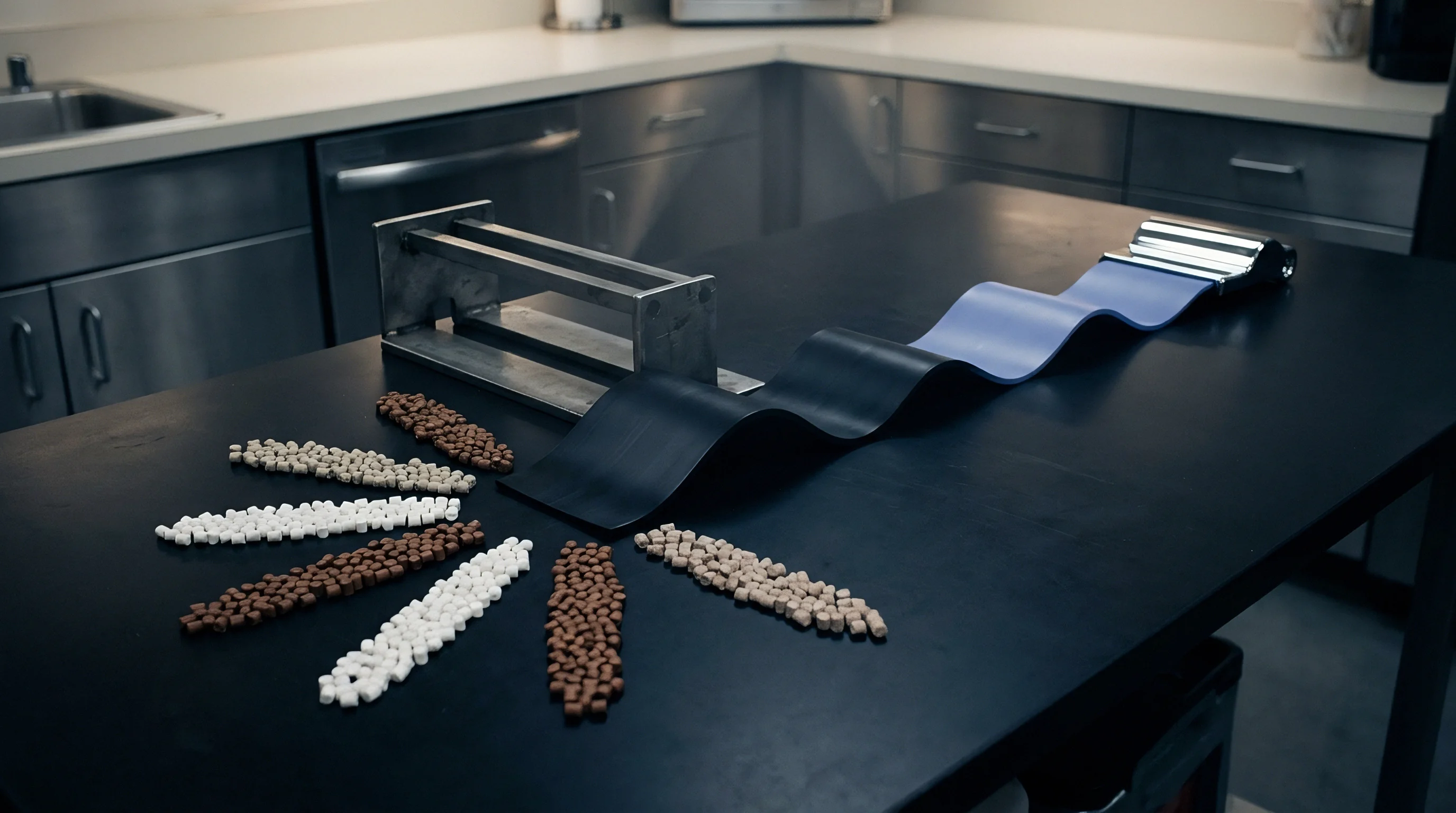
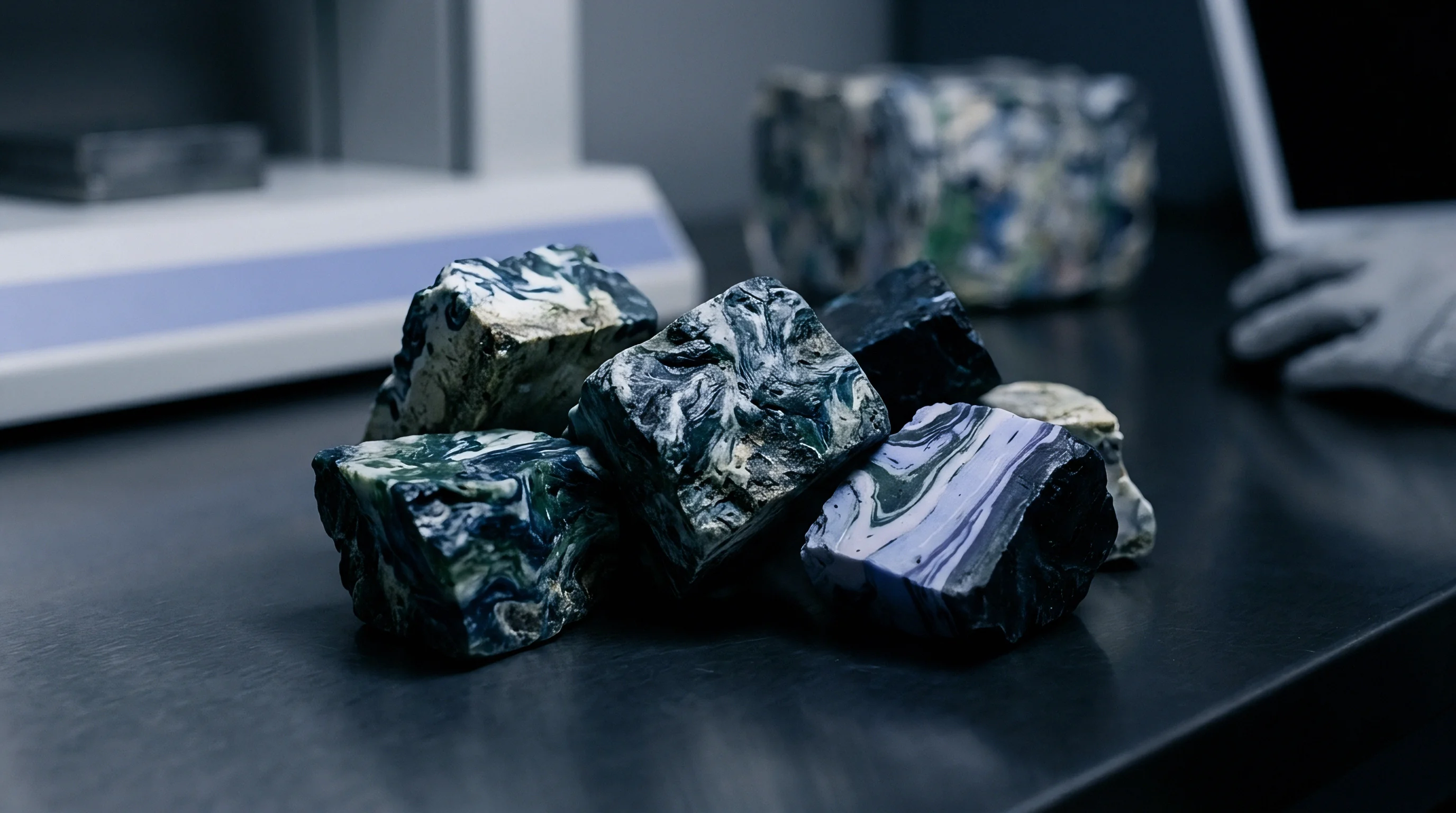
Converting heterogeneous masterbatch pellets into a homogeneous optical specimen demands strict control over particle geometry and binder mass. Direct X-ray fluorescence analysis of raw resin pellets yields severe measurement errors due to surface curvature, inter-pellet void space, and non-uniform filler distribution. Grinding pellets into fine powders under cryogenic liquid nitrogen reduces grain size, yet pressed powder discs continue to exhibit micro-absorption effects, depressing light-element intensities when excitation photons scatter across particle boundaries.
Achieving reference-grade analytical accuracy demands complete physical dissolution of the mineral residue into a vitreous glass disc.

Pressed Disc Limitations in Light Element X-Ray Emission
Direct compaction of ground polymer pellets under thirty tonnes of hydraulic force creates density gradients across the analytical surface. Light element X-ray emission drops when low-energy secondary photons encounter microscopic surface voids or localized polymer binder agglomerates. High matrix absorption lowers detected X-ray yield.
Because X-ray penetration depth varies by wavelength, calcium, magnesium, and aluminum K-alpha photons originate from the upper few micrometers of the specimen surface, making signal strength hypersensitive to local particle orientation. Compounding additives like stearic acid processing aids migrate during high-pressure compaction, creating organic surface layers that suppress calcium fluorescence intensities.
Analytical laboratories select sample preparation methodologies based on required precision, throughput velocity, and sample destructive limits. The table below compares technical performance parameters across standard masterbatch preparation methods.
| Preparation Methodology | Sample Homogeneity | Particle Size Effect | Preparation Time (min) | Relative Precision (% RSD) |
|---|---|---|---|---|
| Direct Pellet Surface Scanning | Very Low | Severe Surface Curvature Distortion | 2 | 4.5 – 8.0 |
| Cryogenic Grinding & Pressed Disc | Moderate | Micro-Absorption & Grain Effects | 15 | 1.2 – 2.5 |
| Direct Melt Compression Disc | Moderate-High | Polymer Matrix Attenuation Retained | 10 | 0.8 – 1.8 |
| Lithium Borate High-Temp Fusion Disc | Absolute (Vitreous Glass) | Completely Eliminated | 45 | 0.1 – 0.4 |
Borate Flux Selection and High-Temperature Dissolution
High-purity lithium tetraborate dissolves oxidized mineral calcination residues inside platinum-gold crucibles at 1050 degrees Celsius. Lithium tetraborate flux provides an acidic matrix suitable for dissolving basic metal oxides such as calcium oxide. Borate flux dilutes element concentration tenfold.
Adding lithium metaborate to the flux mixture lowers melt viscosity, improving fluidity when casting neutral aluminosilicate residues from talc or kaolin masterbatches. Automated fusion equipment rotates the crucible over high-temperature gas burners or electric induction coils, releasing trapped gas bubbles and producing a perfectly flat glass disc ideal for wavelength dispersive X-ray spectrometry.
Standardizing loss on ignition specimen preparation for fused glass disc production follows a strict sequence:
- Weigh five grams of masterbatch pellets into a quartz crucible to four decimal places.
- Place crucible into a muffle furnace set to 550°C for two hours to burn off the hydrocarbon carrier.
- Transfer the calcined ash residue to a high-temperature furnace at 950°C for one hour to complete mineral calcination.
- Cool the crucible inside a desiccator for thirty minutes and record the final loss on ignition mass.
- Mix the calcined inorganic residue with lithium tetraborate flux at a precise 1:10 sample-to-flux mass ratio.
- Fuse the mixture at 1050°C inside a platinum-gold alloy crucible for twelve minutes with continuous agitation.
- Cast the liquid glass into a heated platinum mold and allow controlled cooling to prevent thermal fracturing.
Precision improves when mineral calcination residues dissolve entirely into molten borate glass discs.
Homogeneous glass specimens consistently outperform pressed powder discs when measuring light element intensities in mineral compounds.

Correction
Fundamental parameter matrix algorithms compute light element absorption coefficients by modeling the unobserved hydrocarbon balance of the plastic specimen. Polyolefin carriers consist of carbon and hydrogen atoms that emit no characteristic X-ray fluorescence lines inside standard spectrometer optical paths. Carbon and hydrogen strongly absorb low-energy characteristic X-rays generated by calcium, magnesium, aluminum, and silicon atoms.
Omitting the organic loss on ignition mass from matrix math forces fundamental parameter software to assign unmeasured mass incorrectly, creating errors in calculated oxide concentrations, whereas standard additions resolve element line overlaps.

Fundamental Parameter Integration of Balance Mass
Modern X-ray spectrometers calculate primary photon attenuation using input values for the unmeasured organic substrate. Standard fundamental parameter software uses Sherman equation calculations to model inter-element absorption and enhancement effects. The program requires an accurate input for total specimen mass loss to assign the correct proportion of low-atomic-number balance elements (CH2).
Inputting an incorrect loss on ignition value alters the calculated mass attenuation coefficient, causing artificial shifts in reported mineral concentration.
Heating calcium carbonate at 950 degrees Celsius for two hours converts one hundred grams of raw filler into fifty-six grams of solid calcium oxide.
Mathematical Reconstruction of Original Mineral Stoichiometry
Converting elemental calcium intensities back into ground limestone loading demands precise accounting for lost volatile oxides. Consider a 40-tonne lot of polypropylene masterbatch specified at 70.0% calcium carbonate content by weight. An analytical laboratory burns a 10.0000 g sample at 550°C, yielding 7.0000 g of uncalcined ash residue.
Heating that same residue to 950°C reduces the mass to 3.9220 g due to complete carbon dioxide release. The observed high-temperature loss on ignition equals 6.0780 g total mass loss (3.0000 g organic polypropylene matrix plus 3.0780 g volatile carbon dioxide gas).
Analyzing the calcined specimen via XRF yields a calcium oxide (CaO) concentration of 99.40% by weight within the fused glass bead, corresponding to 3.8985 g of solid CaO. The fundamental parameter software algorithm reconstructs the original calcium carbonate loading using stoichiometric factors:
Original CaCO3 Weight = Mass of CaO × left( fracMolar Mass of CaCO3Molar Mass of CaO right)
Original CaCO3 Weight = 3.8985 g × left( frac100.086 g/mol56.077 g/mol right) = 6.9577 g
Calculated Filler Loading = left( frac6.9577 g10.0000 g initial sample right) × 100 = 69.58%
If the laboratory omits the high-temperature loss on ignition data and inputs only the 550°C ash weight into an uncorrected fundamental parameter matrix model, the software assumes the 7.0000 g ash consists entirely of stable oxides. The algorithm then over-corrects for carbon matrix attenuation, outputting an erroneous calcium carbonate loading of 74.20% by weight. This 4.62% absolute overestimation triggers false lot rejections at incoming inspection.
What fundamental calibration shift occurs when kaolin clay undergoes partial structural dehydroxylation during high-speed twin-screw compounding before laboratory sampling?
Sampling
Extracting representative analytical specimens from a twenty-tonne shipment of filled polyolefin pellets demands a multi-point extraction pattern, particularly since pellet density shifts sample volume inside cups. Mineral filler masterbatches suffer from micro-segregation inside bulk shipping containers due to particle vibration during transit. Sampling technicians must draw core samples from multiple container depths using pneumatic thief samplers to capture true lot averages.
Compositing twenty distinct sampling points reduces lot-to-lot analytical variance below 0.15% standard deviation.
Lot Heterogeneity and Specimen Mass Requirements
Compounding extruders experience slight feeder pulsation that alters mineral dispersion across continuous production runs. Single-pellet XRF analysis reveals loading variations up to 3.0% absolute filler concentration between consecutive pellets. Representative analytical samples require a minimum sample mass of 500 grams taken from blended composite lots.
Laboratory technicians grind this composite down to a fine particle size distribution before drawing sub-samples for loss on ignition furnace heating.
Spectrometers isolate characteristic energy wavelengths to identify inorganic minerals present in compound matrixes. The table below outlines key emission lines, line energies, target elements, and thermal sensitivity profiles across standard mineral fillers.
| Target Element | Spectral Line | Line Energy (keV) | Associated Mineral Phase | LOI Thermal Sensitivity (550°C vs 950°C) |
|---|---|---|---|---|
| Calcium (Ca) | K-alpha | 3.691 | Calcium Carbonate (Calcite) | High (44% CO2 volatile loss at 950°C) |
| Magnesium (Mg) | K-alpha | 1.254 | Talc / Dolomite | Moderate (4.75% H2O loss above 850°C) |
| Silicon (Si) | K-alpha | 1.740 | Talc / Kaolin / Quartz | Moderate (Dehydroxylation shifts ratio) |
| Aluminum (Al) | K-alpha | 1.487 | Kaolin Clay / Feldspar | High (13.96% H2O loss between 550-800°C) |
| Titanium (Ti) | K-alpha | 4.511 | Titanium Dioxide (Rutile) | Negligible ( |
| Barium (Ba) | L-alpha | 4.467 | Barium Sulfate (Barytes) | Negligible ( |
Cross-Verification Protocols between Gravimetric Ash and XRF
Benchtop gravimetric furnaces offer absolute mass verification while X-ray emission yields elemental ratios within minutes. Combining fast XRF screening with standardized loss on ignition routines establishes total quality control across high-volume compounding halls. Standardizing analytical routines prevents off-spec masterbatch lots from reaching commercial extrusion lines.
Laboratory quality programs monitor specific failure mechanisms during incoming masterbatch inspection routines:
- Incomplete Polymer Matrix Burnout occurs when furnace holds below 550°C leave unburned carbon char that skews gravimetric residue mass balance calculations.
- Unrecorded Carbonate Calcination happens when muffle furnaces drift above 650°C during nominal ash testing, releasing partial carbon dioxide gas volumes.
- Post-Furnace Atmospheric Rehydration develops when calcined calcium oxide residues absorb ambient humidity prior to analytical balance mass determination.
- Flux Volatilization Losses occur during high-temperature fused bead preparation when prolonged heating cycles evaporate lithium borate components inside the crucible.
Finer mineral grind sizes decrease primary X-ray backscatter while increasing light element signal yield.
Failing to standardize furnace temperature hold profiles leads directly to inaccurate filler loading claims, financial contract disputes, and severe melt flow shifts during downstream part molding operations.

Clause
Commercial purchase agreements for mineral masterbatches demand explicit test conditions to resolve delivery disputes regarding filler percentage. Masterbatch buyers pay premium rates calculated per kilogram of active mineral loading versus carrier polymer price. Specifying raw gravimetric ash without stating the furnace hold temperature allows suppliers to claim calcined residue weights as total mineral loading.
Procurement contracts must tie certified analysis limits to precise test standards, specified furnace temperature profiles, and corrected fundamental parameter XRF matrix models.
Contractual Tolerances and Measurement Uncertainty
Defining masterbatch loading boundaries inside purchase orders protects compounding halls from downstream part density shifts. Standard commercial tolerances permit a ±0.5% absolute variation around target filler concentrations. If a contract specifies a 70.0% calcium carbonate masterbatch in polypropylene, landed shipment testing must fall between 69.5% and 70.5% total mineral content.
Specifying measurement uncertainty bands prevents premature rejection of compliant masterbatch lots caused by routine analytical variance.
Standardized purchase specifications detail technical test conditions, standard references, and actionable retest thresholds across commercial procurement contracts. The table below summarizes key contractual parameter specifications for mineral masterbatches.
| Specification Parameter | Standard Test Method | Target Concentration Range | Contractual Tolerance | Actionable Retest Boundary |
|---|---|---|---|---|
| Calcium Carbonate Loading | ISO 3451-1 / ISO 12677 | 50.0% – 80.0% by weight | ±0.5% Absolute Mass | 0.8% Shift from Target |
| Talc Content | ISO 3451-4 / XRF FP | 20.0% – 60.0% by weight | ±0.6% Absolute Mass | 0.9% Shift from Target |
| Kaolin Clay Fraction | ASTM D5630 / ISO 12677 | 15.0% – 50.0% by weight | ±0.5% Absolute Mass | 0.7% Shift from Target |
| Titanium Dioxide Concentrate | ISO 3451-1 / XRF FP | 30.0% – 70.0% by weight | ±0.4% Absolute Mass | 0.6% Shift from Target |
| Note: Analytical measurements require dual-stage Loss on Ignition standardization (550°C organic burnout and 950°C mineral calcination) combined with fused lithium tetraborate disc XRF analysis. | ||||
Standardized Certificate of Analysis Requirements
Masterbatch shipments landing at the compounding facility carry verifiable analytical documentation for both carrier resin and filler content. Certificates of analysis state the exact loss on ignition protocol executed, furnace hold temperatures, sample preparation method, and XRF matrix correction parameters applied. Shipments lacking complete analytical transparency expose buyers to uncompensated filler shifts that disrupt downstream injection molding cycles.
Specifying ISO 12677 borate fusion in masterbatch supply agreements eliminates matrix density discrepancies between laboratory standards and incoming pellets.
Every delivery specification signed by the buyer shall include the clause: “Mineral filler content verification shall be performed via X-ray fluorescence spectrometry on lithium tetraborate fused glass discs prepared from residue subjected to dual-stage loss on ignition at 550°C and 950°C in accordance with ISO 12677, with elemental intensity corrections calculated using fundamental parameters incorporating total volatile mass loss.”