Meaning
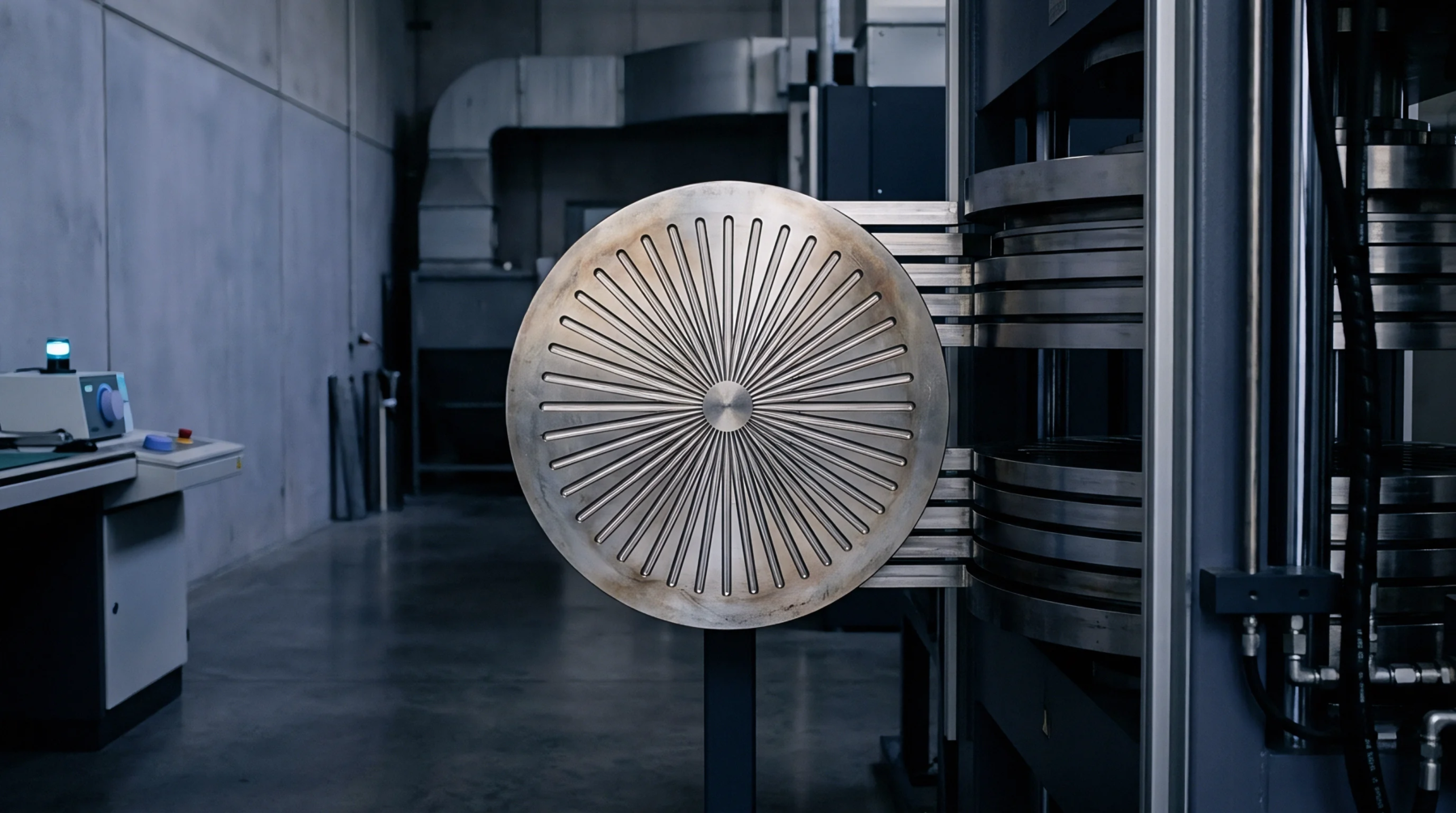
Fluid channel configuration within a steel mould determines the rate of thermal extraction from a plastic part. Correct tooling cooling line placement facilitates uniform heat removal across complex geometries to prevent warpage or excessive internal stresses. Improper routing near thick sections leads to prolonged cycle times because the polymer remains molten longer than the surrounding thinner features.
Cooling circuits situated too far from the cavity surface fail to influence resin crystallization effectively.
Thermal Geometry
Uniform temperature distribution remains the primary objective for every internal circuit layout. Engineers align channels relative to the part wall thickness to balance the heat load across the mould cavity. Small distances between the steel surface and the water line improve transfer efficiency while maintaining structural integrity of the tool.
Weak walls between lines and the cavity wall occasionally collapse under high injection pressures.
Flow Restriction
High pressure drops occur when circuits contain excessive elbows or sharp directional changes that impede laminar flow. Moulders specify manifold diameters that match the primary input lines to prevent velocity spikes that induce local cavitation within the coolant. Water channels must remain unobstructed by scaling or mineral deposits to preserve their design efficacy over long production campaigns.
Turbulent flow through the circuit enhances the coefficient of heat transfer compared to stagnant or laminar regimes.
Dimensional Stability
Variance in shrinkage arises when circuit density deviates between opposing mould halves. Balanced layouts force the plastic to solidify at a predictable rate that aligns with the material datasheet shrinkage values. Regrind usage shifts the required cooling duration because different molecular weight distributions alter the thermal diffusivity of the polymer melt.
Consistent placement mitigates the risk of sink marks appearing opposite ribs or bosses where mass accumulation occurs. Effective circuit design dictates the peak production rate of the mould by limiting the minimum dwell time before ejection.