Meaning
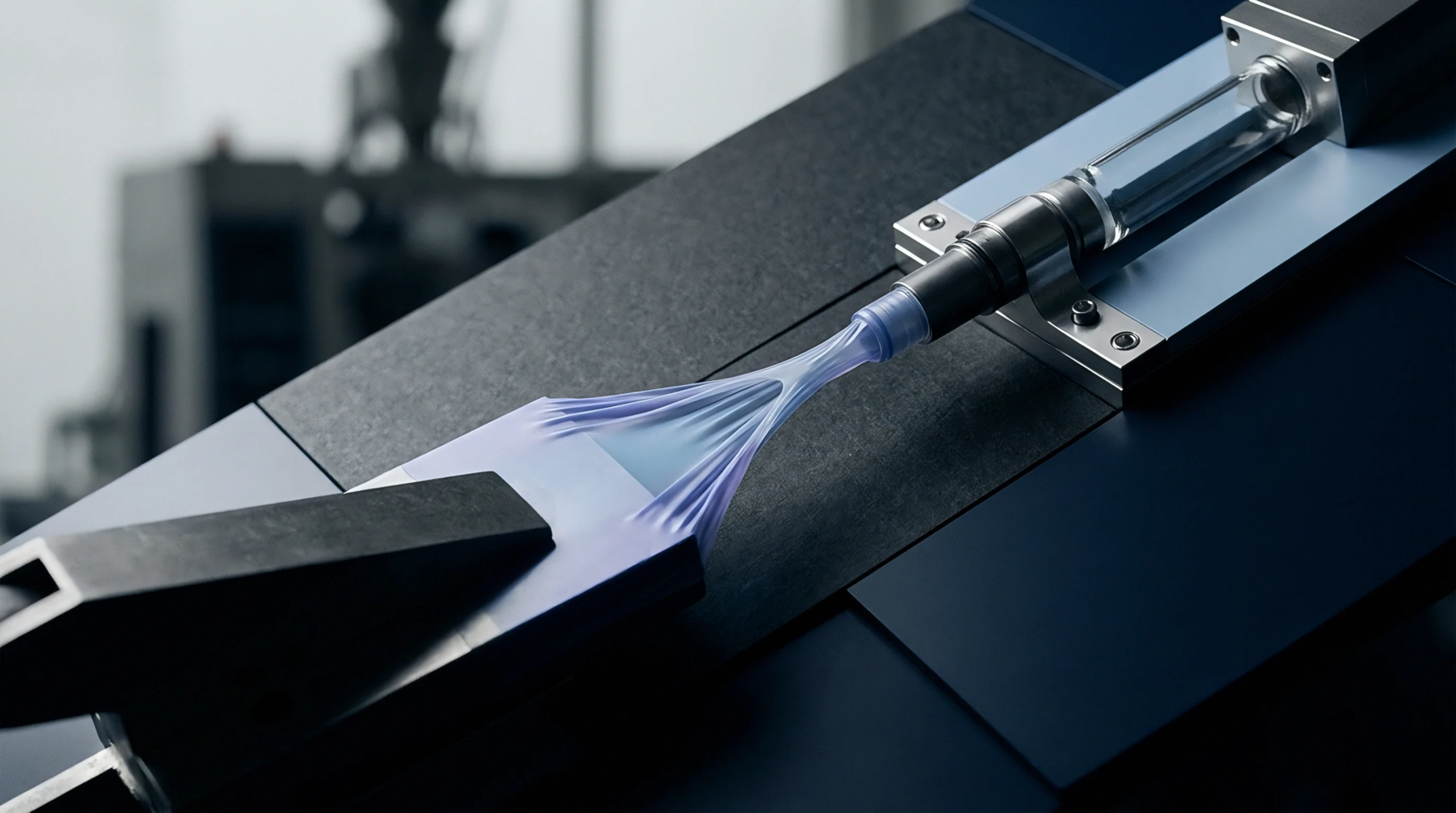
Permanent deformation or molecular rearrangement in polymers occurs when a material undergoes strain softening. This mechanical response involves a local reduction in stress during a controlled elongation phase. The reduction happens as chains disentangle and structural order changes under load.
The physical boundary of the phenomenon is the yield point. Below this threshold, elastic recovery persists, but beyond it, permanent internal modifications remain.
Processing Dynamics
Injection moulding technicians track this behavior to predict flow stability within the cavity. Cooling rates influence the density of molecular alignment, which dictates how the melt absorbs energy before yielding. Variations in resin viscosity between virgin pellets and regrind material alter the stress profile required to move the polymer front.
A stable melt temperature keeps this profile consistent across a production cycle.
Component Integrity
Part performance depends on internal stress states established during the cooling phase. Residual stresses locked into the matrix reduce the mechanical capacity of the final geometry. If the production process ignores the energy dissipation curve, walls fail prematurely under operational loads.
Brittle fractures appear when the internal network lacks the capacity to undergo uniform realignment.
Material Economics
Specification sheets define the yield properties of raw resins for quality control. Engineering grade materials require tighter adherence to these values than commodity plastics. Consistent feedstock prevents uncontrolled fluctuations in flow geometry that lead to high scrap rates.
A slight deviation in the initial modulus forces the machine to compensate with higher injection pressure. Proper characterization of these properties minimizes the cost of secondary part failure.