Meaning
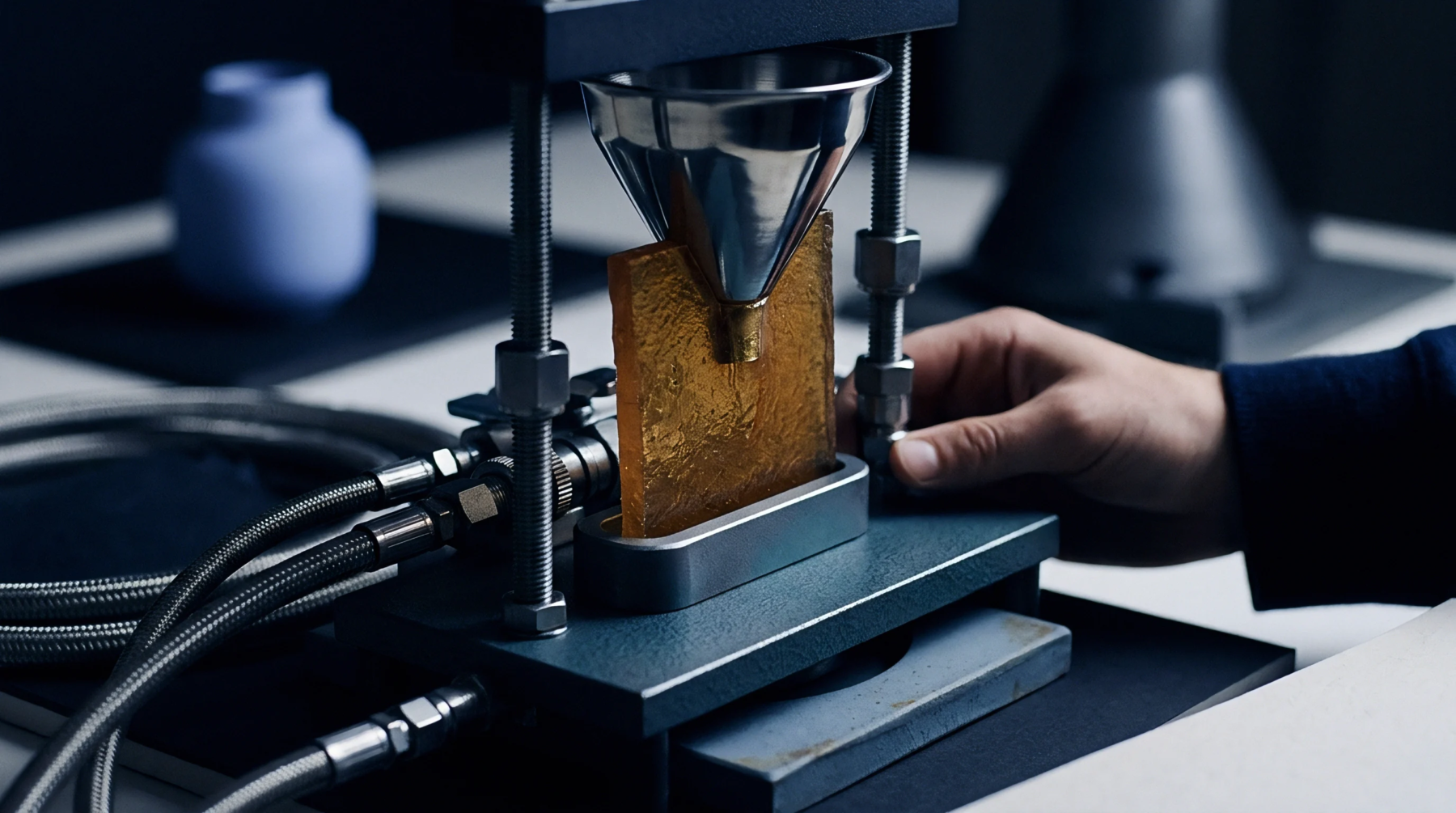
Hierarchical crystal structures consist of a central extended-chain nucleus surrounded by folded-chain lamellae growing perpendicularly. The growth of a shish kebab morphology happens in polymer melts subjected to high degrees of tensile and shear flow. The extended-chain shish provides high tensile strength, while the folded-chain kebabs contribute to the bulk volume of the crystal.
This structure is a hallmark of high-strength oriented films and fibers.
Flow Condition
Processing steps like film blowing or fiber spinning create the intense deformation needed for structural development. The formation of a shish kebab morphology requires the melt to be stretched at a rate faster than the chain can relax. This requires precise control over the take-up speed.
Material Grade
High molecular weight resins are more likely to form this structure because long chains are more easily entangled and stretched. In these materials, the shish kebab morphology enhances the modulus and the melting point. Recycled resins with shorter chains may struggle to develop these strong internal frameworks.
Production Limit
Excessive heat can destroy the shish structure by allowing the chains to relax back into a random coil. Maintaining a shish kebab morphology requires careful management of the temperature gradient during the cooling process. If the temperature remains too high for too long, the kebabs will merge and the unique mechanical benefits of the structure will be lost, leading to a part that is much more flexible and less resistant to stress.