Meaning
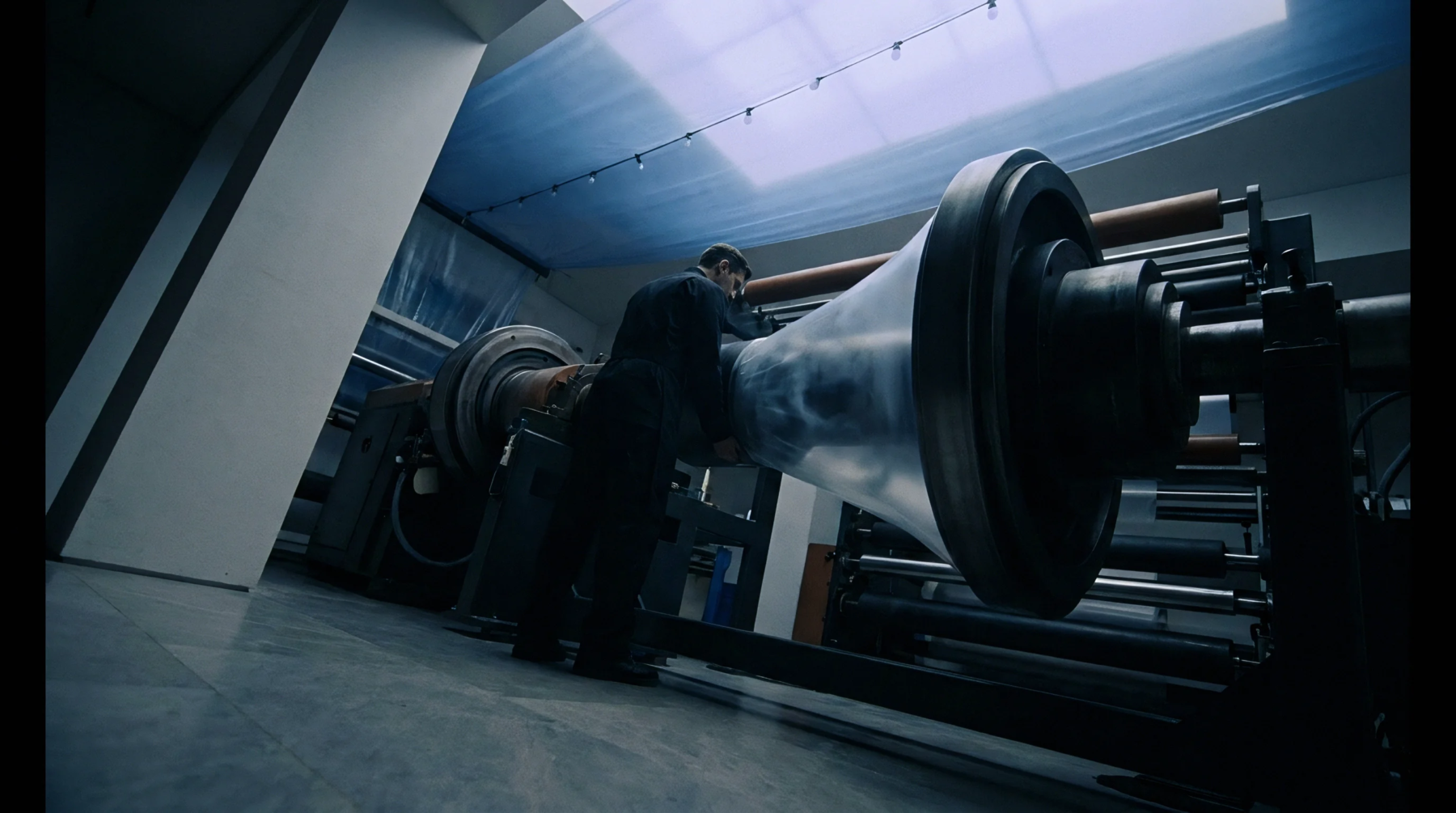
The industrial conversion of post-industrial plastic waste into pelletized feedstock through shredding, melting, and extrusion is accomplished via regrind processing. Thermal degradation accelerates during this operation because repetitive polymer exposure breaks molecular chains and lowers intrinsic viscosity. Strict control over barrel temperatures and residence times during this mechanical recycling phase prevents excessive chain scission and thermal yellowing in the resulting polymer stream.
Processing equipment operators typically deploy screen changers to remove degraded gel particles and particulate contaminants before the melt reaches the pelletizing die face.
Resonating Shear
Shear heating generated within the extruder barrel determines the final molecular weight distribution of reclaimed polyolefins. Elevated screw speeds introduce excessive mechanical work that severs polymer backbones and degrades tensile strength across moulded components. Screw geometry optimization balances throughput rates against specific energy consumption to limit polymer chain scission during melting.
Extruder torque monitoring provides immediate feedback on melt viscosity shifts caused by moisture or inconsistent feedstock density.
Thermal Stability
Moisture entrapment inside porous regrind pellets causes hydrolytic cleavage of ester linkages in condensation polymers like polyethylene terephthalate during secondary extrusion. Predrying chambers remove residual humidity down to strict parts per million thresholds before the material enters the plasticizing unit. Vacuum venting ports along the barrel remove volatile degradation products and trapped air to eliminate surface voids in finished parts.
Incomplete drying manifests as milky streaks on part surfaces and causes a sharp reduction in impact resistance.
Moulding Economics
Virgin polymer blending ratios dictate the mechanical performance ceiling for recycled feedstock injection moulding operations. Virgin resin costs exceed post-industrial regrind prices by significant margins, which drives processors to maximize reclaimed content without compromising structural integrity. Injection pressure profiles require upward adjustment when processing high percentages of recycled material due to lower melt flow index values.
Part shrinkage rates increase as crystallinity shifts between virgin and regrind lots, which forces toolmakers to widen dimensional tolerance bands on critical features.