Meaning
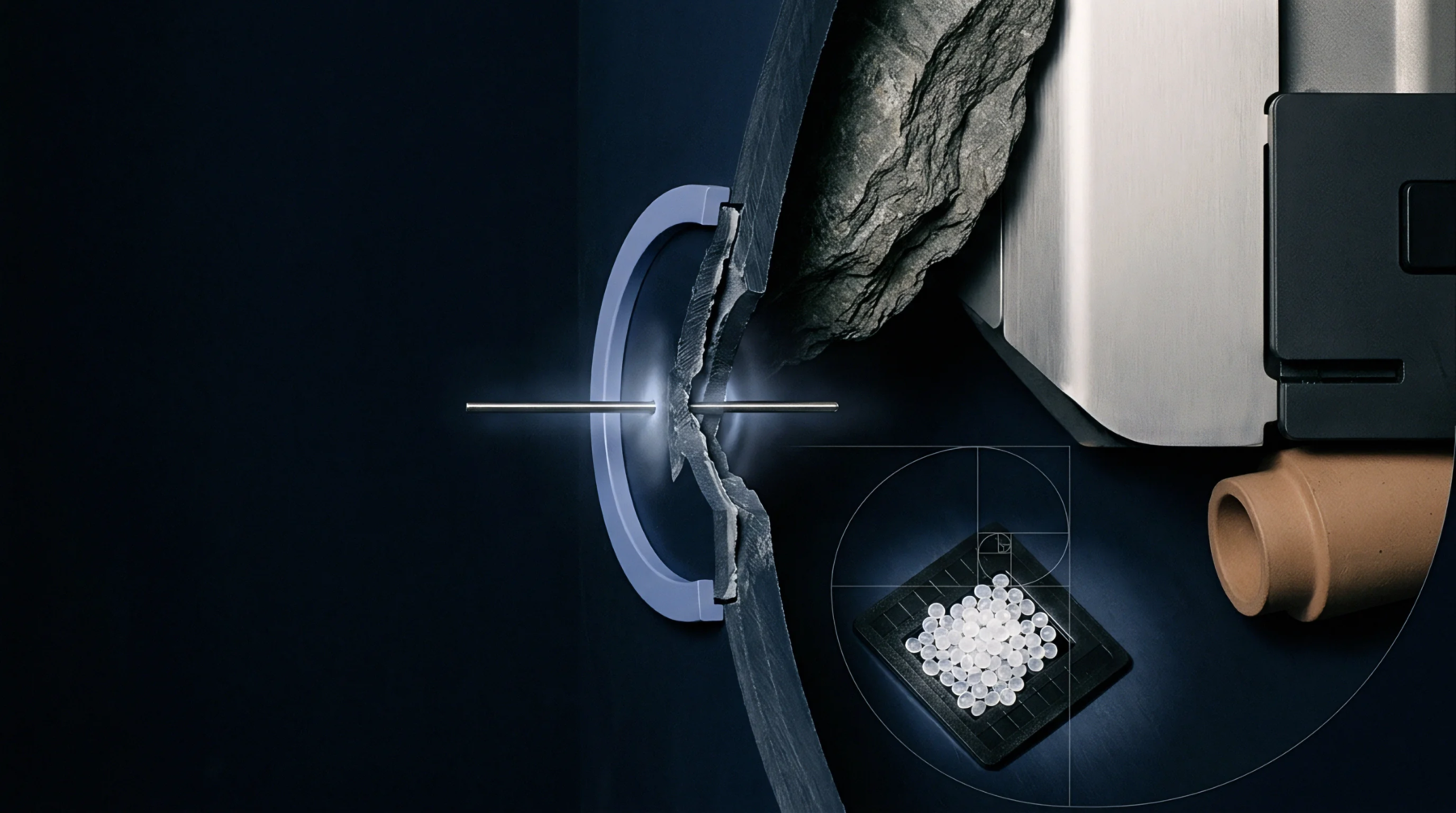
Piezoelectric ceramic formulation based on lead zirconate titanate functions as a high-performance actuator material governing the precise displacement output of injection molding cavity pressure sensors and active hot runner valve pin controls. The stoichiometric ratio of lead, zirconium, and titanium determines the electromechanical coupling coefficient and the Curie temperature governing thermal depolarization limits inside high-temperature processing zones. Tooling engineers specify this material when rapid mechanical deformation under high voltage fields must translate into precise micro-actuation within automated mold cycling equipment.
Operational boundaries require that ambient temperatures stay below the Curie threshold and mechanical loading remains within compressive limits to prevent brittle fracture of the sintered ceramic element during high-frequency actuation cycles.
Actuation Voltage Sensitivity
Applied voltage magnitude directly dictates the dimensional expansion rate of the polarized ceramic transducer inside the tooling assembly. High voltage input gradients drive molecular dipole rotation within the perovskite crystal lattice, generating mechanical force output for precision valve gating. Circuit designers must compensate for inherent hysteresis during high-frequency cycling to prevent positional drift in the molded part dimensions.
Thermal expansion mismatch between the brass housing and the active ceramic core introduces clamping stresses that alter the nominal output sensitivity over extended production runs.
Polarization Decay Threshold
Elevated barrel temperatures near the nozzle tip can exceed the material Curie point and permanently degrade the piezoelectric charge constant of the sensor element. Continuous mechanical shock from high injection pressures compounds thermal fatigue, leading to gradual signal attenuation during long production campaigns. Mounters track output voltage degradation to schedule preventative maintenance before cavity pressure feedback errors compromise part weight consistency.
Virgin resin batches with stable melt flow indices help maintain uniform packing pressures, reducing the mechanical shock transmitted back to the internal ceramic stack.
Hysteresis Compensation Method
Charge amplifiers utilize software algorithms to correct for nonlinear displacement behavior inherent in the mechanical response of the polarized ceramic. Voltage feedback loops adjust the driving current dynamically to counteract mechanical creep and thermal drift during continuous multi-cavity molding operations. Production technicians calibrate the closed-loop system using baseline data from known reference parts to separate true material viscosity shifts from sensor output errors.
Part specifications demand strict dimensional tolerances that depend entirely on this electronic correction to prevent flash formation and short shots across extended molding runs.