Meaning
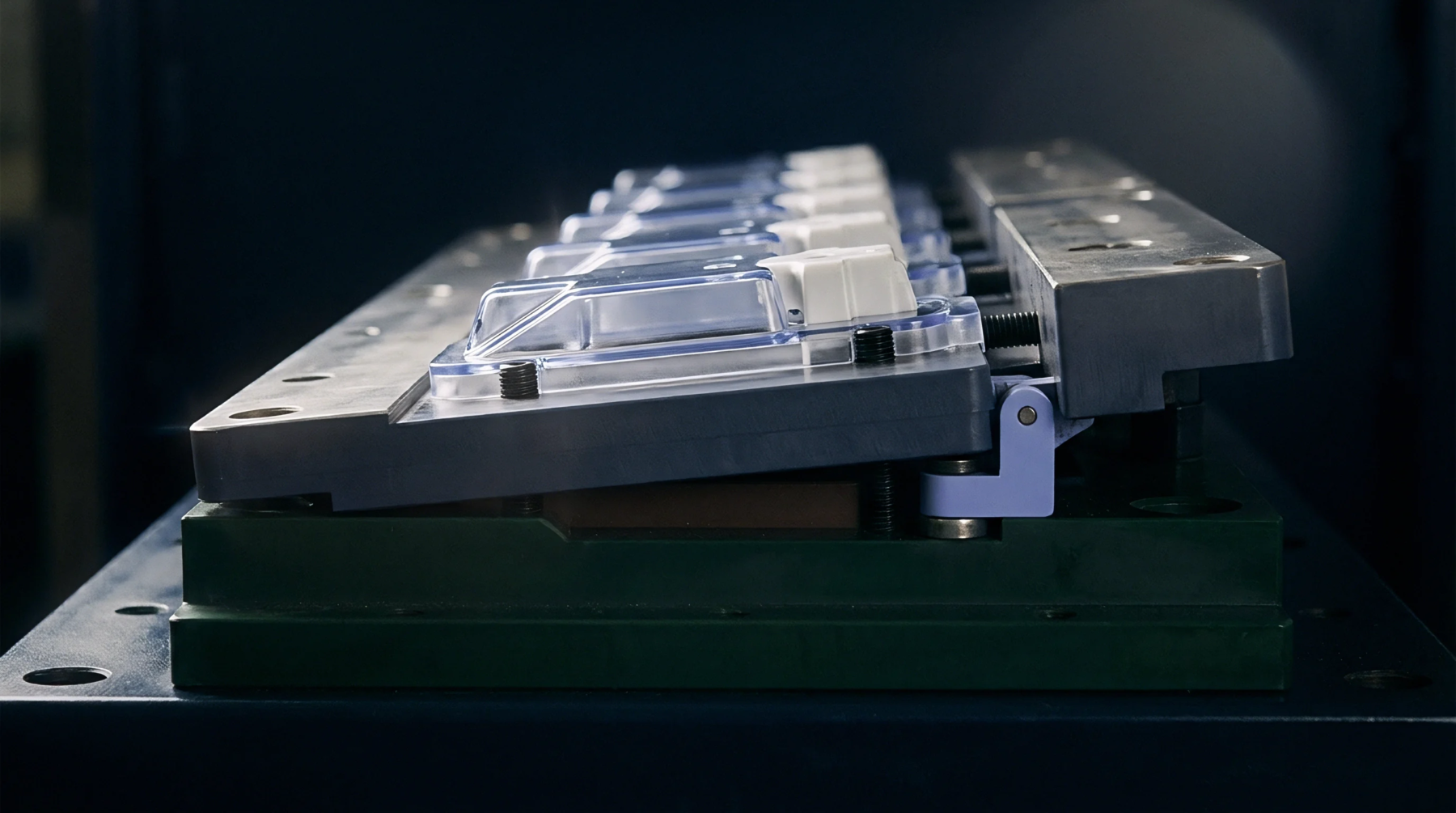
Pressure within a moulding machine cylinder creates the force necessary to hold the mould shut against the opening force generated by the injection of molten plastic. hydraulic clamp force calculation determines the required tonnage by multiplying the projected area of the moulded part by the peak cavity pressure and adding a safety margin to account for material viscosity and gate geometry. This computation prevents mould flashing and damage to the parting line.
Process Variable
Accurate estimations ensure the machine tonnage remains higher than the cavity pressure during the packing stage of the cycle. When the clamp tonnage falls below the required force, the parting line opens and creates heavy flash that ruins the dimensional stability of the part. Moulders often use a formula based on projected area in square inches multiplied by a factor ranging from two to ten tons per square inch depending on material flow characteristics. virgin resins require higher injection pressures than regrind mixtures because the chain length distribution affects viscosity and flow resistance inside the tool.
Tooling Constraint
High cavity pressures require sturdy tie bars and platen designs to resist deflection during the injection stroke. hydraulic clamp force calculation accounts for the geometric complexity of the part which influences the pressure drop from the sprue to the furthest edge of the mould. Thin walls necessitate higher injection speeds and pressures, which in turn demand a higher clamp tonnage to overcome the opening force. Large parts with long flow paths exacerbate the internal stress on the tool surface and demand precise setup to prevent structural failure of the clamping unit.
Safety Factor
Engineers add an allowance to the theoretical result to protect the tool against process spikes such as air traps or sudden viscosity shifts in the polymer. This margin compensates for gauge inaccuracies and hydraulic pressure fluctuations that occur across a long production run. A properly set clamp force sustains the integrity of the mould surface and extends the lifespan of the steel components by minimizing repetitive stress.