Meaning
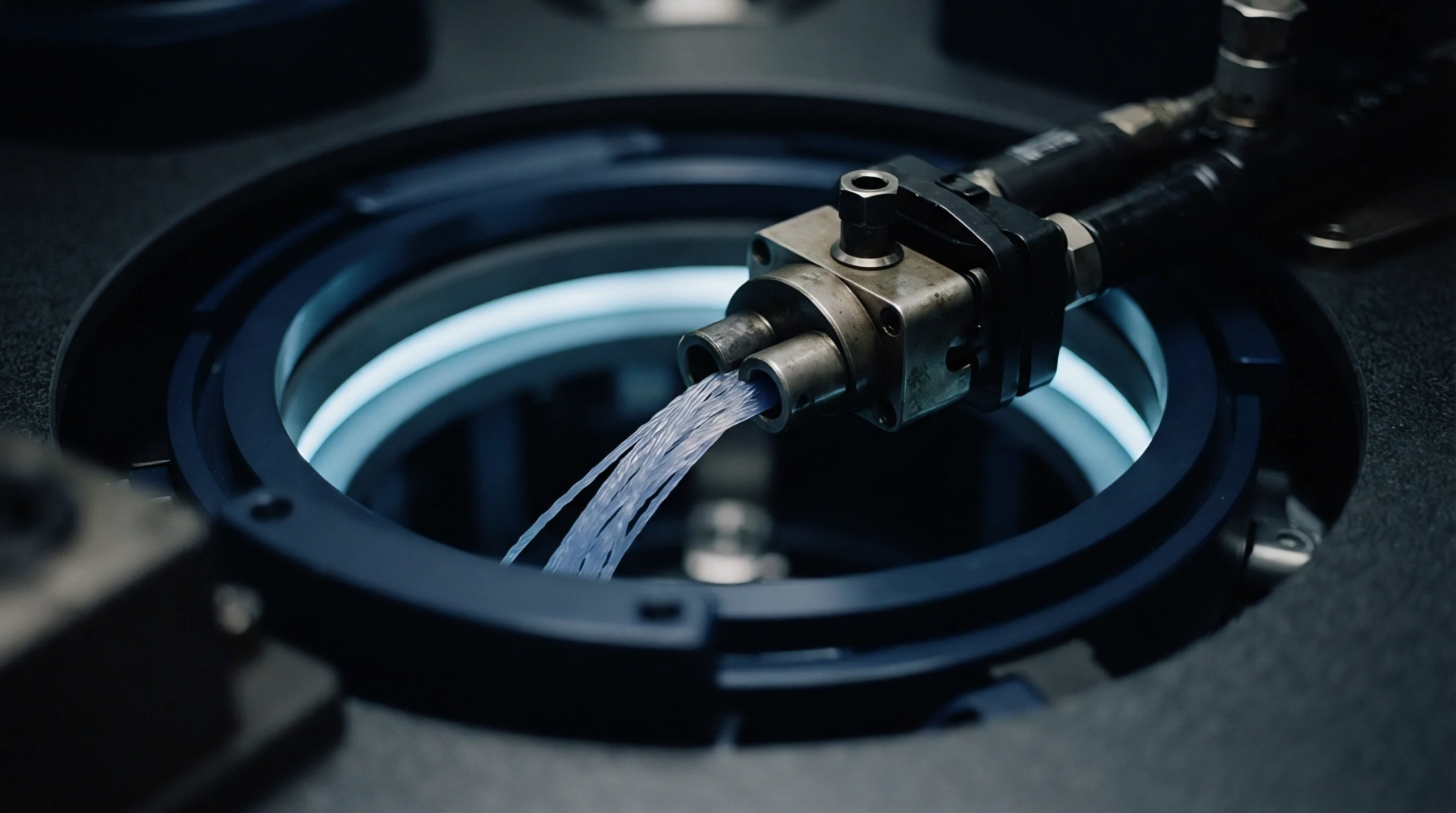
Deformation of thermoplastic material through high shear conditions results in increased molecular orientation and improved mechanical properties within the extruded profile. High strain extrusion generates significant localized energy which assists in overcoming internal viscosity barriers during the processing of highly filled polymers. This transformation happens predominantly within the die geometry where the narrowing channel forces polymer chains to align parallel to the flow direction.
Enhanced tensile strength and dimensional stability occur as direct results of the induced molecular ordering.
Rheological Effect
Molecular alignment reduces the isotropic nature of the final part by concentrating stress along the longitudinal axis. High strain extrusion alters how the material reacts to subsequent cooling cycles because the pre-oriented chains experience different shrinkage rates than non-oriented counterparts. Process control involves monitoring die pressure because excessive drag leads to thermal degradation of sensitive additives.
Consistent throughput depends upon the precise balance of screw speed and cooling rate to prevent internal voids.
Production Variable
Screw geometry choice dictates the initial breakdown of granules before the melt enters the final shaping zone. High strain extrusion relies on precise temperature regulation to ensure the polymer chains remain mobile enough to slide past one another without fracturing the matrix. Regrind percentages affect the achievable strain levels because contaminants introduce sites of premature failure under high pressure.
Stable output requires strict adherence to melt temperature targets to avoid surface defects like sharkskin or melt fracture.
Economic Consequence
Capital expenditure for high-performance die sets remains higher than standard extrusion hardware due to the extreme pressures sustained during operation. Tooling life decreases when processors force high-load materials through complex geometries without adequate lubrication packages. Manufacturers realize gains in material efficiency because the increased strength allows for thinner wall sections without sacrificing structural integrity.
Reduced weight per part provides the primary financial justification for implementing this processing method.