Meaning
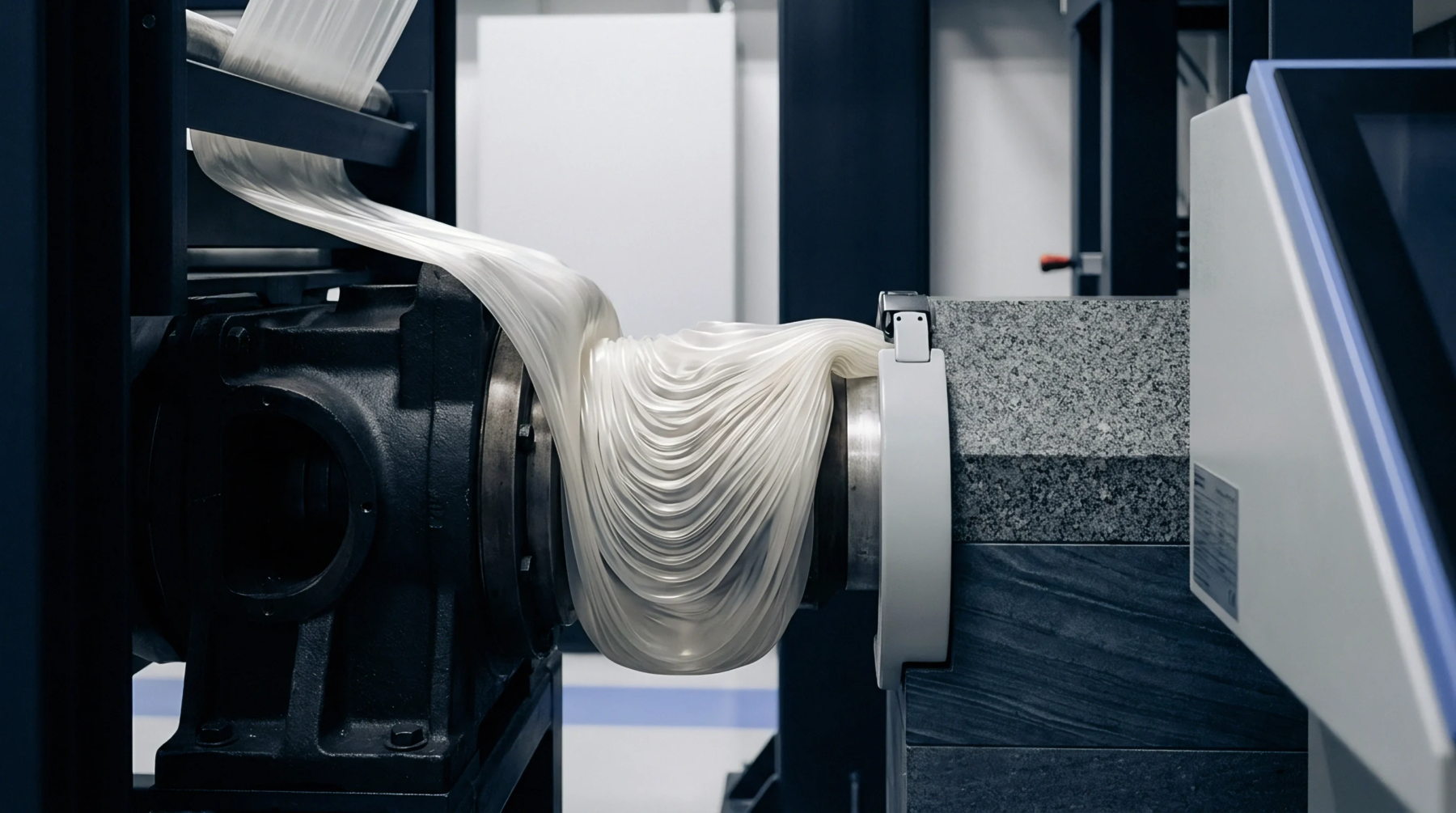
Rheological mapping of non-Newtonian polymer melt behavior plots shear stress against shear rate to define flow resistance across specific processing conditions. The dynamic viscosity curve characterizes how the internal friction of a molten resin changes when subjected to increasing deformation velocities. Melt state properties are governed by molecular weight distribution and branching architecture, which dictate the extent of shear thinning observed during injection moulding.
Industrial datasheets frequently report singular viscosity points for quality control, yet these values fail to capture the behavioral range required for complex cavity filling. A robust process window relies upon selecting materials that exhibit stable flow profiles within the anticipated shear rate regimes of the gating system.
Rheological Profile
Variations in the flow profile indicate significant shifts in molecular chain entanglement and alignment. These curves show whether a material maintains stable viscosity when processing temperatures fluctuate or filler concentrations change. Polymers intended for high-speed automated moulding require specific shear thinning responses to ensure consistent cycle times and dimensional accuracy.
Regrind usage alters the expected curve by shortening average chain lengths, which lowers viscosity at high shear and necessitates recalibration of injection pressure profiles. Discrepancies between theoretical values and machine data often arise from degraded resin history or excessive moisture content that acts as an unintended plasticizer.
Process Consequence
Operational defects appear when the chosen resin profile conflicts with the machine capacity to maintain pressure and velocity. Parts suffer from flash when the viscosity drops faster than the injection cycle compensates, while short shots occur if the melt resistance stays too high at the tool surface. Cost increases originate from scrap accumulation during the attempt to force material through runners that mismatch the rheological requirements of the polymer.
Proper machine calibration accounts for the total shear rate, which includes both the nozzle orifice constriction and the final cavity thin-walled sections.
Measurement Standard
Laboratory testing requires a capillary rheometer to generate data points across multiple decades of shear rate. Standardized protocols ensure that the results reflect the intrinsic behavior of the resin rather than the characteristics of the test equipment itself. Precise temperature control holds the variable constant while the ram speed increases to simulate the diverse conditions experienced inside the tool.
Laboratory measurements provide the benchmark for comparing virgin material batches against developmental blends.