Meaning
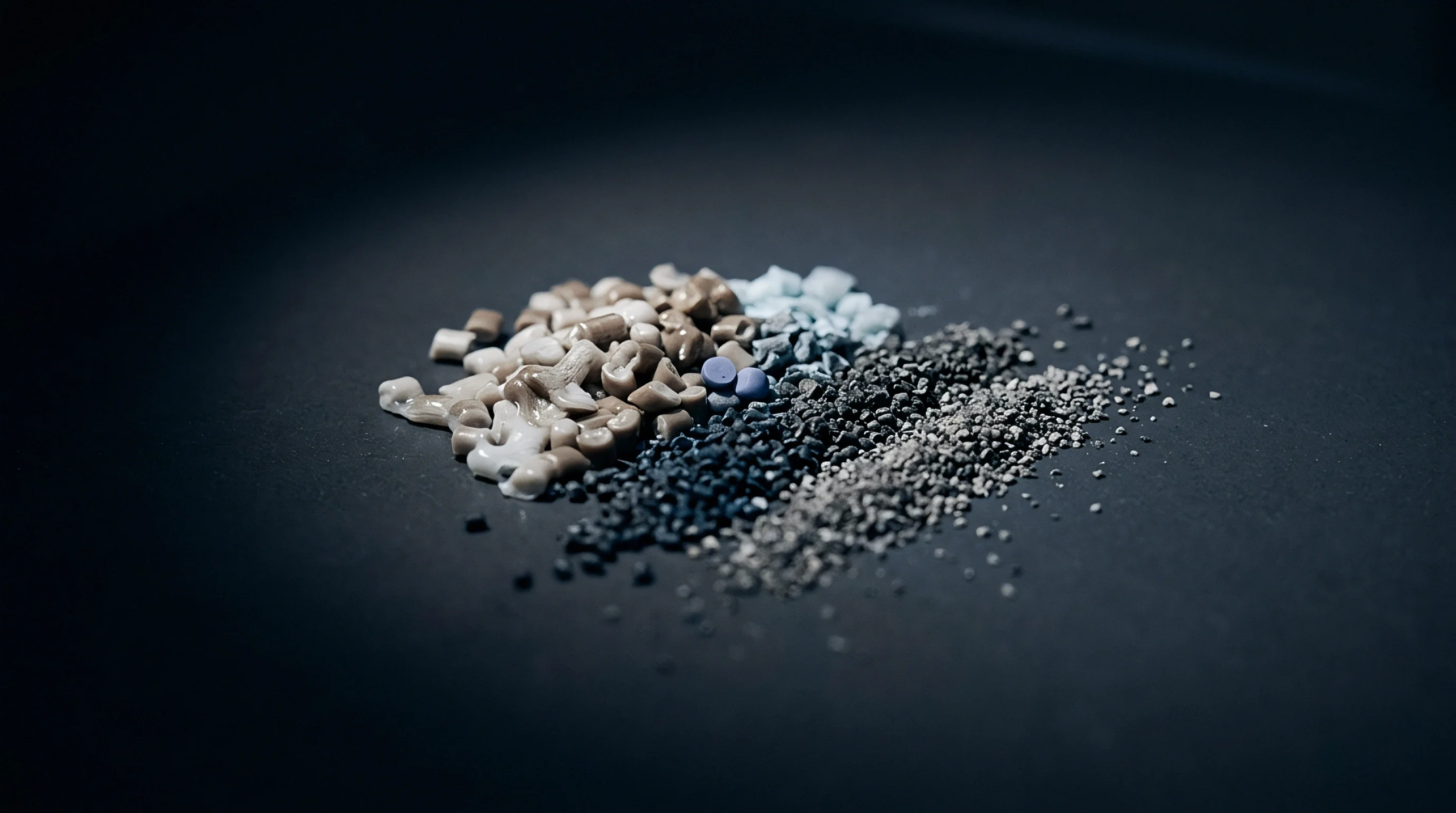
Pulverisation of heat-sensitive materials relies upon liquid nitrogen or carbon dioxide to reach temperatures below the glass transition point of a polymer. Through cryogenic grinding the internal structure of a substance becomes brittle enough to allow for finer particle sizes than mechanical milling at ambient temperatures. This process prevents the thermal degradation and structural melting that occur when high shear forces generate friction heat inside the mill.
The methodology ensures that molecular weights remain intact and stable for sensitive additives or thermoplastic powders that lose chemical properties under standard milling friction.
Thermal Management
High rotational speeds during standard milling operations generate heat that alters the morphology of thermoplastic resins. Cryogenic grinding neutralises this thermal energy by lowering the intake temperature of the feedstock before the material reaches the grinding chamber. Maintaining the material below its brittle point prevents the particles from smearing or clumping during the reduction phase.
Resulting powders exhibit improved flowability and uniform morphology that directly benefit subsequent moulding or rotational casting applications. Operators monitor the nitrogen flow rates to avoid excessive frosting of the equipment housings which creates maintenance burdens over extended run cycles. Precise temperature control prevents the material from reaching a plasticised state where energy dissipates into internal heat rather than particle cleavage.
Economic Influence
Virgin resins often arrive as pellets that require size reduction to meet the specific mesh requirements of powder coatings or additive manufacturing feeds. Cryogenic grinding adds costs related to liquid nitrogen consumption and specialised cryogenic-rated machinery. Practitioners weigh these operational expenses against the reduction in waste that arises from material scorching or clumping in conventional mills.
Recycled regrind poses additional challenges because inconsistent initial particle sizes necessitate longer residence times within the cryogenic system. Higher throughputs occur when the incoming material has a consistent geometry and minimal moisture content.
Powder Morphology
Uniform particle shapes govern the packing density and melt consistency of the final moulded part. Cryogenic grinding creates angular and jagged surfaces that provide different aesthetic and structural results than the spherical particles produced by water-based or mechanical methods. Smaller distributions of particle sizes lead to more predictable shrinkage rates during the cooling phase of an injection moulding cycle.
Irregular powder shapes derived from this process increase the surface area for pigment dispersion and chemical bonding. These physical attributes define the performance limits of the material in high-tolerance industrial applications.