Meaning
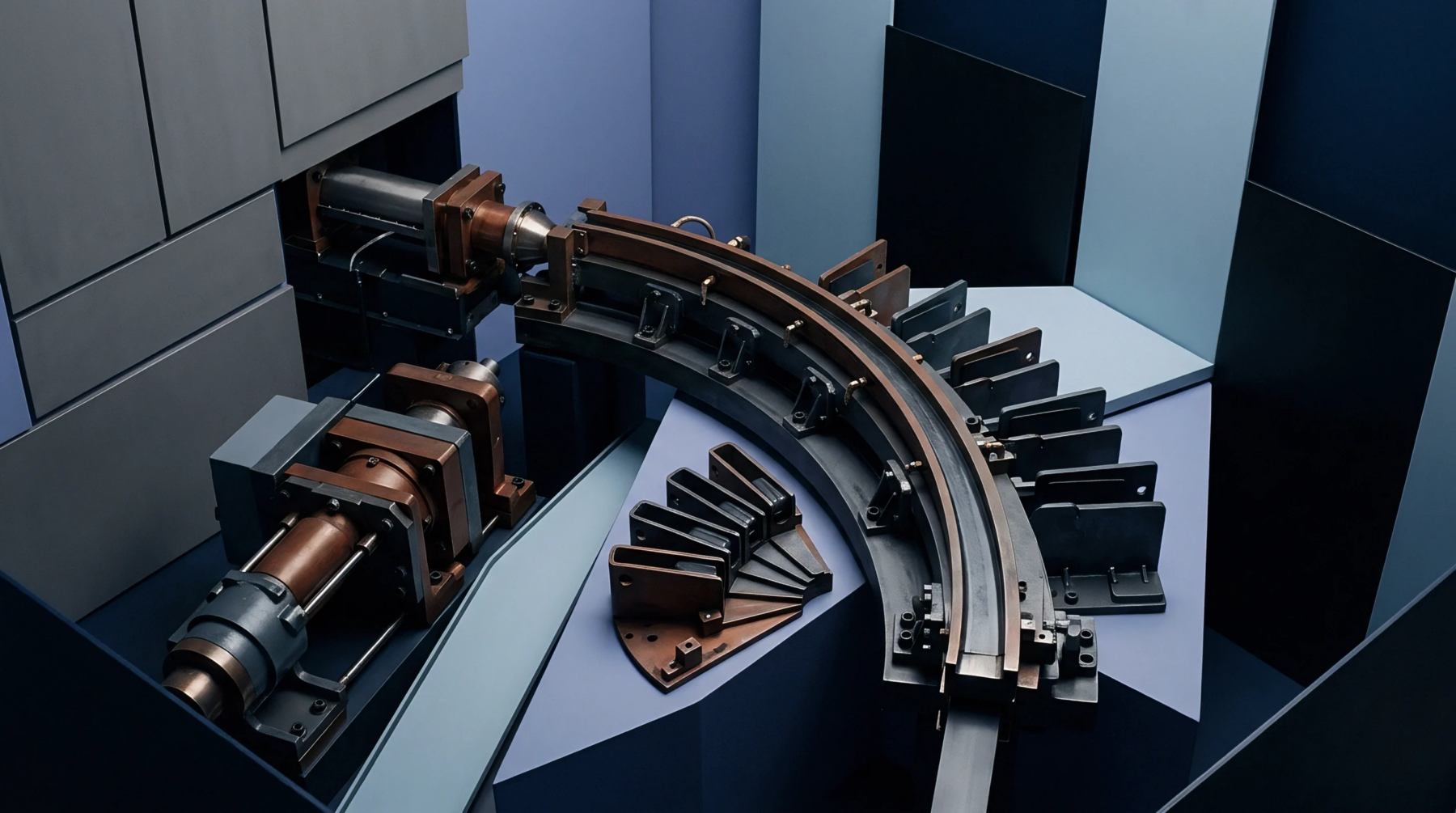
Industrial tool inserts comprise the primary mating blocks that determine the inner and outer dimensions of an injection moulded plastic component. In high-volume production, a core cavity set is installed within a standard mould base to receive the molten polymer flow. This assembly defines the part thickness, surface texture, and gate location, with its operational limits bounded by the clamping force of the press.
Tooling Configuration
The mating halves are machined from hardened tool steel to withstand high injection pressures and thermal cycles. High-grade materials like H13 or P20 steel are selected to ensure dimensional stability under extreme stress. The core defines the internal hollow areas of the part, while the cavity shapes the external aesthetic surface.
Aligning these elements precisely prevents parting line mismatch and flashes on the finished product. This alignment relies on guide pins and interlocking tapers built into the larger mould structure.
Wear Performance
Repeated moulding cycles degrade the sharp edges where the steel halves meet. Abrasive resins like glass-filled polyamide accelerate this erosion during high-speed injection. Periodic inspection identifies micro-cracks before they cause cosmetic failures.
Preventive maintenance involves stripping, cleaning, and sometimes re-polishing the steel faces to restore the original shut-off capability.
Replacement Cost
Procuring duplicate sets ensures production continuity when a tool reaches its fatigue limit. Capital expenditure for these components depends on the part complexity and the number of cavities. Retaining a spare set reduces downtime from days to hours if a catastrophic failure occurs on the line.
This investment is justified for high-volume programs where machine idle time incurs severe financial penalties.