Meaning
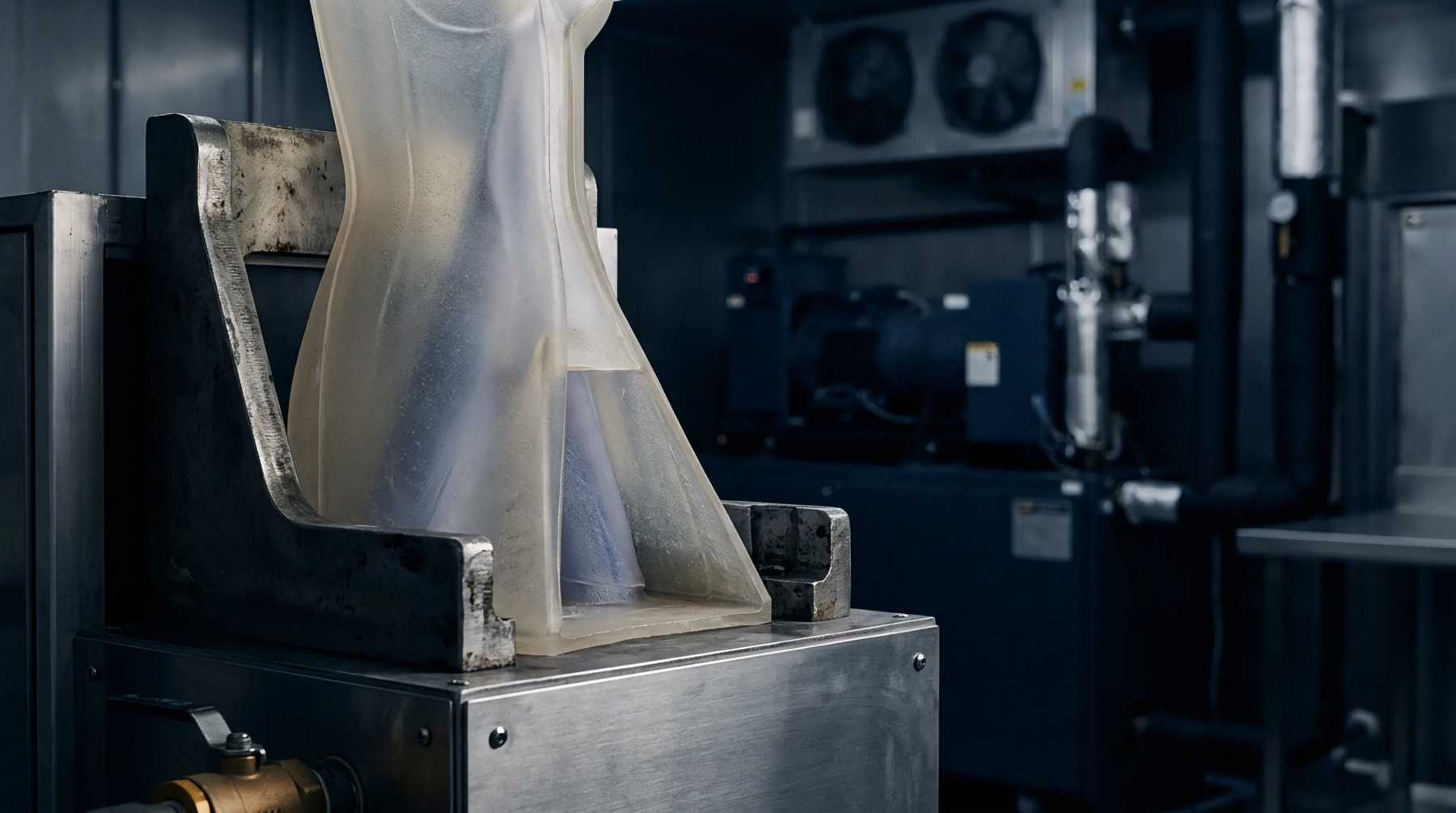
Heat regulation channels inside an injection mould follow the geometry of the cavity to provide uniform thermal extraction. The presence of conformal cooling passages reduces cycle times by bringing water lines closer to the resin where standard drilled holes cannot reach. Unlike straight lines, these follow curvature and maintain a steady distance from the moulding surface to avoid hot spots or thermal gradients.
Thermal Gradient
Heat removal efficiency determines the rate at which molten plastic transitions into a solid state. Because conformal cooling passages track the surface geometry, they facilitate balanced cooling between thick and thin part segments. Water flows through these curved paths to draw heat away faster than static conductive methods.
Fabrication Constraint
Additive manufacturing techniques like laser sintering allow for complex internal geometries that traditional machining methods would impossible to create. While conventional drilling limits engineers to straight intersections, 3D printing enables these intertwined tubes to snake around lifters and slides. High initial tooling costs associated with this method are offset by shorter cycles and lower scrap rates in high volume production.
Part Quality
Dimensional stability improves when the internal stress caused by uneven cooling is minimised across the part surface. Warpage decreases because the cooling rate remains consistent across the entire length of the plastic wall.