Thermoforming against Injection for Volumes below Fifty Thousand Units
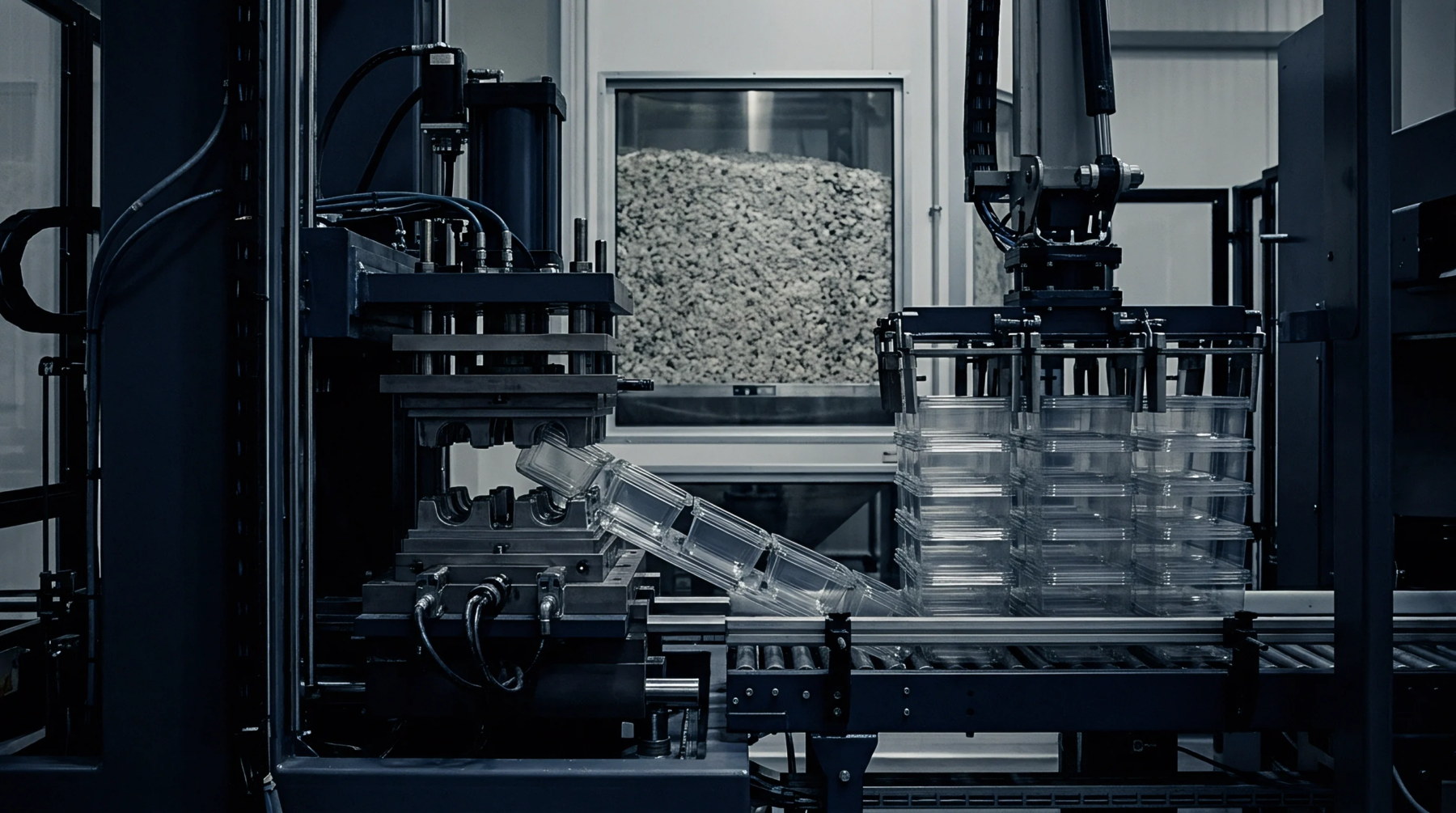
Thermoforming delivers lower total landed cost below fifteen thousand units by saving upfront tooling capital, beyond which injection piece price efficiency dominates.
Production planning depends on calculating breakeven volume to determine the exact output threshold where total manufacturing expenses equal total revenue generated from molded parts. Tooling investments create high fixed overhead costs comprising machine depreciation, hot runner maintenance, and cavity amortization, which must be recovered through sustained part sales. Variable expenses accumulate with every injection cycle, including resin pellet consumption, energy draw, and direct operator labor.
Commercial operations balance these financial obligations against market pricing pressure before ordering production molds. Financial controllers establish this metric during project quotation phases to verify whether projected order quantities justify building multi-cavity steel tools. Production supervisors monitor actual output against this calculated baseline to prevent margin erosion caused by short production runs.
Tooling amortization stops applying once the initial production contract concludes, requiring recalibration if replacement orders demand refurbishment charges.
Cavity wear accelerates when production runs fall short of financial targets because fixed machinery expenses distribute across fewer acceptable components. Engineers analyze steel hardness ratings and thermal fatigue limits during tool design to estimate how many cycles the mold withstands before dimensional drift appears. High cavitation tooling demands massive initial capital outlay, pushing the required output threshold higher before profitability begins.
Processing parameters must remain strictly controlled during extended runs to prevent flash or sink marks from ruining parts that contribute toward fixed cost recovery. Resin selection directly influences tool longevity, as glass-filled polyamides abrasive wear gate inserts faster than unfilled polyolefins, altering tool maintenance schedules. Scrap rates generated during material changeovers reduce the net quantity of sellable components, forcing machines to operate longer to cover baseline manufacturing expenses.
Virgin polymer grades demand higher raw material budgets, raising baseline production costs and shifting the required output threshold upward for every commercial order. Regrind polymers introduce viscosity variations that complicate melt flow consistency, increasing scrap generation rates during automated injection molding runs. Technicians adjust barrel temperatures and injection speeds constantly to compensate for melt index shifts inherent in post-industrial regrind streams.
Material datasheets provide baseline melt flow index numbers, but moisture absorption during storage alters processing behavior on the factory floor. Part specifications dictate whether structural components tolerate blended regrind percentages without sacrificing tensile strength or impact resistance. Economic pressures tempt processors to increase regrind ratios, yet excessive recycling degrades polymer chains until mechanical failure rates surpass acceptable thresholds.
Dimensional stability suffers when injection machines cycle outside established processing windows, generating out-of-spec components that waste valuable raw material. Cavity pressure sensors track packing phases to ensure consistent volumetric shrinkage across every molded part, preventing sink marks and warping. Material variations between polymer batches alter cooling shrinkage rates, forcing technicians to recalibrate clamping tonnage and holding pressures mid-run.
Part specifications impose strict geometric tolerances that require precise mold temperature control to prevent post-molding distortion. Datasheet values represent ideal laboratory conditions, whereas shop floor environments experience ambient temperature fluctuations that influence molded part dimensions. Quality inspectors measure wall thicknesses against blueprint tolerances to verify that process adjustments maintain acceptable manufacturing standards throughout the entire production run.
Thermoforming delivers lower total landed cost below fifteen thousand units by saving upfront tooling capital, beyond which injection piece price efficiency dominates.
Expertise is a utility, not a secret. sentiention™ publishes its working knowledge as open reference: intelligence layer covering the materials it sources, the markets it enters, and the reference that serves both.