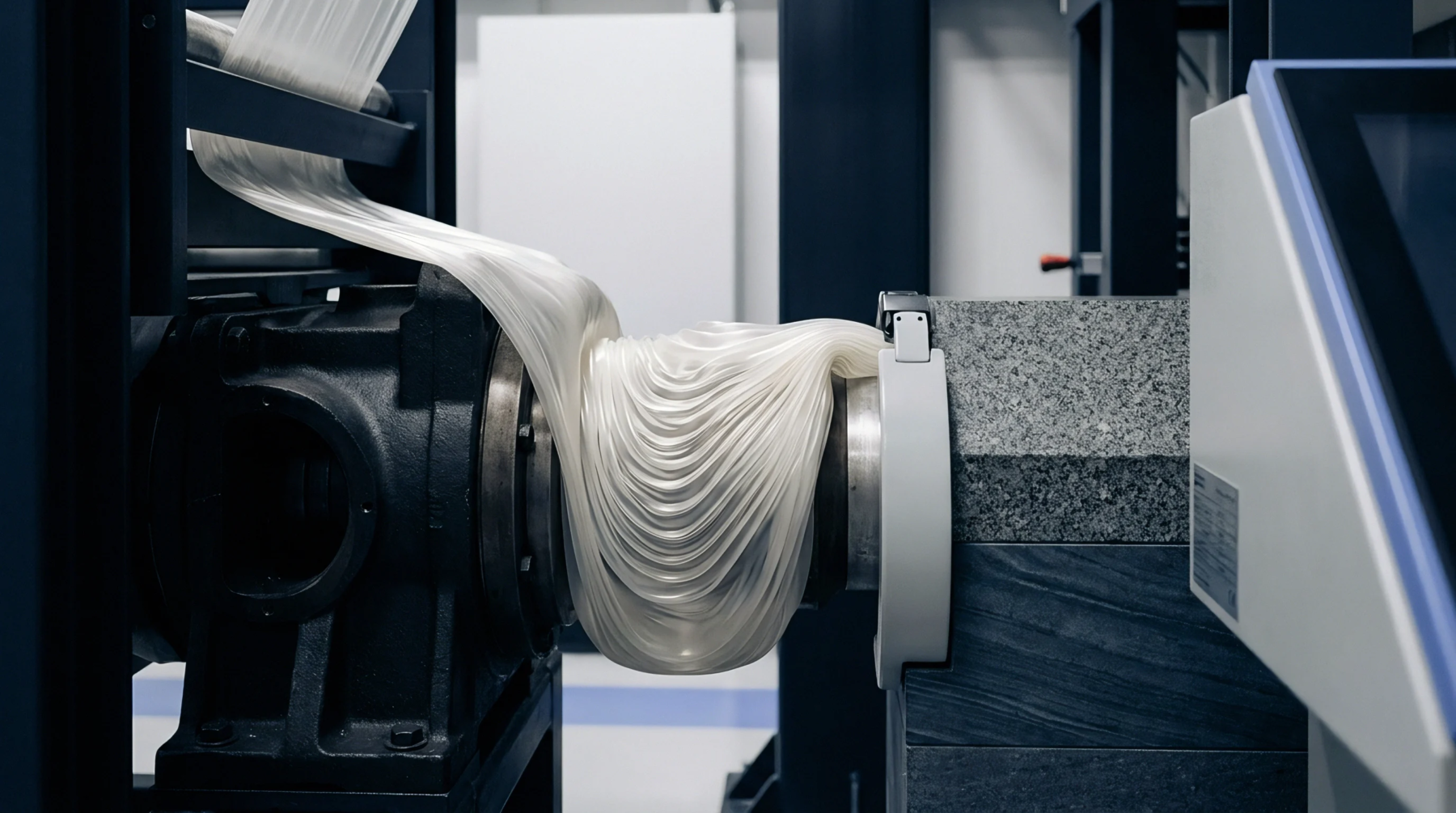
Optimizing Melt Channel Bifurcations to Eliminate Shear Heating Viscosity Gradients
Optimizing melt channel bifurcations with melt rotation geometry and stepped hydraulic diameters eliminates shear-induced viscosity gradients across cavities.
Runner geometry inserts engineered for multi-cavity injection moulds redistribute non-uniform thermal and shear profiles within branching melt streams. Melt passing through conventional branched runners develops asymmetric laminations because wall contact induces localized viscous heating. The patented Beaumont flipper alters stream orientation at intersections by shifting outer shear-heated skin layers into the core of downstream branches.
This physical realignment balances volumetric filling, cavity pack pressures, and shrinkage profiles across geometrically balanced layouts. Tooling engineers treat the insert as a mechanical rheology equalizer that functions without electrical heating zones or manifold valve gating. The boundary of its utility sits strictly within branched cold or hot runner delivery channels where shear-induced imbalance degrades part weight uniformity.
Flow channels generate distinct viscosity gradients between the stationary channel perimeter and high-velocity internal streamlines. Shear stress concentrates along perimeter boundaries, raising local resin temperature by several degrees. When a circular stream splits perpendicularly at a conventional tee junction, the warmer outer lamina routes preferentially into inner branch walls while cooler core material deflects outward.
Downstream cavities connected to inner branch paths receive hotter, lower-viscosity resin than companion cavities fed by outer paths. Cavity fill imbalance emerges despite identical runner cross sections and matched delivery lengths. The Beaumont flipper counters this thermal asymmetry by introducing a three-dimensional step that rotates the cross-sectional flow profile by ninety degrees.
Asymmetric thermal layers invert before entering tertiary splits, distributing hot skin material symmetrically across subsequent flow fronts.
Mould makers install these flow-management elements as interchangeable cylindrical tool steel inserts directly at runner intersections. Fabricating runner branches into hardened inserts permits precise electrical discharge machining of proprietary compound radii without altering main cavity plates. Regrind additions exacerbate filling discrepancies by broadening the molecular weight distribution, which steepens the shear-thinning response across runner splits.
Inserting a Beaumont flipper suppresses variations caused by regrind viscosity shifts, preserving part dimensions across disparate cavitation rows. Part weight deviations shrink across multi-cavity production runs, lowering the frequency of short shots and sink marks in outer cavities.
Process engineers verify balancing effectiveness through progressive short-shot study series conducted at production injection velocities. Unbalanced tooling exhibits cavity fill differentials exceeding twenty percent when parts are injected at eighty percent volume. Installing a Beaumont flipper reduces cavity-to-cavity weight variation down to thresholds below two percent across high-cavity tools.
Gate freeze times align across cavities, yielding uniform core stress and consistent volumetric shrinkage. Flash development on centrally located parts ceases because packing pressure distributes evenly across the parting line. Tool longevity improves as clamping tonnages operate against symmetrically distributed cavity pressures.
Optimizing melt channel bifurcations with melt rotation geometry and stepped hydraulic diameters eliminates shear-induced viscosity gradients across cavities.
Expertise is a utility, not a secret. sentiention™ publishes its working knowledge as open reference: intelligence layer covering the materials it sources, the markets it enters, and the reference that serves both.