Meaning
Coexistence of viscous liquid flow and elastic solid recovery within a single material governs how polymers respond to stress and strain over time. This dual behavior, known as viscoelasticity, occurs because polymer chains can slide past each other while also storing energy through molecular stretching. It dictates the processability of melt flows during extrusion and determines the load-bearing capacity of finished parts.
Time Dependence
Molecular relaxation represents the rate at which polymer chains return to their equilibrium state after being stretched. In a viscoelastic material, the response to a load depends on the duration of the applied force. Under rapid impact, the polymer chains behave like an elastic solid, resisting the deformation and storing energy.
If the load is applied slowly, the chains have time to slide and disentangle, resulting in viscous flow and permanent deformation. This rate-dependent behavior is a critical factor in both processing and product design.
Processing Consequence
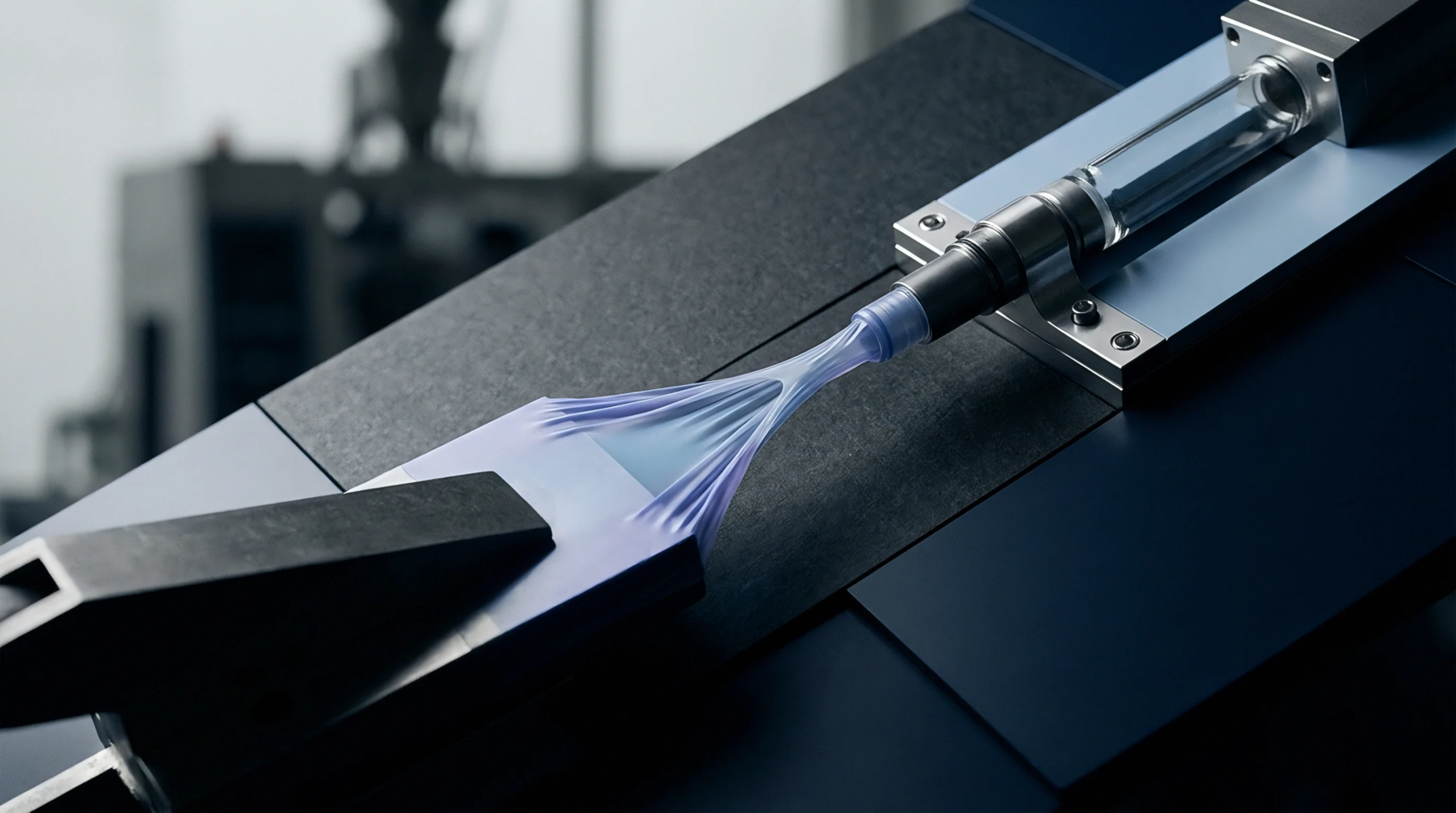
Melt swell and die exit distortion are direct results of the stored elastic energy in the flowing polymer. As the resin is squeezed through a narrow die, the chains stretch in the direction of flow. Upon exiting the die, the material’s viscoelasticity causes the chains to recoil, resulting in an expansion of the extrudate known as die swell.
Moulders must account for this behavior when designing dies to ensure that the finished profile matches the required dimensions.
Solid State
Creep and stress relaxation are the main performance issues that arise when finished plastic parts are subjected to constant load over their service life. If a plastic component is held under constant tension, the internal stress will gradually decay as the polymer chains rearrange themselves. This process can cause fasteners to loosen or structural parts to deform permanently over time.
Design engineers must use long-term viscoelastic data to calculate the load limits of parts that will be under continuous stress in the field.