Meaning
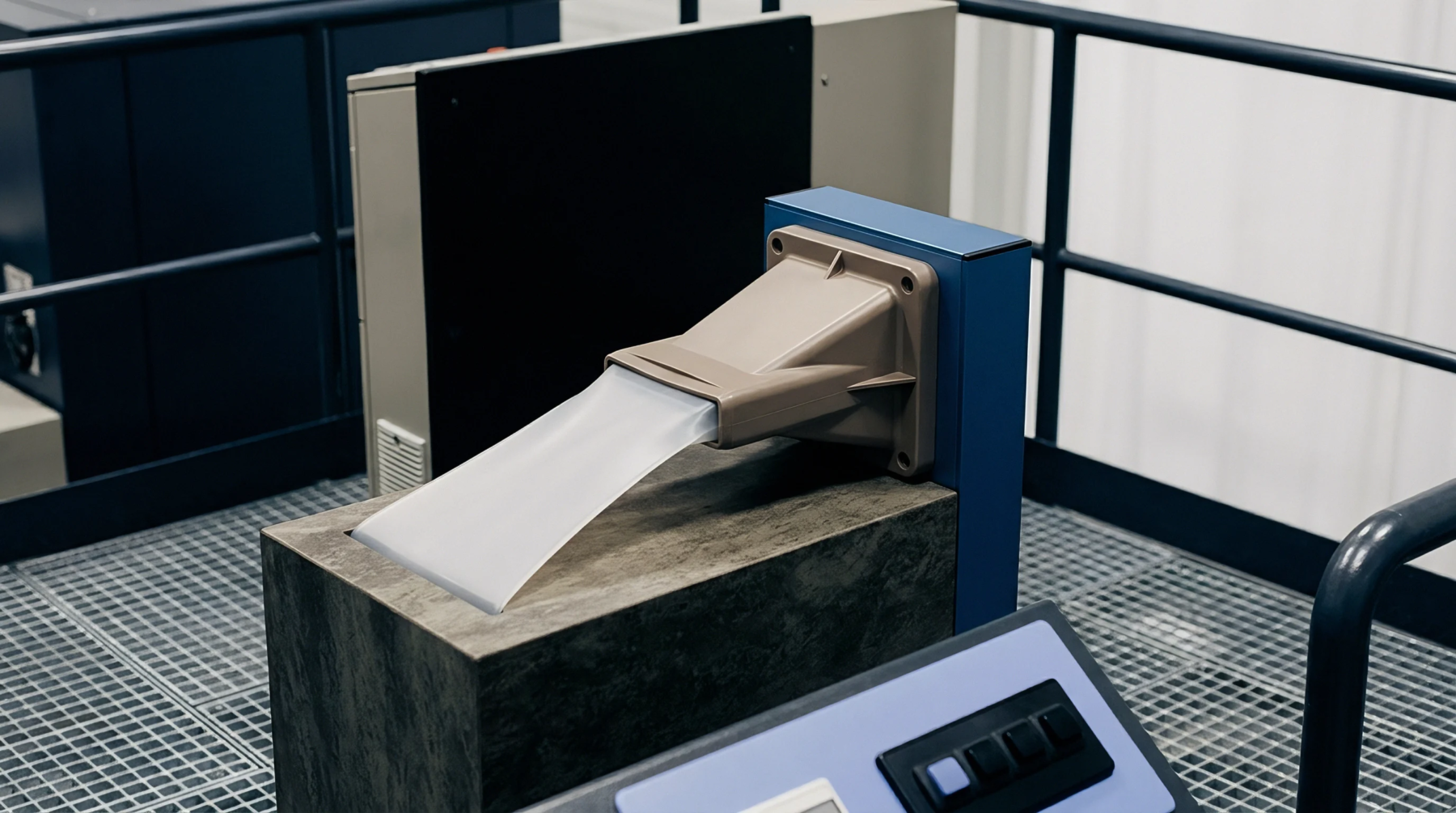
Automated packaging machinery forms flexible polymer webs into vertical tubular envelopes, doses a measured charge of product inside the gravity fed cavity, and seals the perimeter concurrently to separate individual units. Vertical form fill seal technology governs the transition state from flat thermoplastic roll stock to a sealed containment pouch by applying thermal energy and mechanical clamping pressure along the horizontal and vertical sealing jaws. Temperature regulation must match the melting point of the specific sealant layer within a multilayer extrusion structure to prevent film burn through or insufficient bond strength during high speed cycling.
That mechanical boundary stops applying once the pouch leaves the discharge chute because subsequent case packing operations rely on external conveyors rather than the primary forming collar.
Sealing Integrity
Thermal contact time dictates the molecular diffusion across the polymer interface during the jaw closure phase. Pressure variance across the heated bar introduces micro channels that compromise barrier properties against moisture vapor and atmospheric oxygen. Polyethylene layers require precise dwell intervals to allow adequate heat transfer without degrading the outer oriented polypropylene substrate.
Moulders evaluating seal failure look for peel force consistency rather than visual appearance alone.
Film Tension
Unwinder brake torque controls the continuous draw down resistance acting on the flexible roll stock. Excessive drag distorts the printed graphic registration marks and induces premature stretching of low density polyethylene films. Insufficient brake resistance causes tracking wander across the forming tube shoulders, resulting in uneven longitudinal seam overlaps.
Production technicians adjust dancer arm springs to absorb the intermittent shock loads generated by the stepping pull belts.
Hoop Stress
The cylindrical forming collar subjects incoming thermoplastic films to continuous circumferential stretching forces. High density formulations resist excessive elongation during this bending sequence, whereas soft elastomer modified blends wrinkle easily inside the cone cavity. Operators measure the resulting hoop deformation against the nominal flat width specified on the raw material datasheet.
Pouch dimensional stability degrades whenever excessive friction heats the shoulder surface above the softening point of the base resin.