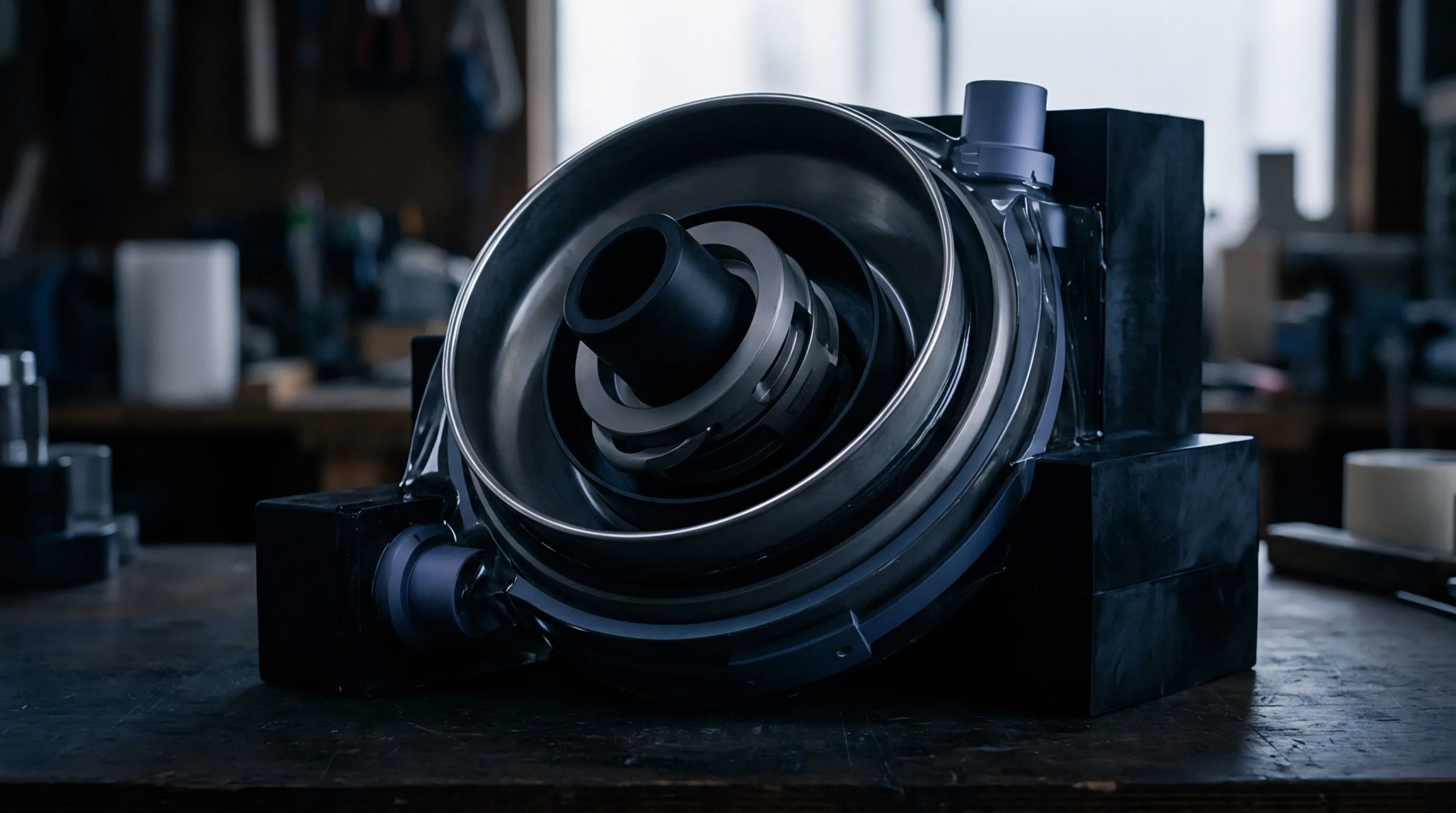
First Shot Samples Polished before the Buyer Ever Sees Them
Doctored T1 samples hide draft and thermal flaws through hand polishing; enforce raw steel T0 audits with continuous cavity telemetry before sign-off.
A specialized micro-abrasive compound utilized in finishing cavities within polymer injection moulds is tool steel lapping diamond paste, functioning strictly as a mechanical reduction medium for hardened alloys and stopping short of chemical etching or bulk removal. The suspension consists of graded diamond particles dispersed within a viscous carrier fluid to ensure uniform distribution across high-hardness surfaces during final polishing stages. Operating parameters demand careful control of rotational speed and applied pressure to prevent localized overheating that alters the metallurgical temper of underlying substrates.
Polishing actions directly dictate the boundary layer characteristics of cavities where tool steel lapping diamond paste removes microscopic peaks left by previous machining operations. Reducing surface roughness values below strict micro-inch thresholds minimizes mechanical drag during polymer flow, preventing shear-induced molecular degradation in shear-sensitive engineering resins like polycarbonate. High friction coefficients resulting from inadequate finishing lead to localized sticking during part ejection, generating high ejection forces and subsequent part distortion.
Cavity wall topography determines whether moulded components release cleanly or suffer surface tear defects during demoulding phases, making abrasive grade selection a critical variable in tool maintenance protocols. Production environments rely on specific micron sizes to bridge the gap between rough milling and optical clarity, balancing material removal rates against micro-scratch generation.
Economic pressures often drive processors to incorporate reground polymers, a practice that amplifies the visibility of surface imperfections originating from worn tooling. Tool steel lapping diamond paste restores mirror finishes on worn cavity inserts, extending operational lifespans and delaying costly re-tooling cycles for high-volume production runs. Virgin resin processing tolerates minor tool micro-defects better than heavily filled or recycled material streams, which tend to replicate every microscopic flaw onto the final part surface.
Surface maintenance costs scale directly with the abrasive precision applied during mould servicing, balancing tooling longevity against part aesthetic rejection rates. Tooling maintenance schedules must account for abrasive wear patterns, ensuring that dimensional tolerances remain inside strict part specification limits rather than drifting toward loose datasheet allowances.
Heat dissipation across injection mould interfaces depends on micro-contact efficiency between mating plates and core inserts, a factor directly influenced by finishing quality. Tool steel lapping diamond paste eliminates microscopic air gaps that act as thermal insulators, improving the overall heat transfer rate during the cooling cycle of injection moulded parts. Faster cooling reduces total cycle time and minimizes frozen-in internal stresses within amorphous polymers, preventing warpage and dimensional instability after demoulding.
Mould design specifications dictate precise thermal gradients, and surface finishing imperfections disrupt these engineered temperature profiles by creating localized hot spots within deep rib details. Thermal uniformity across the entire cavity surface prevents differential shrinkage rates, ensuring moulded components meet stringent dimensional tolerances required for assembly applications.
Doctored T1 samples hide draft and thermal flaws through hand polishing; enforce raw steel T0 audits with continuous cavity telemetry before sign-off.
Expertise is a utility, not a secret. sentiention™ publishes its working knowledge as open reference: intelligence layer covering the materials it sources, the markets it enters, and the reference that serves both.