Meaning
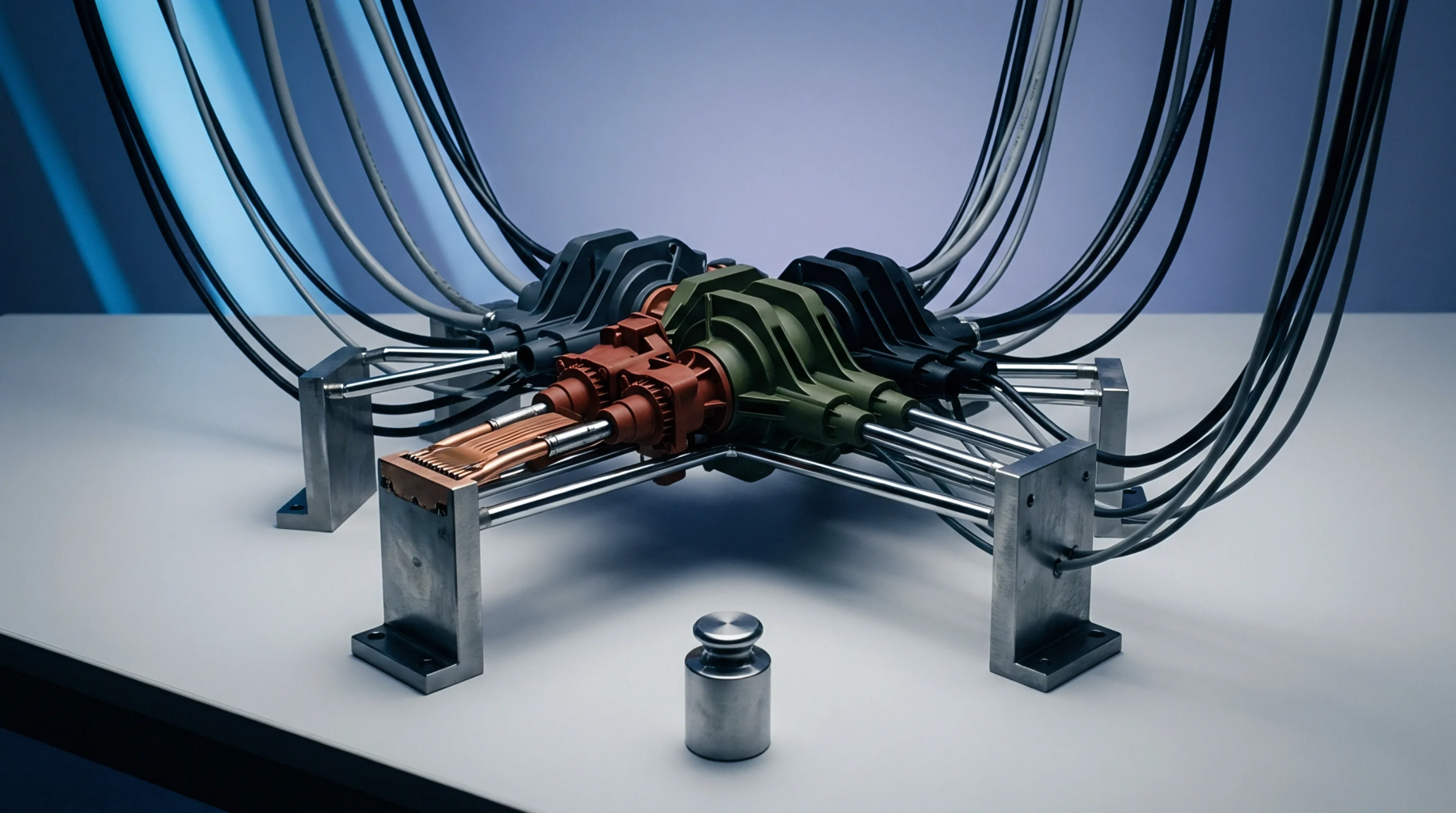
Assembly fixtures hold multiple components in rigid alignment while heat is applied to plastic studs to lock parts together securely. A thermal staking nest provides the structural base that prevents the assembly from shifting or deforming during the melting phase. It governs the quality of the mechanical bond between dissimilar materials such as electronics housings and internal metal brackets.
The fixture applies during the final secondary operations after the initial injection moulding process is complete. It excludes basic manual hand presses that lack the cooling channels and precision support required for consistent high volume repeatable assemblies.
Support Function
Parts must sit inside the cavity without moving to ensure the heat probe hits the target post perfectly every cycle. The thermal staking nest often uses vacuum or mechanical clamps to secure the loose pieces together before the stakes move down. It is often made from aluminum or non marring plastic to prevent scratching the visible surfaces of the consumer goods.
Each nest is custom built to match the unique shape of the target part geometry. It keeps the components level so that the flattened mushroom head forms uniformly across the assembly interface. This alignment is critical for items that need to maintain strict tolerances for gap and flush after the staking is done.
Wear or build up on the nest surface is monitored to maintain the correct location of the workpieces.
Cooling Cycles
Molded in heat must be removed quickly to allow the newly formed rivet to solidify before the fixture opens again. Modern thermal staking nest designs sometimes incorporate active cooling circuits to lower the cycle time of the secondary operation. This prevents heat from migrating into the main body of the part and causing local deformation or visual sink marks.
Without these circuits, the nest would gradually warm up over multiple shifts which changes the effective forming time of the rivets. Precise control of the dwell time ensures that the plastic flows into the correct shape without overfilling or burning. High consistency in this area avoids the assembly problems where components feel loose after they leave the station.
It also reduces the risk of thermal damage to sensitive electronics that might be resting nearby during the staking process.
Process Verification
Operators check the nests regularly to ensure that no debris is interfering with the fit of the assemblies being loaded. A high quality thermal staking nest helps achieve high scores in quality audits because it removes the variation caused by poor operator placement. It allows the production cell to run faster by providing an intuitive and foolproof way to load parts.
When the process finishes, the robot or operator removes a single unified product from the nest for packing. This setup helps detect if incoming injection molded parts are starting to warp beyond the specification limits. If a part no longer fits into the nest, it indicates a problem upsteam in the molding process.
This provides an extra layer of protection against shipping parts that do not meet the assembly requirements.