Meaning
Mathematical representation of the local deformation state within a polymer melt or solid body describes the orientation and magnitude of stretching in three dimensions. This multi-component array, known as the strain tensor, captures both the normal stretching and the shear deformation experienced by the resin. It governs the calculation of molecular orientation and residual stresses that develop during the moulding cycle.
Polymeric Flow
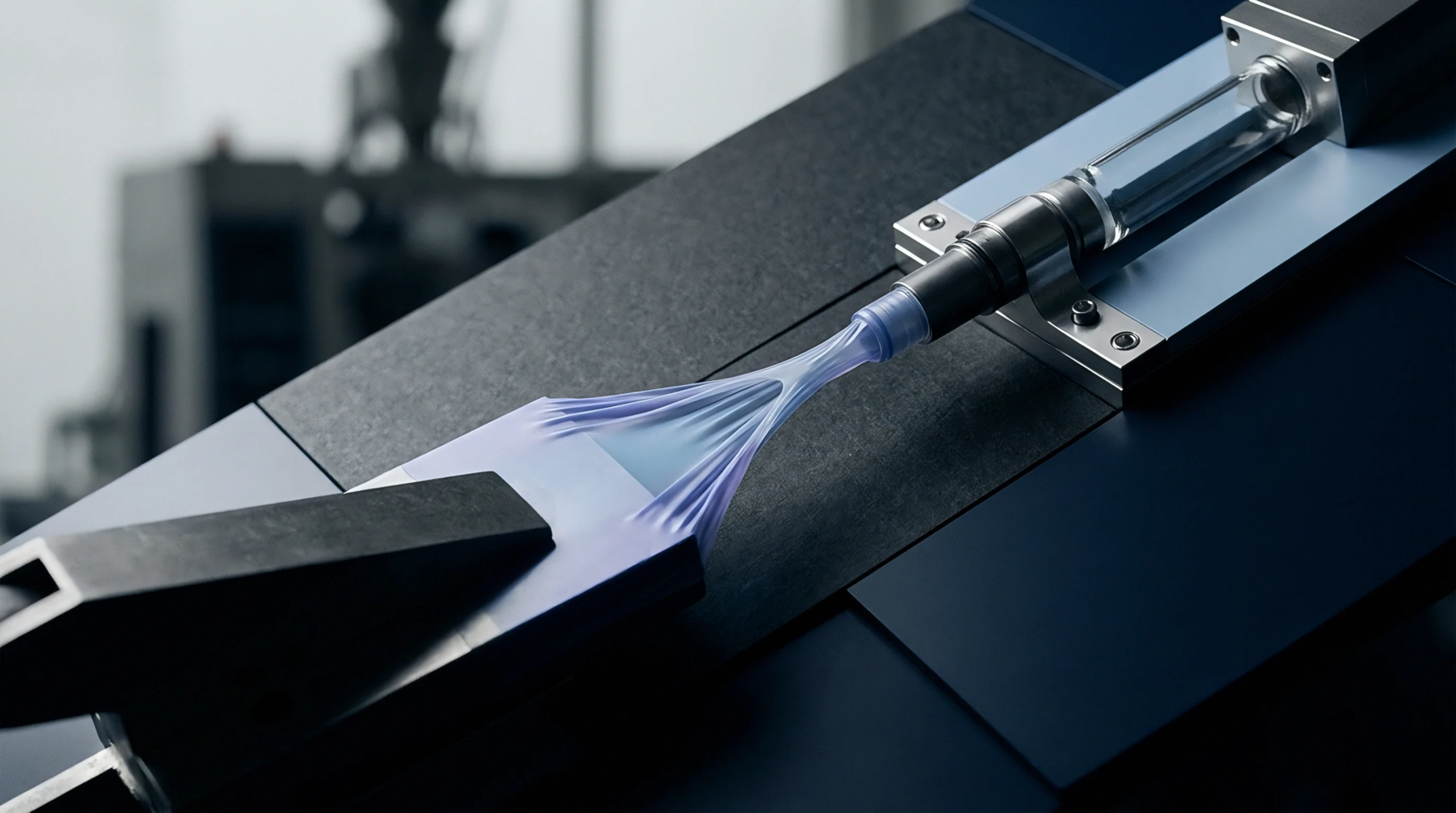
Melt flow through a runner or die experiences complex shear and extension that align the polymer chains. In these flow channels, the strain tensor tracks how the polymer elements deform as they move from the gate into the mould cavity. If the shear components dominate, the polymer chains align in the direction of flow, creating anisotropic properties.
Understanding these spatial deformations helps in predicting where the finished part will have the greatest directional strength.
Part Performance
Residual stress and warpage in the moulded component are directly related to the frozen deformation state after cooling. The solid-state strain tensor determines how the finished part responds to external mechanical loads when put into service. If the moulded-in strains are high, the part may warp or crack when exposed to heat or chemicals.
Designers use these tensor values to identify regions that require stress-relief or thicker wall sections.
Moulding Simulation
Numerical analysis of the injection cycle utilizes the deformation rates to calculate the final properties of the product. Finite element software computes the strain tensor at thousands of nodes across the part geometry throughout the filling, packing, and cooling phases. This computation is critical for predicting how the part will shrink and where weld lines will form.
By analyzing these simulated strain fields, toolmakers can optimize the gate location and venting to minimize the risk of mechanical failure in the field without running expensive physical trials.