Meaning
Polyolefin manufacturing employs specific low-pressure chemical processes where solid polymer particles form as an insoluble suspension within a circulating liquid carrier. The chemical method known as slurry loop polymerization continuously circulates a slurry of ethylene or propylene monomer, solid catalyst particles, comonomer, and a volatile liquid diluent such as isobutane or propane through a jacketed continuous-pipe reactor at high velocity. The technology enables the synthesis of high-density polyethylene and polypropylene at temperatures between 70 and 110 degrees Celsius and pressures between 30 and 50 bar, yielding high-molecular-weight polymers without polymer dissolution.
The methodology ceases to apply when reaction temperatures exceed the melting point of the polymer, which transitions the system into a solution polymerization regime.
Particle Kinetics
High-velocity internal circulation provided by an axial-flow pump prevents polymer granules from settling out or sticking to the pipe walls. Slurry loop polymerization relies on the continuous heat exchange through external cooling jackets to dissipate the massive exothermic heat generated during rapid olefin addition. Catalysts based on supported chromium or Ziegler-Natta chemistries grow uniform polymer particles that replicate the physical morphology of the underlying catalyst grain.
Operators control polymer chain length through hydrogen partial pressure, while introducing 1-hexene or 1-butene comonomers to regulate resin density and mechanical stiffness.
Moulding Applications
Polymers produced via this loop mechanism excel in structural applications that demand extreme resistance to slow crack growth and environmental stress failure. Blow moulders processing industrial chemical containers and high-density fuel tanks rely heavily on the bimodal molecular weight distributions synthesized in tandem dual-loop reactor installations. The low-melt-index high-molecular fraction provides parison sag resistance, while the lower-molecular-weight fraction provides easy flow through the extruder screw, maintaining high output rates without overheating the melt.
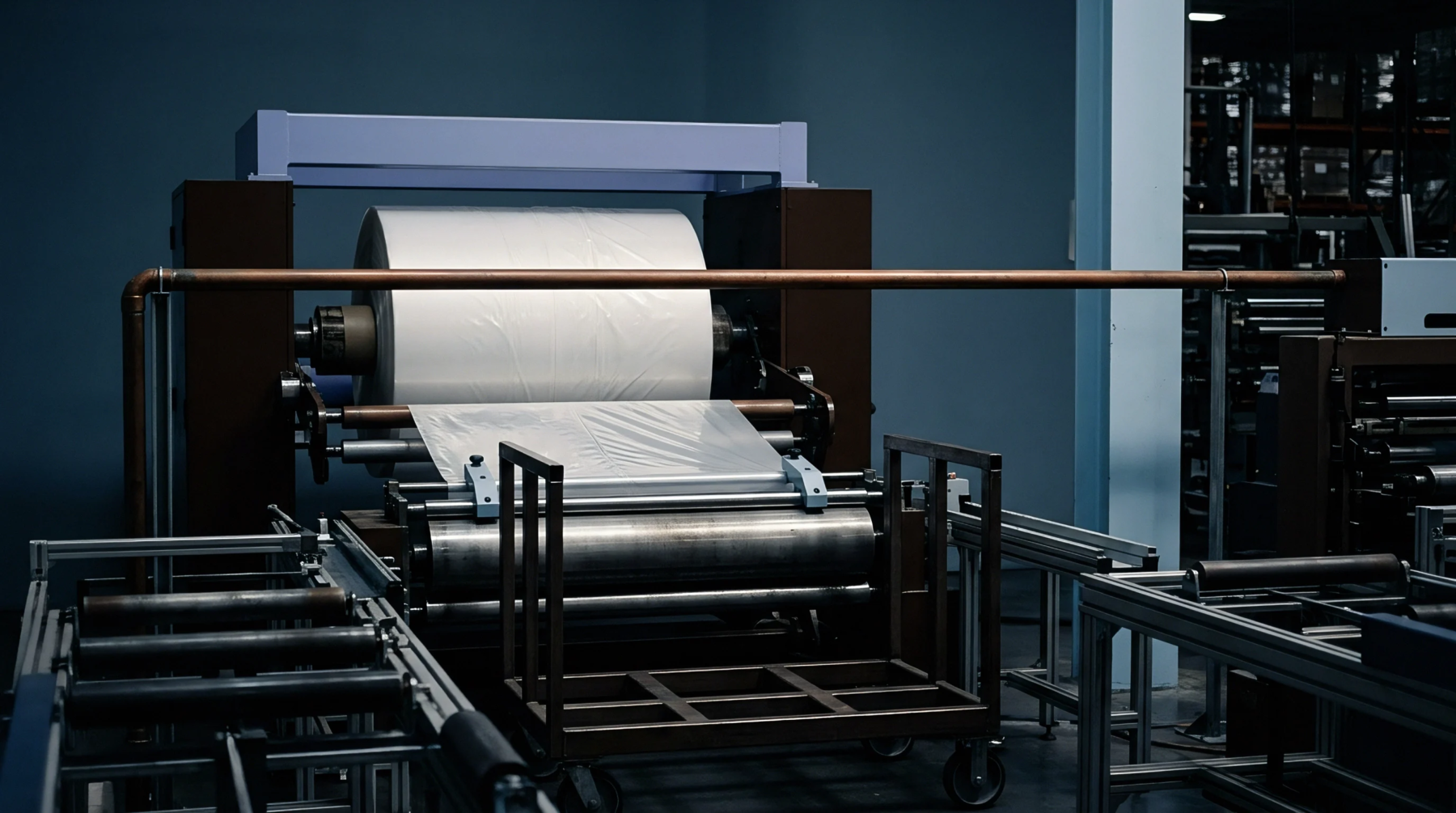
Film extruders also utilize slurry-derived high-density resins for high-strength shopping bags that require excellent tensile strength down to thin gauges.
Process Sensitivities
Controlling reaction conditions inside the circulating loop demands exact monitoring of comonomer distribution and carrier diluent purity. If the reaction temperature rises too close to the swelling temperature of the resin, polymer particles soften, swell with solvent, and foul the reactor walls, creating thick polymer coatings that ruin heat transfer and force an emergency shutdown. The carrier diluent must be flashed off, purified, and recompressed downstream, adding capital equipment requirements and energy costs that simple gas-phase fluidized bed reactors do not share.
Color changes and additive transitions are executed downstream in compounding extruders, meaning the reactor produces base fluff that requires extensive stabilization before conversion into commercial pellets.