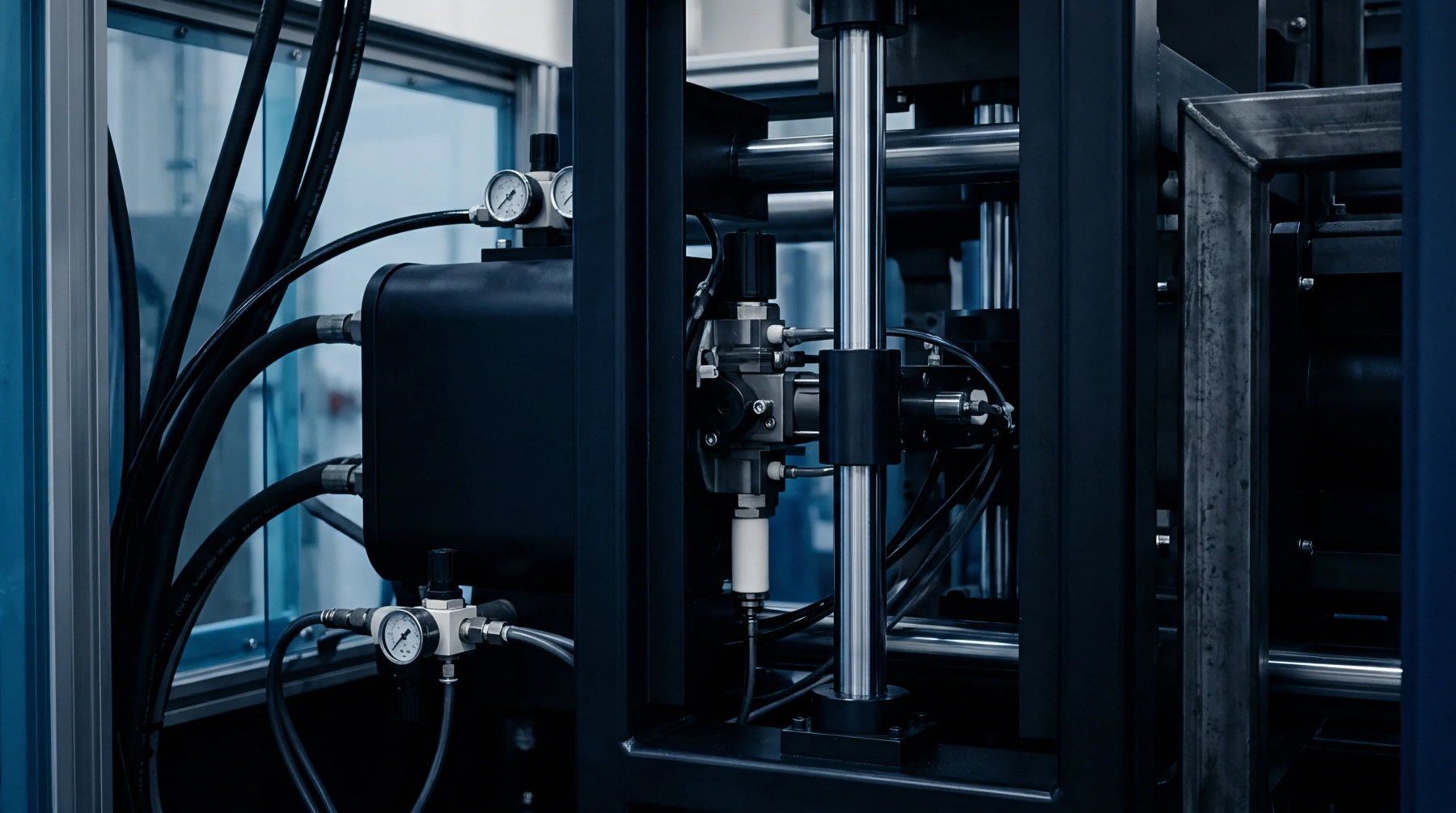
Managing Dynamic Core Deflection under High Cavity Packing Pressure Gradients
Core deflection control requires symmetric melt arrival, high-modulus tool inserts, precision taper locking, and real-time cavity pressure monitoring.
Geometric quotient comparing the unsupported length of a structural column or tooling member to its cross-sectional radius of gyration governs vulnerability to elastic buckling and lateral bending. Slenderness ratio quantifies whether a structural component behaves as a short, compression-dominated column or a long, flexure-dominated member when subjected to axial and transverse mechanical loads. In polymer tooling design, the metric applies to core pins, ejector pins and long side-action slides subjected to high hydraulic melt pressures and compressive mechanical ejection forces.
High ratios indicate components susceptible to severe lateral deflection and catastrophic structural buckling under standard operating stresses. The scope of this metric is restricted to structural stability analysis of long tooling elements, stopping short of broad cavity wall deflection, machine platen clamping compliance or base plate bending moments.
Mechanics governing tall tooling features change fundamentally as dimensions shift from low to high aspect geometries. Short pins with a low slenderness ratio fail primarily through material yielding under simple compressive stress, where failure load depends strictly on the yield strength of the tool steel. Long components crossing the critical slenderness threshold fail through elastic instability governed by Euler buckling formulations.
For an injection mould pin fixed at its base and free at the tip, the effective length factor doubles its physical length, drastically reducing the critical axial force that the pin can support before buckling sideways. Transverse loads imposed by advancing molten polymer aggravate this instability, inducing bending moments that amplify initial axial stresses and accelerate mechanical collapse.
Operational boundaries inside the moulding cell narrow rapidly when tooling components feature high slenderness ratios. Processing deep, tubular components like syringes, test tubes or pipettes requires long, narrow cores that intrinsically carry elevated slenderness values. Molten polymer entering the impression exerts unbalanced lateral drag and hydraulic pressures against these slender projections, driving tip deflection that throws wall thickness out of tolerance.
Moulders working with slender tooling must reduce injection velocity and clamp speeds, dampening dynamic pressure spikes to prevent pin deformation. High-viscosity engineering thermoplastics, heavily filled grades and cold melt conditions exacerbate lateral forces, occasionally forcing tooling redesigns that split deep draws across multiple moving inserts or incorporate supportive pilot guides to lower the effective slenderness ratio.
Mitigation of high slenderness ratios begins by adjusting cross-sectional geometry or introducing mechanical supports that lower effective column length. Designing core pins with tapered cross-sections increases the radius of gyration near the base, augmenting area moment of inertia where bending moments peak. Introducing sleeve supports, stripper rings or front-end interlocks changes the structural boundary conditions from a cantilever configuration to a guided or fixed-end state, increasing critical buckling loads fourfold.
When geometric changes are prohibited by component drawings, tool steel upgrades provide marginal buckling improvements unless the elastic modulus increases significantly. Standard tool steels share an elastic modulus near two hundred gigapascals regardless of thermal treatment, forcing engineers to adopt specialized tungsten carbide grades with elastic moduli exceeding five hundred gigapascals to suppress deflection in pins characterized by an unyielding slenderness ratio.
Core deflection control requires symmetric melt arrival, high-modulus tool inserts, precision taper locking, and real-time cavity pressure monitoring.
Expertise is a utility, not a secret. sentiention™ publishes its working knowledge as open reference: intelligence layer covering the materials it sources, the markets it enters, and the reference that serves both.