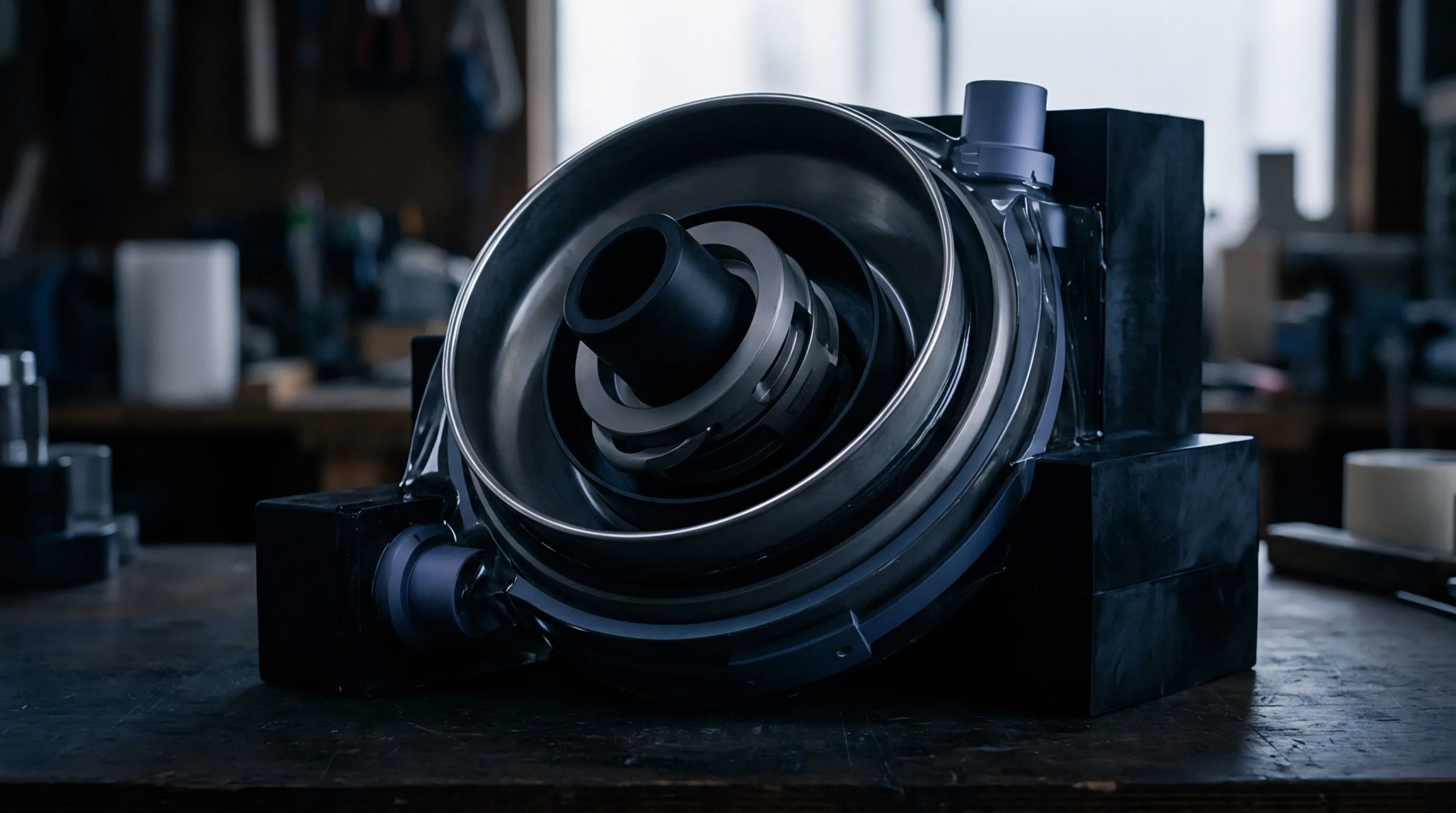
First Shot Samples Polished before the Buyer Ever Sees Them
Doctored T1 samples hide draft and thermal flaws through hand polishing; enforce raw steel T0 audits with continuous cavity telemetry before sign-off.
Melt delivery variance describes a volumetric disparity between cavities in a multi-cavity injection mould. Runner fill imbalance occurs when flow resistance differs across individual feed channels due to asymmetrical layout geometry or uneven thermal conditioning. Polypropylene and polycarbonate resins exhibit high sensitivity to this phenomenon because their viscosity changes rapidly under shear rate fluctuations.
Toolmakers set hot runner drop temperatures and gate dimensions during the sampling phase to correct flow discrepancies before production sign-off. Pressure transducers placed inside the mould cavities reveal actual packing differences, whereas uncalibrated machine displays show only hydraulic system pressure. Uncorrected disparities generate severe part distortion and dimensional variation across identical nests within a single shot.
Material specifications define resin melt flow rate tolerances, while part specifications govern the structural integrity of the final moulded article. Moulders must control barrel temperatures tightly because small thermal shifts alter melt density and worsen flow anomalies.
Temperature gradients across a hot manifold system alter polymer viscosity independently of injection pressure. Heaters mounted on distribution plates degrade over time, creating localized cool zones that restrict material flow into specific branches. Process technicians monitor thermocouple feedback loops to detect heater band failure before short shots occur on the outer cavities.
Virgin polymer processing requires precise thermal windows, whereas regrind incorporation demands wider temperature bands due to varying molecular weights. Excessive barrel dwell time degrades the material, lowering viscosity and masking underlying mechanical imbalances in the feed system. Production runs on high-output machines accumulate frictional heat rapidly, shifting the operating viscosity away from the initial laboratory datasheet value.
Fluid velocity profiles change as polymer melts travel through circular runner channels, generating higher shear stress near the cold wall boundaries. High shear rates reduce apparent viscosity locally, allowing material to race down specific runner branches while lagging behind in symmetrical counterparts. Injection speed profiles must balance this non-Newtonian flow behavior against clamping force limits to avoid flash formation.
Resins with broad molecular weight distributions handle high shear better than narrow-cut engineering thermoplastics. Moulders struggle to maintain consistent mechanical properties across all cavities when shear heating alters the material structure unevenly. Laboratory melt index values measured at low shear fail to predict how a resin behaves inside high-speed injection systems.
Volumetric disparities between cavities lead directly to localized over-packing, residual stress, and part warpage in the final assemblies. Thick-walled sections cool slowly and sink when fed by starved runners, whereas overfed cavities develop flash and high residual stress. Quality inspectors measure dimensional deviation against part drawings to establish whether failures originate in the tooling or the raw material batch.
Commercial production relies on maintaining uniform cavity pressure profiles to prevent structural failures during end-use service. Substandard parts demand costly secondary sorting operations and increase scrap rates across the manufacturing lot.
Doctored T1 samples hide draft and thermal flaws through hand polishing; enforce raw steel T0 audits with continuous cavity telemetry before sign-off.
Expertise is a utility, not a secret. sentiention™ publishes its working knowledge as open reference: intelligence layer covering the materials it sources, the markets it enters, and the reference that serves both.