Meaning
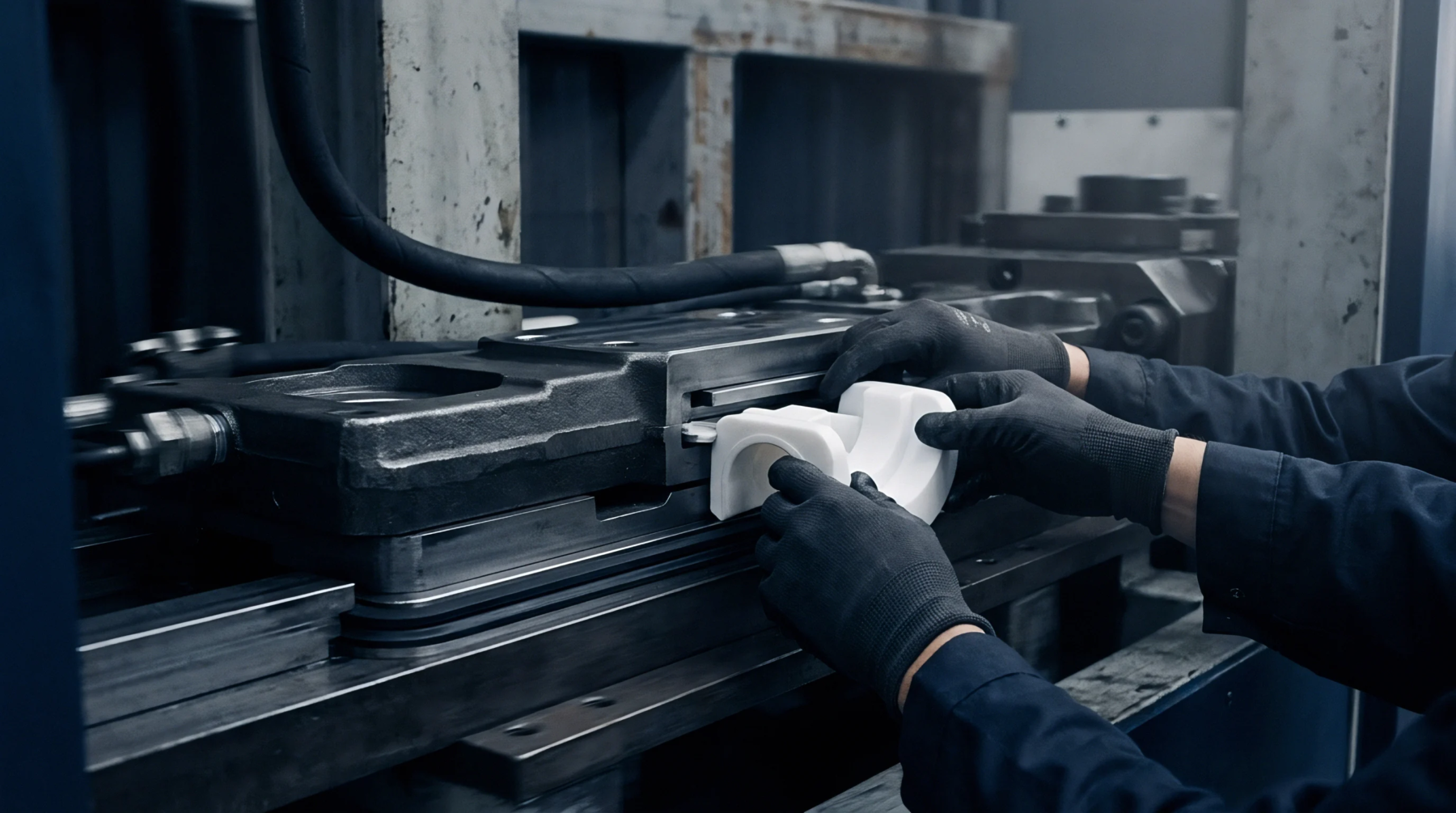
The specific mechanical release phase within a multi-station compression press separates a cured resin shape from its surrounding steel cavity walls. Polymer matrix extraction governs the interfacial shear stress threshold during high-speed tooling release cycles, and boundary conditions fail when internal cavity temperatures exceed the glass transition zone of the feedstock. Tooling engineers apply this procedural standard to evaluate draft angle parameters during preliminary mold design sequences.
Production lines encounter flash formation and surface tearing whenever extraction pressures deviate from the calibrated nominal range established by the resin supplier.
Tooling Kinematics
Ejection pins distribute mechanical force across the rear plane of the component to overcome frictional resistance between the polymer and the polished tool steel. Hydraulic actuators regulate stroke velocity to prevent localized vacuum creation beneath deep-draw geometries during rapid separation stages. Cycle times shorten when technicians optimize platen acceleration profiles, although excessive initial velocity causes micro-cracks along thin-wall sections.
Moulders must balance clamping tonnage against release resistance to avoid permanent deformation of the newly formed geometry.
Material Behaviour
Polypropylene and engineering thermoplastics exhibit distinct volumetric shrinkage rates that directly influence the required separation force during the cooling cycle. Virgin polymer pellets yield predictable linear contraction values, whereas regrind materials introduce unpredictable viscosity shifts that alter final part dimensions across a production run. Material specifications define baseline mechanical properties under laboratory conditions, while actual shop floor processing demands constant adjustments to compensate for batch-to-batch molecular weight variations.
Thermoplastic degradation accelerates when barrel temperatures remain elevated beyond standard dwell time thresholds, which consequently increases adhesion inside the mold cavity and ruins surface finish quality.
Economic Yield
Scrap rates increase dramatically whenever part specifications clash with the practical tolerances achievable by standard injection machinery during continuous multi-shift operations. Plant operators track hourly output metrics to identify thermal drift before adhesive failure damages expensive tool surfaces beyond repair. Commercial success relies on maintaining consistent processing parameters rather than trusting static datasheet values published by material manufacturers.
Lowering reject percentages requires strict control over hopper drying times and barrel heating zones to stabilize melt flow behaviour throughout every production batch.