Meaning
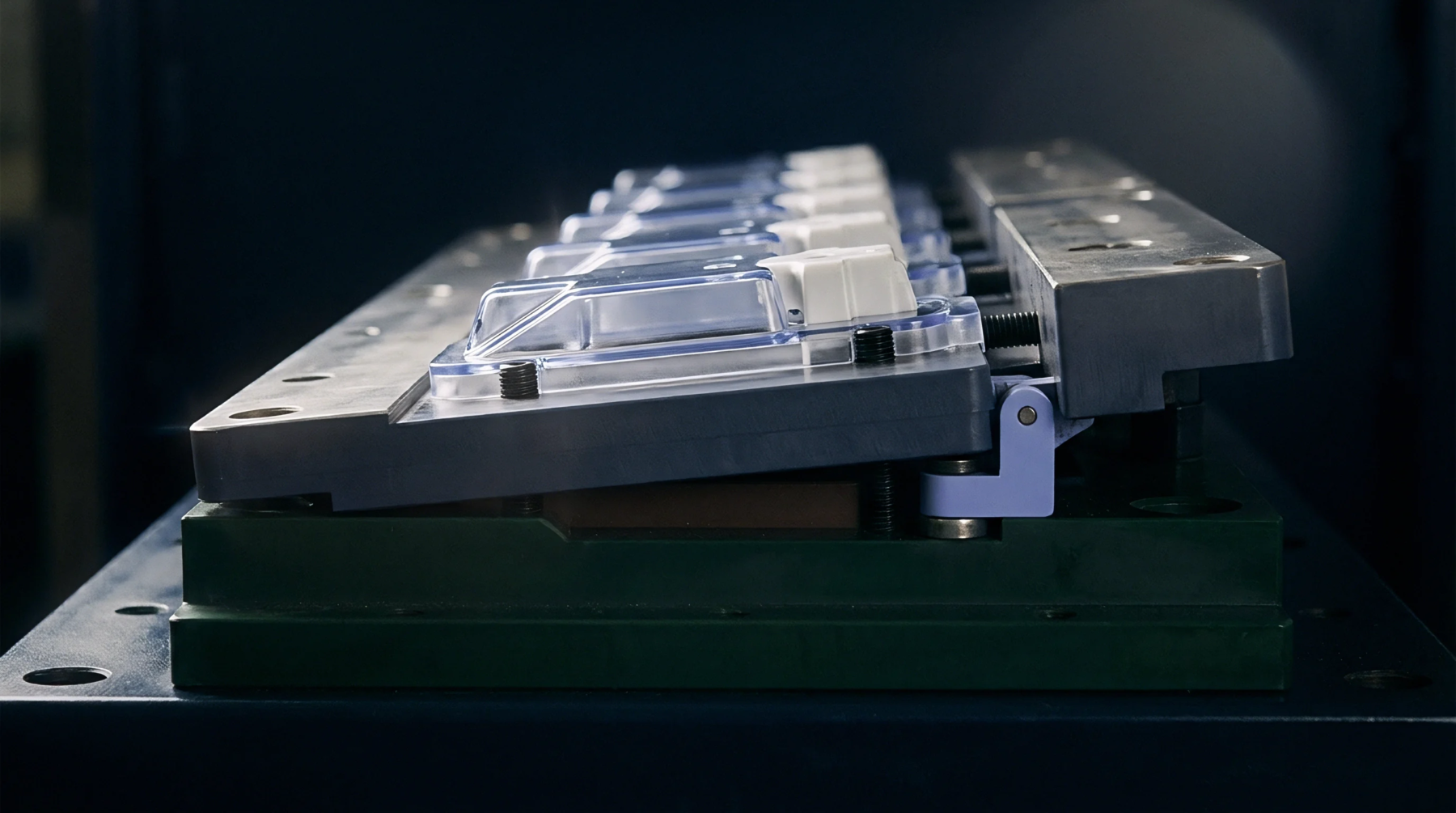
Precision-machined voids within a mold block made of high-alloy steel that has undergone thermal hardening withstand the abrasive forces of high-volume plastic injection molding. Utilizing a hardened steel tool cavity prevents premature wear and erosion from glass-filled resins and high-pressure injection cycles. This component is typically heat-treated to a hardness of 48 to 54 Rockwell C to ensure long-term dimensional stability.
The boundary of its application lies in high-volume production where tool longevity justifies the higher initial machining costs.
Material Durability
Thermal processing of tool steels like H13 or S7 creates a microstructure that resists deformation under extreme clamping forces. Integrating a hardened steel tool cavity ensures that the fine details and textures of the mold are preserved over millions of cycles. Untreated steel or aluminum cavities would deform or wear down quickly under the same conditions, leading to part defects.
This hardening process is completed after the primary machining is done to prevent tool cracking.
Manufacturing Suitability
Abrasive additives like glass fibers, carbon fibers, or mineral fillers accelerate the wear of mold surfaces. When a hardened steel tool cavity is used, the rate of erosion is minimized, maintaining the tight tolerances of the molded parts. This makes the cavity suitable for automotive and industrial components where dimensional drift cannot be tolerated.
Virgin resins can also cause chemical outgassing that corrodes softer metals, making hardened tool steels a safer choice.
Financial Efficiency
High upfront tooling costs are offset by the reduction in maintenance and replacement expenses over the life of a project. Choosing a hardened steel tool cavity is an investment that pays off for high-volume runs where downtime for tool repair is costly. If a softer tool cavity wears out during production, the resulting flash and dimensional errors can lead to rejected batches and delayed shipments.
Moulders must calculate the total projected part volume to determine if the durability of hardened steel is required. For short runs, pre-hardened or aluminum inserts may be more economical, but high-volume operations depend on the reliability of fully hardened cavities to remain profitable.